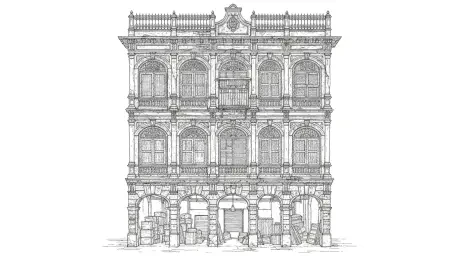

The historic heart of Bangladesh’s capital is facing a profound crisis that threatens its very soul, as a perfect storm of soaring rental costs, systemic governance failures, and unchecked commercialization displaces long-standing residents. In Old Town, Dhaka, this is not merely an economic issue; it is a battle for cultural survival, where families who have lived for generations are being priced out of their own history. The crisis erodes the city’s unique heritage, jeopardizes public safety, and hollows out the community that gives this ancient urban space its vibrant character.
The Squeeze on Old Dhaka’s Soul
Economic Hardship and Precarious Living
The financial burden on Old Town’s residents has become unsustainable, with rents skyrocketing by an alarming 30–45 percent in just five years, a rate that far outpaces income growth for the average family. This dramatic increase forces many households to allocate over 60 percent of their monthly earnings to housing, a figure that is more than double the internationally recognized affordability benchmark of 30 percent. This dire situation is significantly intensified by the predominantly informal nature of the local rental market, where verbal agreements are the norm and written contracts are a rarity. This lack of formal documentation leaves tenants in a perpetual state of vulnerability, subject to the whims of landlords who can impose arbitrary rent hikes or issue sudden eviction notices without any legal recourse. The precariousness of their situation is a constant source of stress, undermining any sense of stability or security for families who have called these neighborhoods home for decades.
This economic pressure cooker is further heated by the common practice of landlords demanding exorbitant advance payments, often equivalent to six to twelve months’ rent. For the working-class families, small traders, and students who form the backbone of Old Town’s community, such a large upfront cost creates an almost insurmountable barrier to securing or retaining housing. This practice effectively filters out lower and middle-income residents, accelerating a process of gentrification that replaces long-standing community members with more affluent tenants or commercial interests. The lifeblood of the old city—its artisans, its shopkeepers, its multi-generational families—is being systematically drained as the financial requirements for simply having a place to live spiral out of reach. This is not just a market correction; it is an economic siege on a historic community, pushing its most integral members to the brink of displacement and severing their deep-rooted ties to the area.
A Tale of Two Cities
National statistics dangerously mask the severity of Old Town’s hyper-localized crisis, painting a misleadingly benign picture of the city’s overall housing market. While the Bangladesh Bureau of Statistics reports a seemingly moderate 6.2 percent year-on-year rise in Dhaka’s House Rent Index, this city-wide average fails to capture the unique and intense pressures suffocating the historic core. Unlike newer, more planned residential areas such as Uttara or Mirpur, Old Town suffers from a chronic and severe constraint on its housing supply. Decades of organic, dense development have left little room for new residential construction, creating a finite pool of available homes that is constantly shrinking due to commercial encroachment. This scarcity has created fertile ground for rampant real estate speculation, where properties are valued not for their residential utility but for their potential commercial profitability, driving rental prices to levels completely disconnected from local wage realities.
This disparity transforms what was once an accessible and tightly-knit community into an increasingly exclusionary and predatory rental market. The relentless commercial encroachment, with residential buildings being illegally converted into warehouses and factories, further constricts the housing stock and drives up rents for the remaining units. As a result, lower-income residents in Old Town find themselves paying a disproportionately high share of their earnings for housing that is often substandard, overcrowded, and lacking basic amenities. They are caught in a cruel paradox: paying a premium to live in a historic neighborhood while simultaneously inhabiting decaying structures that fail to provide safety or comfort. This widening gap between the lived reality in Old Town and the broader statistical narrative highlights a critical failure in urban policy, which has overlooked the distinct vulnerabilities of one of the nation’s most culturally significant urban landscapes.
A System in Collapse
Governance Gaps and Unchecked Commercialization
At the heart of Old Town’s escalating crisis is a systemic and catastrophic failure of urban governance, where regulatory oversight is virtually non-existent and enforcement is weak to the point of irrelevance. A critical factor fueling the displacement of residents is the routine and illegal conversion of residential buildings into commercial spaces. Without fear of penalty, landlords repurpose homes into crowded warehouses for flammable goods, small-scale chemical factories, and bustling eateries, all operating in dangerously close proximity to where families sleep. This practice not only shrinks the already limited housing stock, directly driving up rents for the few remaining residential units, but it also fundamentally erodes the cultural and architectural identity of the area. The unique charm and historical character of the neighborhood are being systematically dismantled from within, replaced by the chaotic and often hazardous machinery of unregulated commerce.
This unchecked commercialization also inflicts a more subtle, yet equally damaging, blow to the area’s heritage. Historic homes, with their intricate facades and traditional layouts, are often ruthlessly subdivided into cramped, poorly maintained rooms to maximize rental income, destroying their architectural integrity in the process. Landlords, driven by profit, have little incentive to invest in the upkeep of these heritage structures, allowing them to fall into disrepair. In more extreme cases, these invaluable pieces of history are demolished entirely to make way for architecturally incongruous apartment blocks that disrupt the neighborhood’s unique human scale and historic character. This destructive cycle, fueled by a lack of zoning enforcement and a disregard for preservation laws, is transforming Old Town from a living museum into a chaotic commercial hub, hollowing out its soul one building at a time.
Living in the Shadow of Danger
The unregulated commercialization sweeping through Old Town has created a dire and ever-present public safety crisis, turning residential neighborhoods into potential death traps. The tragic 2019 Chawkbazar fire, which claimed over 70 lives, serves as a potent and horrifying example of the lethal risks involved. The inferno tore through residential buildings that were being illegally used as warehouses for highly flammable chemicals and plastics, exposing the deadly consequences of unenforced zoning laws and the city’s failure to separate industrial activities from living quarters. This was not an isolated incident but a symptom of a systemic problem that continues to plague the area. Years after the tragedy, countless tenants still live in constant fear, residing in structurally unsafe buildings that lack basic safety features like fire exits, proper ventilation, or clear emergency access routes, often because these spaces have been blocked or repurposed for storage.
Residents find themselves trapped in a perilous situation, paying inflated rents for homes that offer neither safety nor security. The financial strain of high housing costs is compounded by the physical risk of living in buildings that are, in many cases, ticking time bombs. Landlords, operating with impunity in a regulatory vacuum, prioritize profit over the well-being of their tenants, neglecting essential maintenance and ignoring safety codes. These residents bear the full cost of a broken system—both the financial burden of exorbitant rent and the heavy psychological weight of knowing their homes could become the site of the next disaster. The persistence of this problem demonstrates a profound failure of governance, where the lives of citizens are devalued in the face of unchecked commercial interests, leaving an entire community to live in the shadow of preventable danger.
The Failure of Policy and Protection
The institutional frameworks that should protect tenants and regulate the housing market in Old Town have completely broken down, leaving residents with virtually no legal safety net. The primary piece of legislation, the Premises Rent Control Act of 1991, is dismissed by experts as outdated, toothless, and so weakly enforced that it offers no real protection to tenants facing exploitation. Its provisions are routinely ignored, and there is no effective mechanism to hold landlords accountable for violations. This legal vacuum is exacerbated by the absence of fundamental regulatory tools, such as a central tenant registry to track occupancy and rental agreements, a system for monitoring and capping exorbitant rent increases, or a structured, accessible process for resolving disputes between landlords and tenants. Without these basic institutional supports, tenants are left to navigate a predatory market on their own, with little power to negotiate fair terms or challenge unjust practices.
This policy blindness extends to the national level, where housing strategies have overwhelmingly focused on promoting homeownership, a goal that is entirely irrelevant to the vast majority of Dhaka’s population. The National Housing Policy 2016, for example, is heavily skewed towards supporting property buyers, a demographic that represents a small fraction of the city’s residents. This narrow focus has left the nearly three-quarters of Dhaka’s inhabitants who live in rented accommodations—the city’s lifeblood—without any meaningful policy support or protection. This profound oversight has created a two-tiered system where the needs of a minority of homeowners are prioritized while the immense challenges faced by the renter majority are ignored. The result is a crisis that has been allowed to fester, pushing Old Town’s historic community to the breaking point due to a combination of legislative neglect and misguided policy priorities.
Reclaiming History and Home
A Blueprint for Tenant Rights and Safety
A fundamental shift in governmental priorities became necessary, one that began with recognizing renters as essential stakeholders in the city’s future. This required the modernization of archaic tenant laws, which was achieved through the revision of the 1991 Act and the introduction of a robust Tenant Protection Act. This new legislation mandated written agreements for all tenancies, established transparent and fair rent-setting mechanisms to prevent price gouging, and provided for an accessible and efficient dispute resolution system. Equally urgent was the need to regulate industrial encroachment. Authorities began to strictly relocate hazardous industries and workshops from residential zones, while also rigorously enforcing zoning boundaries, building codes, and fire safety inspections. These actions were not merely regulatory; they were life-saving measures designed to prevent a recurrence of past tragedies and restore a sense of security to the community.
This comprehensive approach also involved a concerted effort to dismantle the informal systems that had allowed exploitation to thrive. The establishment of a centralized tenant registry provided the government with crucial data to monitor market trends and protect vulnerable residents. Specialized tribunals were set up to handle landlord-tenant disputes, offering a faster and more equitable alternative to the traditional court system. Furthermore, public awareness campaigns were launched to educate both tenants and landlords about their rights and responsibilities under the new laws. This multi-pronged strategy was designed to rebalance the power dynamic in the rental market, ensuring that housing was treated as a fundamental human right rather than a purely commercial commodity. By creating a strong legal and regulatory framework, the city took a decisive step toward safeguarding its residents and preserving the social fabric of its historic core.
Balancing Heritage with Housing
To counter the narrative that heritage preservation and housing affordability were competing goals, the city looked to international examples like Stone Town in Zanzibar and Old Havana for inspiration. These cases demonstrated that with targeted public investment, sensible rent regulation, and community-led rehabilitation projects, it was possible to protect both historic buildings and their long-term residents. A key strategy involved supporting the adaptive reuse of heritage buildings in a way that prioritized rent stability and resident retention. Instead of allowing these structures to be converted into purely commercial ventures, programs were established to facilitate their transformation into affordable housing units. The formation of community cooperatives and the development of public rental housing within historic properties became a cornerstone of this new approach, ensuring that the people who gave the neighborhood its character were not displaced in the name of preservation.
This holistic vision also recognized that a community’s liveability extended beyond the four walls of a home. A significant investment was made to improve basic urban services, including upgrading water and sanitation systems, enhancing local healthcare facilities, and improving access to quality education. These improvements were crucial for sustaining the community and preventing the forced out-migration of Old Town’s core population, which had been driven away not only by high rents but also by deteriorating living conditions. By treating heritage, housing, and public services as interconnected components of a single urban ecosystem, the government moved from reactive measures to a proactive, heritage-sensitive planning model. Ultimately, the protection of renters was understood not as an act of charity, but as an essential act of protecting history itself, because no city could achieve modernity if it allowed its oldest soul to be hollowed out by displacement and neglect.