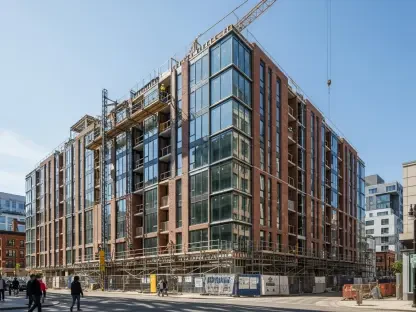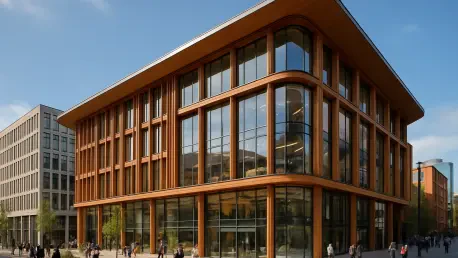

With a reputation for delivering complex, large-scale projects, Luca Calaraili has been at the forefront of integrating modern construction methods with ambitious sustainability goals. His work on major urban developments showcases a deep understanding of not just the technical challenges of construction but also the importance of community integration and social value. In this interview, we delve into his team’s approach to the landmark £160 million Upper Brook Street student accommodation project in Manchester, exploring how lessons from past collaborations are shaping this development, the logistical intricacies of off-site manufacturing, the drive for top-tier environmental ratings, and the commitment to creating a space that benefits the wider community.
This is the second major collaboration between McLaren’s property and construction divisions in Manchester. How does your experience on St Gabriels Court shape your approach to this £160 million development, and what specific lessons are you applying to manage a project of this scale?
St Gabriels Court was a fantastic proving ground for our integrated approach, and it truly set the stage for Upper Brook Street. The biggest lesson we carried forward is the power of early and constant collaboration between the property and construction teams. On a project of this magnitude, you can’t afford to have silos. We learned to streamline our communication channels and decision-making processes, which is now paying dividends. For this £160 million scheme, we’re applying that lesson by having fully integrated design and logistics meetings from day one. We’ve meticulously planned the entire sequence, from the installation of the 219 piles to the delivery schedule for prefabricated elements. It’s about treating the project as a single, unified entity, which ensures we can manage the immense complexity and deliver the kind of high-quality, best-in-class building we’re all aiming for.
The project heavily utilizes modern methods like unitized concrete panels and bathroom pods. Could you walk us through the logistical steps involved in integrating these off-site elements, and what specific metrics you’re tracking to measure the expected gains in efficiency and quality control on site?
Integrating off-site elements is like conducting a well-rehearsed orchestra. It begins months, sometimes years, before anything arrives on site, with intense digital coordination. For the unitized concrete panels, which come with brickwork and windows already integrated, we work with the manufacturer to create a precise 3D model that aligns perfectly with our concrete frame. These panels are then manufactured in a controlled factory environment and delivered on a just-in-time basis. The same goes for the bathroom pods from Walker Modular; they arrive fully finished, ready to be craned in and connected. The key metrics we’re tracking are speed, quality, and safety. We measure the floor-to-floor cycle time, expecting a significant reduction compared to traditional methods. We also monitor our defect rate, which is drastically lower because the factory setting allows for superior quality control. Finally, we track on-site labor hours and waste reduction—fewer tradespeople working in a confined space and less material cut on-site create a safer, cleaner, and more efficient environment.
You’re targeting high standards like BREEAM Excellent and EPC A. What are the key challenges in integrating these sustainability goals from the initial design through to construction, and could you provide a specific example of an innovative material or system you’re using to meet these targets?
Achieving top-tier sustainability ratings like BREEAM Excellent and EPC A isn’t about ticking boxes; it’s a fundamental philosophy that must be embedded from the earliest design sketches. The biggest challenge is ensuring that every decision, from the building’s orientation to the choice of insulation, aligns with these goals without compromising the budget or schedule. It requires a holistic view. A great example from this project is our use of the fully unitized prefabricated concrete panels. While their primary benefit is often seen as speed, their contribution to sustainability is immense. Because they are manufactured in a factory, we achieve a level of precision in insulation and sealing that is incredibly difficult to replicate on a traditional building site. This superior airtightness is critical for thermal performance, dramatically reducing the energy needed to heat and cool the building and pushing us toward that EPC A rating. It’s a perfect case of a modern construction method directly enabling our environmental ambitions.
With 219 piles already installed, you’re targeting slip-form rig assembly before Christmas to start the frame in the new year. Could you elaborate on the key steps and coordination required to hit this critical milestone, and how it sets the pace for completion by the 2028 academic year?
Hitting that pre-Christmas milestone for the slip-form rig is absolutely crucial; it’s the starting gun for our vertical construction phase. With the groundwork, piling, and concrete bases for the two tower cranes already complete, the site is perfectly prepped. The next steps involve the meticulous assembly of the slip-form system itself—a complex hydraulic platform that essentially climbs the building as it constructs the concrete core. This requires intense coordination between our structural engineers, the crane operators, and the concrete supply chain. Getting it assembled and ready means that come the new year, we can begin the continuous concrete pour for the core, which will rise at a very rapid pace. This sets a powerful tempo for the entire project. Once the core is racing ahead, it allows all subsequent trades, like the installation of the prefabricated panels, to follow in a coordinated, efficient sequence, keeping us firmly on track to welcome students for the 2028 academic year.
Beyond the 737 student beds, the development promises a community facility and enhanced public realm. How do you integrate these community-focused elements into the project’s core planning and budget, and can you share a specific anecdote about your collaboration with local groups like the Salvation Army?
From the very beginning, we viewed the public-facing elements not as add-ons, but as integral parts of the development’s identity. The community facility, café, and landscaped public spaces are designed to make the building a positive contributor to the Oxford Road Corridor, not just a place for students to live. These elements are costed and planned right alongside the residential towers, ensuring they receive the same attention to detail. Our commitment to social value goes beyond the physical structure. We’ve been actively working with local partners, including the Salvation Army, to create real-world impact. For instance, we’ve been co-developing initiatives to provide training and employment opportunities for local people on the project itself. It’s about moving beyond contractual commitments and building genuine relationships. When you see someone from the local community gain a skill and a job through the project, it reinforces that we’re not just building structures; we’re helping to build a stronger community.
What is your forecast for the purpose-built student accommodation market in key university cities like Manchester over the next five years?
I believe the forecast is exceptionally strong, but it will be defined by a flight to quality. The demand for student housing in top-tier university cities like Manchester isn’t going to wane. However, students’ and investors’ expectations are evolving rapidly. The days of just providing a basic room are long gone. The future of the market lies in high-quality, purpose-built developments like Upper Brook Street that offer a comprehensive living experience—robust amenities like gyms and collaborative study spaces, exceptional digital connectivity like a Platinum WiredScore, and demonstrable sustainability credentials like BREEAM Excellent. We will see continued investment and growth, but the most successful projects will be those that deliver a premium, well-managed, and sustainable product in prime locations. The bar is being raised, and that’s a positive trend for everyone involved.