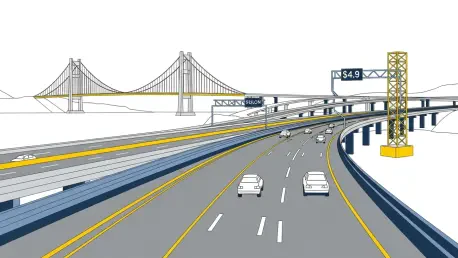

The sprawling 67-mile transit corridor stretching from the state capital in Madison to the tourism hub of Wisconsin Dells is currently undergoing the most significant infrastructure metamorphosis in the history of the Badger State. This massive undertaking represents far more than a routine repaving project; it is a $4.9 billion modernization effort designed to redefine how goods and people move through the heart of the Midwest. With the Dallas-based engineering powerhouse Jacobs at the helm, this overhaul is set to address the deep-seated growing pains of a transit system that has long outgrown its original mid-century design.
As the primary designer for the project’s most complex segments, Jacobs is tasked with untangling one of the region’s most congested networks. This initiative is not merely about adding pavement but about reimagining the state’s economic backbone to support a new era of mobility. By integrating advanced engineering with strategic urban planning, the project aims to turn a notorious bottleneck into a streamlined gateway for millions of travelers.
The Strategic Necessity: Modernizing the I-39/I-90/I-94 Corridor
The I-39/I-90/I-94 system serves as a critical artery for regional commerce, yet it has faced mounting pressure from skyrocketing traffic volumes and deteriorating structures. Modernizing this corridor is an absolute essential for maintaining Wisconsin’s competitive edge in the logistics and tourism sectors, which rely heavily on predictable travel times. Beyond the movement of freight, the project addresses urgent safety concerns by replacing outdated merging lanes and improving sightlines for drivers.
As national infrastructure faces a period of reckoning regarding longevity and capacity, this Wisconsin project stands as a proactive response to 21st-century travel demands. The reliance on this specific stretch of highway for interstate trade means that any inefficiency here ripples through the entire Midwestern supply chain. Consequently, the upgrade is viewed by state officials as a protective measure for the regional economy, ensuring that the transit network remains a bridge rather than a barrier to growth.
Engineering the Overhaul: Scope, Scale, and Sustainability
The technical breadth of this project involves much more than simply expanding road capacity for more vehicles. Jacobs will spearhead the design of the critical third segment, focusing on a complex system interchange that serves as the project’s structural backbone. The scope includes widening interstate lanes, reconstructing dozens of existing bridges, and the ambitious addition of three entirely new interchanges designed to improve local access without compromising through-traffic speeds.
A standout feature of the modern design is a focus on environmental resilience, an increasingly vital component of civil engineering. Engineers are planning to raise roadway elevations in specific low-lying areas to mitigate the impact of flooding, ensuring the interstate remains operational during extreme weather events that have previously paralyzed the region. This forward-thinking approach acknowledges that infrastructure must be built to withstand the volatile environmental conditions of the coming decades.
Leadership and Economic Realities: Large-Scale Civil Engineering
According to Tom Meinhart, Jacobs’ Executive Vice President, this project reinforces a deep-seated commitment to delivering solutions that directly improve the quality of life for Wisconsin residents. The firm is leveraging its global experience to ensure that the local design meets international standards for safety and efficiency. However, the project also serves as a sobering case study for the current economic climate. While initial cost estimates sat at approximately $3.7 billion, updated forecasts now project a $4.9 billion price tag.
This nearly 30% increase highlights the significant inflationary pressures on labor and raw materials that major engineering firms must navigate today. The rising costs of steel, concrete, and specialized labor have forced planners to be more disciplined in their resource allocation. Despite these financial hurdles, the state has prioritized the project, recognizing that the cost of inaction—measured in accidents, delays, and lost commerce—would eventually far exceed the investment required for a total overhaul.
Strategic Frameworks: Future-Proofing State Infrastructure
The Wisconsin overhaul provides a definitive blueprint for how states can manage massive civil works in a volatile global economy. Key strategies included integrating climate-resilient designs, such as elevated roadways, from the very first planning phase to avoid the astronomical costs of future retrofitting. By anticipating environmental shifts now, the Wisconsin Department of Transportation and Jacobs have created a model for sustainable development that other states are already beginning to emulate.
Furthermore, the partnership illustrated the importance of leveraging a diverse infrastructure pipeline to apply cross-industry innovations to highway modernization. Insights gained from Jacobs’ work in data centers and semiconductor facilities were applied to the “smart” components of the highway, such as integrated sensors and advanced traffic management systems. These technological additions ensured that the finished corridor was not just wider, but significantly more durable and intelligent, providing a high-speed data and transit foundation that served the state for generations to come.