
With over two decades of experience navigating the complexities of modern architecture and the evolving technological landscape of the job site, Luca Calarailli offers a seasoned perspective on the current state of the building trades. As a professional who has bridged the gap between traditional design and the high-tech tools now driving construction, he is uniquely positioned to interpret the latest shifts in market demand. Our conversation explores the deepening divide within the industry, where a massive surge in data center projects is currently obscuring a broader slowdown that has left many general contractors with their thinnest backlogs in years. We examine why mid-sized firms are facing their toughest environment since the start of the decade and how specific sectors like infrastructure are losing the momentum they once enjoyed.
The latest data reveals that construction backlogs have dipped to an average of just eight months, which is the lowest point recorded since January. From your perspective, what does this downward shift signify for the industry’s overall stability as we move through the second half of the year?
This 0.8-month drop from both June and the previous year is a significant red flag because it signals a genuine cooling of momentum that we haven’t seen in quite some time. When you walk onto a job site today, there is a palpable sense of urgency because that eight-month window represents a shrinking safety net for firms that are used to much longer horizons. For a project manager, losing nearly a month of guaranteed work from the books means the pressure to secure new bids is at an all-time high, often leading to tighter margins just to keep crews busy. This isn’t just a minor seasonal fluctuation; it feels like a fundamental recalibration of the market where the post-pandemic backlog surge has finally hit a ceiling.
There is a striking contrast between contractors involved in the data center boom and those who are not, with the tech-heavy firms holding significantly more work. How is this divide reshaping the competitive landscape for the vast majority of contractors who don’t have these specialized projects?
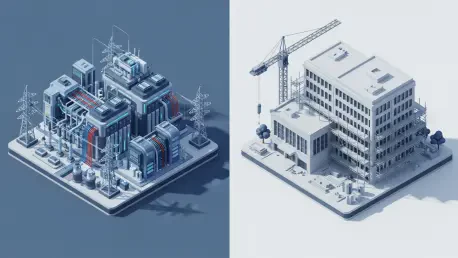
The divide is truly staggering when you look at the 12% of contractors who are tied into data center builds, as they are reporting a very robust 11.4 months of backlog. Meanwhile, the other 88% of the industry is grappling with only 7.5 months of work, which creates a “haves and have-nots” dynamic that is incredibly difficult to navigate. This “masking” effect is dangerous because the massive scale of these tech projects hides the underlying weakness in bookings for everyone else. For those without tech-sector contracts, the lack of momentum in traditional commercial or institutional segments is becoming a daily reality that forces them to compete more aggressively for a shrinking pool of standard projects.
Small and mid-sized contractors seem to be bearing the brunt of this slowdown, with some seeing their thinnest pipelines in years. Why is the current market proving to be so much more punishing for these firms compared to the industry giants?
The data for mid-sized firms in the $30 million to $50 million annual revenue category is particularly heartbreaking, as their backlogs have plummeted to the lowest levels we have seen since March 2020. We are seeing large firms with over $100 million in revenue maintain a comfortable 12.1 months of work, while the smallest contractors with less than $30 million in revenue are down to just seven months. Larger entities have the capital and the deep-rooted relationships to pivot into complex infrastructure or massive tech builds that require immense bonding capacity. Smaller and mid-sized shops often lack that specialized infrastructure, leaving them vulnerable to local market shifts and the rising costs of financing that make smaller commercial builds less viable.
Infrastructure was once seen as the most reliable sector for steady work, yet it recently posted the largest decline in backlog among all categories. What factors are contributing to this sudden loss of momentum in a sector that was supposed to be the industry’s backbone?
It was a shock to see infrastructure backlog drop by a full 1.3 months, bringing it down to 8.8 months total in July. This was a much sharper decline than the commercial and institutional sectors, which saw a more modest dip of 0.9 months over the same period. Even with significant federal funding conversations happening, the actual “boots on the ground” execution of these projects is hitting bottlenecks, perhaps due to regulatory delays or the sheer exhaustion of local municipal budgets. For contractors who pivoted toward public works for safety, seeing this level of contraction is discouraging and suggests that the “safe harbor” of infrastructure is currently facing its own set of logistical or financial headwinds.
What is your forecast for the construction industry as we look toward the coming year?
I believe we are entering a period of forced consolidation where the gap between specialized tech-builders and generalists will continue to widen. We will likely see more mid-sized firms attempting to form strategic partnerships or joint ventures to gain access to the data center market, as the 7.5-month backlog for non-tech firms is simply not enough of a cushion for long-term growth. While we might see the commercial sector regain some of that 0.9-month loss if interest rates become more favorable, the immediate future belongs to those who can adapt to high-tech infrastructure. It will be a year of survival for the generalist and a year of unprecedented scaling for those who can power the digital economy.