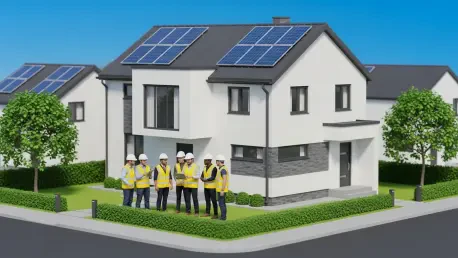

The traditional divide between luxury sustainable architecture and affordable urban development is beginning to collapse as innovative educational models prioritize environmental equity for low-income residents. In the village of Rantoul, Illinois, a group of dedicated students from the University of Illinois has launched a pioneering initiative known as “Beacon,” which seeks to prove that high-efficiency living is a right rather than a privilege. By constructing a net-zero residence designed specifically for a local family, these aspiring professionals are tackling the dual crises of housing insecurity and climate change through direct physical intervention. This project is not merely a theoretical exercise but a functional proof-of-concept that integrates solar energy harvesting with advanced insulation techniques to ensure that the home generates more electricity than it consumes annually. As urban centers across the Midwest struggle with rising utility costs and aging infrastructure, this net-zero model offers a scalable solution for community revitalization.
Interdisciplinary Methods: Technical and Social Integration
Building a residence that achieves a net-zero energy balance requires a complex synthesis of architectural design, civil engineering, and modern construction management techniques that few traditional classrooms can provide. The students involved in the “Beacon” project represent a diverse array of academic backgrounds, ranging from landscape architecture to energy systems and construction management. This multidisciplinary team works closely with professional contractors to navigate the intricate requirements of installing all-electric heating and cooling systems while maintaining structural integrity. By selecting high-performance materials like triple-pane windows and high-density spray foam insulation, the team ensures the building envelope remains airtight, which significantly reduces the energy load required to maintain comfortable indoor temperatures. The integration of rooftop photovoltaic panels serves as the primary power source, turning the house into a mini-power plant that offsets the carbon footprint of its occupants.
The partnership with Habitat for Humanity ensures that the physical structure serves a tangible social purpose by providing a permanent home for a family that might otherwise be priced out of the high-efficiency market. This collaboration allows students to move beyond digital blueprints and engage in the grueling reality of on-site labor, from pouring foundations to wiring complex electrical circuits. Faculty advisors, including Mark Taylor, emphasize that this hands-on experience is essential for developing the next generation of architects who understand the fiscal constraints of real-world development. By focusing on long-term affordability through the elimination of gas bills and the reduction of electricity costs, the project demonstrates how sustainable design can provide lasting financial stability. This approach bridges the gap between academic research and community needs, fostering a sense of social responsibility that is often missing from traditional engineering curricula.
Economic Scalability: Challenges and Future Outlook
While the technical success of the “Beacon” house is evident, broader industry adoption of net-zero affordable housing faces significant hurdles related to the supply chain and the procurement of specialized building materials. Student leaders, such as Amrit Agarwal, have noted that the current market price for high-efficiency components remains a barrier to large-scale implementation without philanthropic or institutional support. To combat these challenges, the team is documenting every aspect of the construction process to create a reproducible blueprint that can be utilized by other non-profit organizations and municipal developers. They have already taken steps to subdivide adjacent land in Rantoul, envisioning a future where this single home evolves into a fully sustainable, community-oriented neighborhood. By analyzing the data from 2026 to 2028, researchers hope to identify specific cost-saving measures that will allow private developers to see the economic viability of green building in underserved communities.
The completion of the Rantoul project signaled a significant shift toward prioritizing environmental stewardship and social equity within the field of modern architectural education. Moving forward, the industry must focus on standardizing these green building practices by incentivizing the production of low-cost, high-performance insulation and solar technologies to ensure they are accessible to all income brackets. Municipalities should consider updating zoning laws to encourage the development of net-zero communities, which would foster greater urban resilience and lower the long-term burden on local power grids. The “Beacon” initiative successfully proved that interdisciplinary collaboration between universities and non-profits could deliver high-quality, sustainable housing solutions that effectively addressed both financial and ecological concerns. By transforming academic theories into a habitable reality, these students provided a concrete roadmap for future urban planners who aim to integrate renewable energy into the fabric of residential infrastructure.