
I’m joined today by Luca Calaraili, a construction expert whose extensive background in design and architecture is matched only by his passion for technological innovation in the industry. We’re here to unpack the significant regulatory shifts proposed by the EPA, specifically concerning the definition of “waters of the United States,” or WOTUS. This conversation will explore the real-world implications of these changes, moving beyond legal jargon to understand how new standards for “relatively permanent” waters and “continuous surface connections” are reshaping site assessments. We’ll also delve into the practical effects of major exclusions for features like ditches and subsurface drains, and ultimately, look ahead to what this evolving regulatory landscape means for the future of land development.
The proposed rule defines jurisdictional waters as “relatively permanent” bodies of water tied to a region’s “wet season.” How does this change the on-the-ground assessment process for consultants, and what does it mean for features like ephemeral streams that only flow briefly?
It fundamentally changes the starting point for any site assessment. Before, we were often stuck in a gray area, trying to prove or disprove a “significant nexus,” which was a very broad and often subjective analysis. Now, the focus is on tangible, observable evidence tied to a specific timeframe—the “wet season.” For consultants in the field, it means less time spent on complex modeling of potential downstream effects and more time on establishing a clear hydrological baseline for that specific geographic region. You’re physically looking for evidence of sustained flow. For those ephemeral streams, the change is dramatic. Imagine a gully that only flows for a few weeks after the heaviest rains. If the defined wet season for that region is, say, three months long, and that stream is only flowing for one of those months, it would now very likely be considered non-jurisdictional. This clarity removes a huge layer of uncertainty that used to stall projects right at the starting line.
With the shift from a “significant nexus” analysis to a two-part test requiring a “continuous surface connection,” how does the evaluation of wetlands change? Could you walk through how a project site with wetlands near a stream would be analyzed differently now?
The evaluation of wetlands becomes much more direct and, frankly, more logical. The old “significant nexus” test was incredibly broad. You could have a wetland that was a good distance from a stream, with no visible surface connection, but if an analyst could argue it had some chemical or biological effect on the jurisdictional water downstream, it could get pulled into federal oversight. It was a massive headache. Now, the process is streamlined into a clear, two-part test. First, does the water body in question exhibit relative permanence during the wet season? Second, does the wetland have a continuous, unbroken surface connection to that jurisdictional water? So, picture a project site with a small stream we know is jurisdictional. Nearby, there’s a marshy area. Before, we’d have to conduct a detailed study to see if that marsh filtered water that eventually seeped into the stream. Now, the question is simple: Can you walk from the edge of that marsh to the bank of the stream without leaving saturated ground? Is there a visible, physical connection? If the answer is no, it’s not jurisdictional. It’s a black-and-white distinction that replaces a very murky, interpretive process.
A significant proposed change excludes ditches excavated in dry land from jurisdiction, even if they have permanent flow. Can you describe a practical scenario where this specific exclusion could dramatically alter a project’s scope, timeline, and budget?
This is one of the most impactful changes for development, especially in agricultural or previously developed areas. Let’s imagine a developer is looking at a 100-acre parcel of former farmland for a new residential community. The property is crisscrossed with drainage ditches that were dug decades ago to make the land suitable for crops. Under the old rules, if those ditches collected enough runoff and groundwater to have relatively permanent flow and eventually connected to a jurisdictional stream, they could be classified as “waters of the U.S.” Suddenly, every road crossing, every utility line that had to go over or under those ditches, would require a federal permit from the Army Corps of Engineers. This could add a year or more to the project timeline and tens, if not hundreds, of thousands of dollars in consulting and mitigation costs. With the new rule, because those ditches were excavated in dry land, they are explicitly excluded. The developer can now design the site with far more freedom, significantly reducing the permitting burden, accelerating the construction schedule, and ultimately lowering the cost of the project.
The rule also explicitly excludes subsurface drainage systems. What practical challenges did developers face with these features before, and how does this clarification streamline the permitting process and reduce risk for projects on land with tile or french drains?
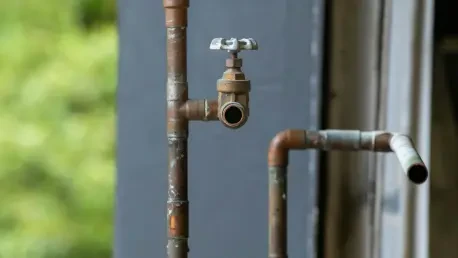
The ambiguity around subsurface systems was a source of constant risk. Groundwater itself was never considered jurisdictional, but the systems that channeled it were in a regulatory no-man’s-land. Developers on sites with old agricultural tile drains or French drains around existing structures faced a real dilemma. If that subsurface system collected groundwater and discharged it into a ditch or stream, there was always a risk that a regulator could argue it was creating a connection that established jurisdiction. This could lead to unexpected permitting requirements popping up late in the design phase, causing costly delays and redesigns. The new rule provides absolute clarity by stating that groundwater drained through these systems is not jurisdictional. This removes that risk entirely. For a developer, it means they can confidently assess a property knowing that existing, man-made subsurface drainage won’t suddenly trigger a complex and expensive federal permitting process. It streamlines due diligence and makes redevelopment of such properties far more predictable and financially viable.
What is your forecast for how the WOTUS rule, if codified, will impact land development and construction activity over the next five years?
My forecast is one of cautious optimism, focused on increased clarity and predictability. If this rule is codified and withstands the inevitable legal challenges, it will provide a much more stable regulatory foundation for the entire industry. For the next five years, I see developers and investors being more confident in acquiring land, particularly parcels that were previously considered risky due to ambiguous water features. The streamlined analysis will reduce upfront due diligence costs and shorten project timelines, which could help ease the pressure on housing and infrastructure development. We’ll likely see a reduction in the number of projects needing federal Clean Water Act permits, which frees up both private and public resources. However, it’s crucial to remember this doesn’t eliminate environmental responsibility; it clarifies federal jurisdiction. State and local regulations will become even more important, and responsible developers will continue to be mindful of water resources. The biggest impact will be the shift from regulatory uncertainty to manageable risk, which is a powerful catalyst for smart, efficient, and sustainable construction.