
The regeneration of Park Hill in Sheffield stands as a testament to the power of reimagining architectural heritage. Once a symbol of post-war social housing, this Grade II*-listed brutalist icon is being transformed into a vibrant, mixed-use community through a complex collaboration between Urban Splash, Places for People, and Great Places Housing Group. With a focus on architectural integrity and social inclusivity, the project is now entering its fourth and fifth phases, integrating modern sustainability with historic preservation. This interview explores the logistical and strategic nuances of breathing new life into such a massive landmark while maintaining a commitment to affordable housing and community-centric design.
With the fourth phase of Park Hill delivering 30 affordable units out of 125, what specific logistical challenges arise when integrating affordable housing into a Grade II-listed landmark, and how does the design process balance historical preservation requirements with the need for modern features like EV charging and secure cycle storage?*
Working within the constraints of a Grade II*-listed concrete frame requires a surgical approach to construction. We are dealing with a structure that has a very rigid identity, so integrating 30 affordable units into the 125-home allocation of Phase 4 means we must ensure that the quality of finish and thermal performance is indistinguishable across all tenures. The logistical hurdle often lies in the “streets in the sky” layout, where we have to thread modern infrastructure—like the wiring for EV charging points and high-capacity secure cycle storage—through historic conduits without scarring the original aesthetic. You can feel the weight of history when you are on-site, touching the weathered concrete while trying to install the latest energy-efficient windows. It is a delicate dance between honoring the raw, honest architecture of the 1960s and meeting the stringent sustainability demands of the 2020s.
This project involves a complex joint venture between multiple partners. How do these partnerships typically manage the allocation of the £6.4 million investment from Homes England, and what metrics are used to measure the long-term success of such a collaborative funding model?
A joint venture of this scale operates on a foundation of shared risk and specialized expertise, particularly when managing a £6.4 million investment from Homes England. This funding is strategically funneled into the acquisition of homes and the essential infrastructure that makes a neighborhood functional, such as enhanced public realms and car club facilities. We measure success not just through the immediate delivery of the 125 units in this phase, but through the long-term social value created by the 24% affordability ratio we’ve established. Long-term success is tracked through “tenure blindness,” where the satisfaction of a resident in an affordable unit is identical to that of a market-rate owner. When you see the diverse mix of people interacting in the communal spaces, you realize the true return on investment isn’t just financial—it’s the restoration of a social fabric that had been torn for decades.
Park Hill has already seen the delivery of 455 homes and significant student accommodation. Looking at the broader neighborhood transformation, how do you curate the 50,000 square feet of commercial space to ensure it supports independent businesses while fostering a genuinely inclusive community atmosphere?
Curating 50,000 square feet of commercial space is less about filling units and more about “placemaking” to ensure the neighborhood feels alive 18 hours a day. We’ve been very intentional about bringing in anchors like the South Street Kitchen and the Grace Owen Nursery, which serve the 455 existing households and 356 students already living here. There is a specific sensory goal in mind: the smell of fresh coffee and the sound of children playing creates an atmosphere of permanence and safety. We avoid large chains in favor of independent businesses that have a stake in the local community, ensuring the commercial hubs act as a “third space” where residents can mingle. This strategy ensures that Park Hill isn’t just a place where people sleep, but a destination where they build lives and support local entrepreneurs.
The upcoming fifth phase is set to introduce 105 homes across diverse formats like duplexes and townhouses. What is the strategic reasoning behind diversifying the housing types at this stage, and how do you ensure these new structures maintain the design integrity established in the previous four phases?
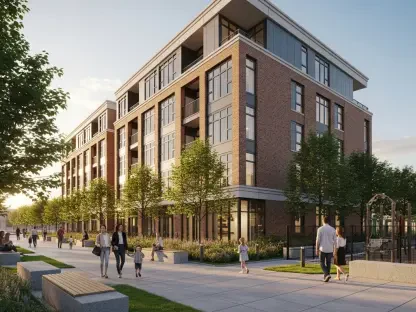
The decision to include 105 homes in the fifth phase—comprising apartments, duplexes, and townhouses—is a direct response to the maturing needs of our residents. In the earlier stages, we focused heavily on establishing a residential core, but as the community grows, we need “move-up” options for growing families who want to stay in Park Hill but need more square footage. By introducing townhouses, we are breaking the monolithic feel of the estate while using the same material palette to maintain visual continuity. The design integrity is preserved by mirroring the rhythmic patterns of the original brutalist facades, ensuring that even the newest duplexes feel like they were always part of the master plan. It’s about creating a “lifecycle community” where someone can start in a one-bedroom apartment and eventually move into a townhouse without ever leaving the neighborhood they love.
Public realm improvements are a central component of this latest development cycle. Beyond simply adding greenery, what are the step-by-step considerations for designing outdoor spaces that successfully connect residential units with commercial hubs?
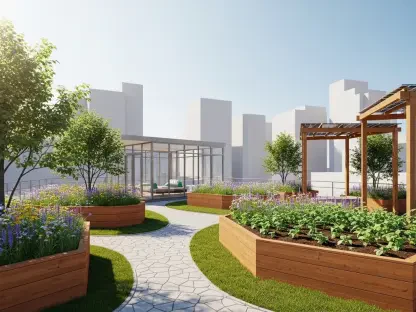
Designing the public realm at Park Hill starts with analyzing the “desire lines”—the natural paths people take when moving from their front doors to the commercial hubs or the nearby city center. We don’t just plant trees; we create specific outdoor “rooms” that encourage people to linger, which significantly boosts the marketability of both the affordable and market-rate units. The first step is hardscaping for accessibility, ensuring that the steep topography of the site is navigable for everyone, followed by the integration of soft landscaping to soften the concrete’s edge. We also prioritize lighting and sightlines to ensure that the transition from a private home to a public square feels safe and inviting at all hours. This infrastructure acts as the glue of the development, transforming a series of buildings into a cohesive, walkable urban village.
What is your forecast for the future of large-scale urban regeneration projects in the UK?
I believe we are entering an era where regeneration will no longer be about “out with the old, in with the new,” but rather a sophisticated repurposing of existing carbon-heavy structures. Projects like Park Hill prove that we can take the most challenging, unloved concrete landmarks and turn them into the most sought-after postcodes in the country. My forecast is that we will see a dramatic increase in heritage-led, mixed-tenure developments where social infrastructure—like nurseries and independent kitchens—is integrated from day one rather than as an afterthought. Success in the next decade will be defined by how well we can blend high-density living with high-quality green space, all while maintaining a commitment to 20% to 30% affordability to keep our cities accessible to everyone.