
With a career built on navigating the complexities of modern construction and a passion for architectural innovation, Luca Calaraili offers a unique perspective on the industry’s most ambitious projects. He has an extensive background in bringing technologically advanced and sustainable designs to life. In this conversation, we explore the multifaceted renovation of the iconic Milton S. Eisenhower Library at Johns Hopkins University. Luca provides an inside look at the challenges of modernizing a mid-century, subterranean structure, the intricate process of introducing dramatic new architectural features like a glass roof, and the stringent demands of building to “net-zero ready” standards. He also shares his insights on managing the complex timeline and coordination required to transform this landmark into a cutting-edge facility for the future.
Your team recently marked the start of vertical construction on the $104M library renovation after completing demolition. What specific challenges did you overcome during the demolition of a 1964 building, and how does this new phase change the day-to-day logistics on site?
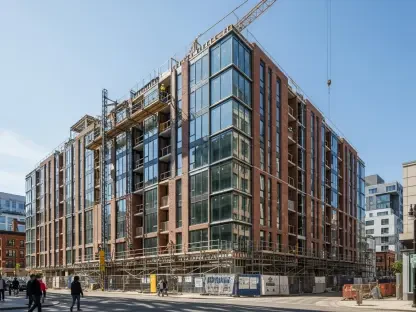
Taking apart a building from 1964, especially one so significant, is far more surgical than simply swinging a wrecking ball. You’re peeling back layers of history, and you have to be incredibly careful. The primary challenge was working within the tight confines of an existing structure, especially with the four subterranean levels, to selectively remove interiors and systems without compromising the core building. Now, as we transition to vertical construction, the entire rhythm of the site has shifted. The sound of demolition has been replaced by the hum of cranes and the careful placement of steel. Instead of hauling debris out, we’re orchestrating a constant flow of new materials in. Our “Slab on Grade” celebration really marked that mental and logistical pivot; we’re no longer removing the past but actively building the future from the ground up.
The original library features four levels below grade. Could you describe the unique engineering and logistical complexities involved in modernizing such a significant subterranean structure, particularly when it comes to installing new MEP systems and building envelope upgrades?
Working four stories underground presents a monumental set of challenges. You’re essentially operating in a massive concrete box with limited access. The most significant complexity is threading entirely new mechanical, electrical, and plumbing systems through a structure that was never designed for them. It requires meticulous planning and precision to core new pathways for ductwork and conduits. Furthermore, upgrading the building envelope this far below grade is critical for moisture control and energy efficiency. It involves specialized waterproofing techniques and ensuring the integrity of the foundation as we integrate new elements. It’s a far cry from a typical new build where you have open space; here, every move is constrained by the existing 183,746-square-foot footprint.
The updated design includes a glass roof and a two-story reading room to bring more light into the building. From a construction standpoint, what structural modifications are required, and how do you sequence this work to maintain the integrity of the existing structure?
Introducing a glass roof and a soaring two-story reading room into a 1964-era building is a massive structural undertaking. It’s not as simple as cutting a hole. We first have to reinforce the existing columns and footings to support the new loads from the roof and features like the new wishbone staircase. The sequencing is absolutely critical. We strategically install temporary shoring to support the structure while we carefully dismantle sections of the old roof and floor slabs. Only then can we begin erecting the new steel framework that will form the reading room and support the glass roof. It’s a highly choreographed process to ensure we never compromise the building’s stability while we open up its core to the sky.
This is the first project to follow Johns Hopkins’ new High-Performance and Healthy Buildings Guidelines, targeting LEED Gold. How does this “net-zero ready” goal influence your material choices and installation methods compared to a standard renovation? Please provide a specific example.
The “net-zero ready” goal and LEED Gold target fundamentally change our approach from day one. Every decision is viewed through the lens of long-term performance and sustainability, not just initial cost or function. This goes far beyond simply choosing efficient light bulbs. For example, when it comes to the building envelope upgrades, we aren’t just restoring the windows. We are installing high-performance glazing systems with specific coatings and thermal breaks that dramatically reduce energy loss. These systems are integral to achieving that “net-zero ready” status. It requires more precise installation methods to ensure a perfect air and moisture seal, something that is a top priority on a project like this compared to a standard renovation where the focus might be more on aesthetics alone.
With a projected completion in fall 2026, what are the most critical milestones your team must hit in the coming months? Could you walk me through the coordination required between your team and your trade partners to keep this complex project on schedule?
To hit our fall 2026 completion date, the next few months are all about the structure. Our most critical milestone is getting the new structural steel erected and completing the building envelope, especially that new glass roof. Getting the building watertight before the weather turns is paramount. After that, the focus shifts to the massive undertaking of the MEP rough-in. The coordination is like conducting an orchestra. We have daily huddles and intensive weekly planning sessions with all our trade partners. We meticulously map out every phase to ensure the electricians, plumbers, and HVAC teams can work seamlessly around the structural and finishing crews. It’s a constant, dynamic conversation to prevent conflicts and keep the momentum going on this $104 million project.
What is your forecast for large-scale university library renovations?
I believe we’ll see a continued shift away from libraries as just quiet repositories for books and toward dynamic, multi-functional hubs for innovation and collaborative learning. Future renovations will follow this project’s lead, focusing on maximizing natural light, creating highly flexible spaces, and deeply integrating technology. Most importantly, the push for sustainability will intensify. We’ll see more universities adopting ambitious goals like LEED Gold and “net-zero ready” status for their flagship buildings, using these projects to showcase their commitment not only to student success but also to environmental stewardship.