
The evolution of a small local contracting firm into a dominant national force requires more than just mechanical skill; it demands a rare fusion of long-term vision and an unwavering commitment to human capital. When Rob Moore first stepped onto a construction site in 1976, the industry operated on much smaller margins and far simpler logistical frameworks than the multi-billion-dollar infrastructure ecosystems of 2026. Over the course of five decades, Moore transitioned through every major executive role, from Chief Operating Officer to CEO, effectively steering the organization through various economic cycles and technological shifts. His career represents a blueprint for organizational scaling, demonstrating that the secret to becoming a top-tier contractor lies in the ability to maintain a boutique-level focus on client trust while managing the complex operations of a massive national enterprise. By prioritizing the development of a culture rooted in accountability, Moore turned a regional player into a powerhouse that now commands eighteen offices across nine states.
The Foundation of Sustainable Corporate Growth
Cultivating a Culture of Personal Accountability
The bedrock of any enduring construction firm is the level of trust established between the leadership and the boots on the ground. Moore championed a “people-first” philosophy that transcended the typical corporate buzzwords, embedding a sense of ownership within every project manager and site supervisor. This approach focused on the idea that construction is not merely about assembling steel and concrete, but about providing solutions rather than excuses when challenges arise. By fostering an environment where integrity and discipline were non-negotiable, the company was able to build a reputation that preceded its entry into new markets. Employees were encouraged to view themselves as partners in the firm’s success, which led to high retention rates and a consistent quality of work that became a primary selling point for the brand. This internal stability allowed the firm to focus on external expansion without the risk of cultural dilution that often plagues rapidly growing companies.
In an industry often characterized by adversarial relationships between contractors and clients, Moore insisted on a radical transparency that prioritized long-term partnerships over short-term profits. This ethical framework was not just a moral choice but a strategic one, as it created a recurring revenue stream from satisfied developers and government agencies. By 2026, this legacy of trust has translated into over 400 industry awards, signaling to the market that the organization is a safe and reliable steward of complex capital. The discipline instilled by Moore ensured that every office, regardless of its distance from the corporate headquarters, operated under the same rigorous standards of excellence. This consistency is what allowed the firm to climb into the ranks of the Top 100 contractors nationally, as clients knew they could expect the same level of performance in a new territory as they did in the original home office.
Strategic Infrastructure and Large-Scale Operations
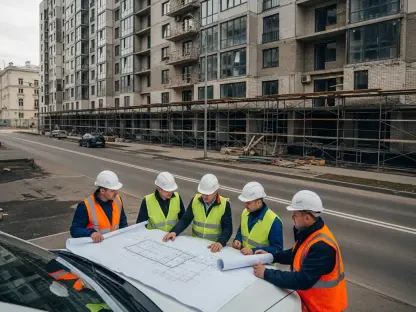
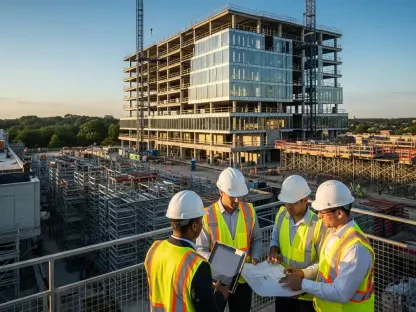
Transitioning from local residential or light commercial work to massive infrastructure projects requires a significant leap in operational sophistication and risk management. Moore was instrumental in navigating this transition, overseeing the acquisition and execution of high-profile contracts that redefined regional landscapes, such as the redevelopment of major international airports. These projects demand a level of logistical precision and safety coordination that few firms can master, yet Moore’s focus on disciplined execution ensured these milestones were met with professional grace. The ability to manage thousands of workers and hundreds of subcontractors across multi-year timelines became a hallmark of his tenure. By investing in the right technology and project management software early on, he ensured that the firm could scale its administrative capabilities alongside its physical footprint, preventing the operational bottlenecks that often stifle growth.
The success of these large-scale endeavors was largely due to a decentralized management style that empowered local office leaders while maintaining a centralized core of values and financial oversight. Moore recognized that a national powerhouse cannot be micromanaged from a single desk; instead, it must be a network of highly capable teams that share a unified vision. This organizational structure allowed the company to be agile in local markets while leveraging the massive bonding capacity and procurement power of a national entity. As the firm expanded into nine states, this model proved resilient against regional economic fluctuations, as the diverse portfolio of projects provided a natural hedge against localized downturns. The result was a multi-billion-dollar annual revenue stream that remained steady even during periods of broader market volatility, cementing the firm’s status as a leader in the engineering and construction sector.
Future-Proofing the Organization Through Leadership
Transitioning Power and Succession Planning
Longevity in leadership is a rare commodity in the modern corporate landscape, and Moore’s fifty-year journey provided a stable anchor for the company’s long-term strategic planning. One of his most significant contributions was the intentional and seamless transition of power to the next generation of executives. By identifying and mentoring successors like Cory Moore long before his departure, Rob Moore ensured that the transition would not cause a dip in performance or a shift in corporate values. This process involved a gradual handover of responsibilities, allowing the new leadership team to gain confidence and establish their own rapport with key stakeholders while still having access to Moore’s deep well of institutional knowledge. This type of succession planning is critical for maintaining client confidence, as it signals that the firm’s success is built on a durable system rather than the charisma of a single individual.
The modern construction environment of 2026 demands leaders who are as comfortable with data analytics and sustainable building practices as they are with traditional craftsmanship. Moore’s mentorship focused on blending these new requirements with the timeless principles of hard work and loyalty. By empowering his teams to innovate, he created a self-sustaining ecosystem where new ideas could bubble up from the field and be integrated into the company’s broader strategy. This forward-thinking approach to leadership development meant that by the time he stepped back, the organization was already positioned to tackle the challenges of the next decade. The focus remained on being the “most sought-after” company, a goal that requires constant evolution and a refusal to rest on past achievements. This culture of continuous improvement is perhaps the most enduring part of his professional legacy, ensuring the firm remains competitive in an increasingly automated industry.
Actionable Strategies for Industry Excellence
To replicate the success seen during Moore’s tenure, current and aspiring construction leaders must prioritize the institutionalization of integrity across all levels of their operations. The first actionable step is to move beyond transactional relationships with both employees and clients, instead investing in long-term engagement programs that reward loyalty and high performance. Companies should establish internal training academies that not only teach technical skills but also emphasize the “people-first” philosophy that drives customer satisfaction. Furthermore, firms must embrace a disciplined approach to geographic expansion, ensuring that the corporate culture is fully matured in an existing market before attempting to plant a flag in a new one. This prevents the “thinning” of talent and ensures that the brand’s reputation remains untarnished as the footprint grows.
Looking ahead, the integration of advanced project management technologies must be balanced with the human element of the construction business. Leaders should use data to improve safety and efficiency, but they must never allow technology to replace the personal touch required to build trust with a project owner. Another key takeaway is the importance of a proactive succession strategy; organizations should begin identifying their leaders for 2030 today, providing them with the cross-departmental experience necessary to manage a complex, national organization. By focusing on these core pillars—integrity, disciplined growth, and intentional mentorship—construction firms can build a foundation that lasts for fifty years and beyond. The shift toward more sustainable and technologically integrated building methods will only be successful if it is supported by the same fundamental principles of hard work and accountability that Moore championed throughout his distinguished career.