
Strategic collaborations between public entities and private enterprise have become the definitive catalyst for progress, fundamentally reshaping Monongalia County’s economic landscape and community infrastructure throughout 2025. By skillfully leveraging public funds to attract significant private investment, the county has embarked on a series of ambitious initiatives that are modernizing its urban core, expanding its commercial footprint, and bridging the digital divide for its residents. This powerful synergy has moved beyond theoretical planning to tangible execution, yielding transformative projects that promise to enhance the quality of life and create a more attractive environment for future growth. From the revitalization of downtown Morgantown to the extension of critical utilities and high-speed internet into rural areas, this partnership model has proven to be the primary engine driving the region forward into a new era of development and opportunity.
A New Vision for Urban Living
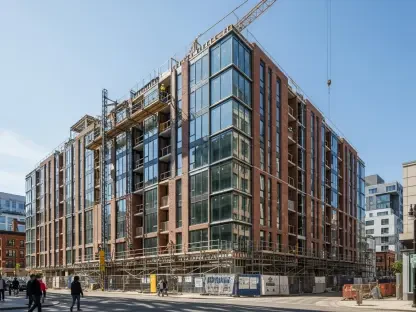
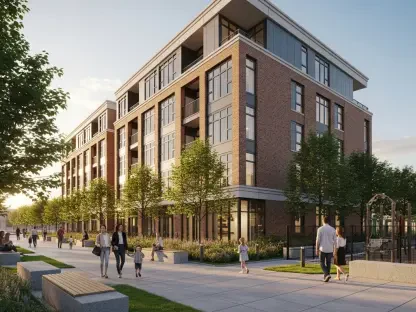
The most prominent example of this transformative approach is the East End Village project, an urban renewal initiative of unprecedented scale that is set to become the single largest private investment in Morgantown’s history. This ambitious undertaking, a joint effort involving the Monongalia County Development Authority and master developer Biafora Holdings, with backing from the city, county, and West Virginia University, aims to completely reimagine a 9.5-acre hillside adjacent to downtown. The vision is to replace a stretch of deteriorating student rental properties with a modern, vibrant, mixed-use community. The comprehensive plan calls for a dynamic blend of market-rate housing situated above street-level retail suites, alongside standalone commercial anchors such as a much-needed grocery store and a boutique hotel. When fully realized, the total private investment in this landmark development is projected to exceed a remarkable $100 million, signaling a profound vote of confidence in the city’s future and establishing a new standard for urban living in the region.
The year 2025 proved to be a pivotal period for East End Village, marked by several crucial advancements that moved the project from concept to near-reality. The year began with the visible sign of progress as demolition crews cleared the last of the 58 aging houses from the site, preparing the ground for new construction. However, the most significant milestone occurred late in the year when the West Virginia Department of Economic Development officially approved the creation of a new Tax Increment Financing (TIF) district specifically for the project. This financial tool is essential, as it allows the anticipated growth in property tax revenue generated by the new development to be captured and reinvested directly into financing the public infrastructure required to support it, such as roads, utilities, and public spaces. With this critical state-level approval secured, the focus has now shifted to the local level, where Morgantown City Council is set to formalize the new district, paving the way for the development authority and the city to draft a comprehensive developer agreement that will meticulously outline construction priorities and architectural standards.
Navigating Growth and Financial Hurdles
Simultaneously, the WestRidge development, already distinguished as one of West Virginia’s most successful TIF districts, continued to serve as a major hub of economic activity and a case study in the complexities of large-scale partnerships. The commercial outlook for the area remained exceptionally strong throughout 2025, reinforcing its appeal to major national brands. Construction began on the state’s second Dave & Buster’s location in the fall, following the successful spring opening of an Academy Sports & Outdoors, both of which diversified the retail and entertainment offerings at the WestRidge Business & Retail Park. The financial engine of the development, its TIF district, also performed robustly. County officials reported in October that sales tax collections were experiencing their strongest months on record, trending approximately 28% ahead of the previous year’s figures. Projections indicated that annual collections could reach $14 million, a substantial increase that reflects the area’s sustained commercial vitality and its significant contribution to the county’s economic base.
This climate of success was contrasted by unexpected news in August when the developer’s primary entities filed for Chapter 11 bankruptcy. However, the developer quickly clarified that this was not a consequence of poor performance but a strategic and defensive legal action designed to protect the project’s long-term health from lenders attempting to force the entities into receivership. This assurance to the County Commission underscored a commitment to safeguarding stakeholder interests and, crucially, ensuring that vital public infrastructure projects partnered with the county would proceed without material impact or delay. This development highlighted the intricate financial balancing acts inherent in such massive undertakings and tested the resilience of the public-private relationship, which ultimately held firm. The commitment to shared goals allowed progress to continue, demonstrating that even significant financial challenges could be navigated without derailing the overarching mission of community improvement and economic expansion.
This commitment was most evident in the continued progress on two major infrastructure initiatives despite the complex financial situation. Work moved forward on a monumental $135 million overhaul of the I-79 Exit 155 interchange, a project financed through a three-way agreement between the state, a federal MEGA Grant, and contributions from WestRidge and the county. Weekly meetings between the developer and the West Virginia Division of Highways ensured the design phase remained on track for its targeted completion. The second initiative, a $14 million water and sewer upgrade project crucial for future development, faced a direct challenge when the bankruptcy created a payment issue. The Morgantown Utility Board requested the county cover a shortfall left by the developer. In a demonstration of good faith, the developer stepped up, making an $800,000 payment in November and scheduling another $1 million payment for December. These essential upgrades, which include new water lines, river crossings, and a new storage tank, are vital for supporting continued growth not only at WestRidge but also in the adjacent Chaplin Hill area.
Bridging the Digital Divide
After more than four years of dedicated planning and strategic investment, the Monongalia County Commission’s ambitious initiative to expand broadband access began delivering on its promise in 2025, connecting homes in previously unserved and underserved parts of the county. The success of this effort hinged on a highly effective public-private partnership model. The commission allocated approximately $8 million of its federal American Rescue Plan Act (ARPA) funds not to build a network itself, but to leverage the expertise and resources of established Internet service providers. This public seed money was instrumental in securing over $20 million in total broadband deployment from private partners, namely Comcast and Frontier Communications. By using the federal funds as a catalyst rather than the sole source of funding, the county was able to maximize the impact of its investment, ensuring a far greater reach and a more sustainable long-term solution for bridging the region’s digital divide and bringing modern connectivity to its most rural residents.
In November, the partnership with Frontier Communications achieved a significant milestone as the company began “lighting up” homes with its newly installed fiber optic network, with some 70 customers signing up for service in the initial rollout. One of the first projects to be completed involved a total cost of over $953,000, with the county commission’s contribution of more than $791,000 covering the majority of the expense. This investment funded the installation of over 11 miles of high-speed fiber optic cable, providing a direct connection to approximately 80 specific locations that previously lacked reliable internet. Just as importantly, the new infrastructure made service readily accessible to an additional 170 nearby properties, creating a ripple effect of connectivity that extended far beyond the initial targeted homes. This tangible progress marked the successful transition from planning to implementation, delivering a critical utility that is essential for education, remote work, and economic participation in the modern world.
The county’s collaboration with Comcast also advanced on multiple fronts, highlighted by a major project announced in 2024 that gained significant momentum in 2025. In this ambitious undertaking, a county contribution of just under $6 million successfully leveraged an $11.84 million investment from Comcast to extend its network to more than 2,100 homes and businesses. This large-scale deployment placed a particular focus on the western end of the county, which has historically had the most significant gaps in high-speed internet availability. In addition to this flagship project, several smaller, more targeted Comcast initiatives were underway to bring service to specific areas, including Stewarts Run and River Road. The implementation timeline for these projects anticipated that many would conclude by the spring, with residents and businesses being connected on a rolling basis as new segments of the fiber network became operational in their neighborhoods, progressively closing the connectivity gap across the county.
A Foundation for Future Prosperity
The strategic deployment of public-private partnerships in 2025 fundamentally altered the trajectory of development within Monongalia County. These collaborations did more than just fund individual projects; they established a new and effective framework for achieving large-scale community goals. The tangible progress on initiatives like East End Village, the WestRidge infrastructure, and the county-wide broadband expansion created a powerful momentum that fostered a renewed sense of confidence among residents, investors, and public officials. By successfully navigating complex financial hurdles and maintaining a steadfast focus on shared objectives, the county and its private partners demonstrated a remarkable level of resilience and commitment. This track record of accomplishment laid a robust foundation for future prosperity, proving that a cooperative approach could overcome long-standing challenges and unlock the region’s full potential for sustainable growth and enhanced quality of life.