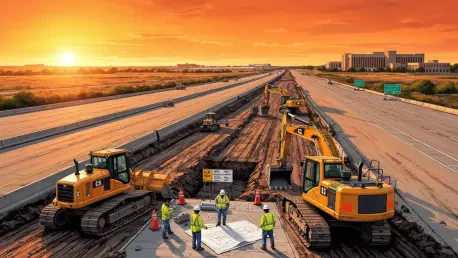

What happens when a critical highway can no longer keep pace with a booming population and surging freight demands? In the heart of Texas, a 12-mile stretch of State Highway 6 (SH-6) in Bryan and College Station has become the focal point of a monumental $671 million reconstruction project led by Fluor, an Irving-based contractor. Kicked off with a groundbreaking ceremony on November 20, 2025, this ambitious endeavor promises to redefine connectivity in the region. Far beyond mere pavement, it’s a catalyst for safer travel, economic growth, and emergency preparedness in one of the state’s busiest corridors.
A Vital Lifeline for the Texas Triangle
The significance of SH-6 cannot be overstated. This north-south artery links Texas A&M University in College Station to surrounding Brazos County communities, serving as a cornerstone of the Texas Highway Freight Network and the Texas Highway Trunk System. More critically, it’s a designated Hurricane Evacuation Route, making its reliability a matter of life and death during natural disasters. With Texas’s population swelling and national highway investments climbing by 22.9% over the past year, the timing of this project underscores a desperate need to modernize aging infrastructure. It’s not just a local fix—it’s a model for tackling transportation challenges across high-traffic regions nationwide.
The Blueprint for a Better Highway
At the core of this initiative is a plan to widen SH-6 from two lanes to three in each direction, a transformation set to wrap up by the end of 2030. This expansion targets the daily grind of commuters and the relentless flow of freight haulers navigating the Texas Triangle. Congestion that once slowed progress to a crawl will soon give way to smoother, more efficient travel, easing the burden on a corridor that’s long outgrown its capacity.
Beyond sheer size, the project embeds safety and resilience into every mile. Enhanced design features aim to cut down on accidents while fortifying SH-6’s role during emergencies like hurricanes. When disaster strikes, this highway will stand as a dependable escape route, ensuring faster evacuations for thousands of residents.
Equally important is how this rebuild knits communities closer together. By improving access to Texas A&M University and nearby economic hubs, it paves the way for stronger ties between education and commerce. While exact traffic volume projections remain under study, the expected outcomes mirror successful highway expansions elsewhere, pointing toward a ripple effect of growth and opportunity.
Leadership Driving the Change
Shawn West, president of Fluor’s infrastructure business, captured the project’s potential with striking clarity: “This expansion will improve mobility, strengthen regional connectivity, and enhance safety and efficiency for all users.” His words reflect a vision shared by industry leaders who see infrastructure as a cornerstone of progress. For Fluor, this project marks a pivotal addition to their Texas portfolio, despite past profitability struggles on other major jobs like the I-635 LBJ East and I-35E in Dallas.
This effort also arrives at a crucial moment for contractors. As privately funded commercial construction slows, public projects like SH-6 offer a much-needed lifeline. Fluor’s commitment to navigating complex public works challenges shines through here, positioning them as a key player in shaping the state’s future roadways.
Lessons for Tomorrow’s Infrastructure
The SH-6 overhaul offers valuable insights for other regions grappling with outdated roads. It highlights the power of targeting multi-use corridors that serve commuters, freight, and emergency needs all at once. Aligning such projects with growth patterns ensures investments meet real demands, a strategy evident in this corridor’s focus on a booming area.
Moreover, the 22.9% national surge in highway groundbreakings signals a window of opportunity. Public funding can bridge gaps left by private sector slowdowns, a lesson for policymakers nationwide. For contractors, Fluor’s journey—marked by both triumphs and hurdles—underscores the need for sharp project management to balance public good with financial viability.
Reflecting on a Road Well-Traveled
Looking back, Fluor’s $671 million commitment to rebuilding SH-6 emerged as a defining chapter for Texas infrastructure. This project not only tackled immediate congestion and safety concerns but also set a precedent for strategic investment in critical corridors. As the highway took shape, its impact on regional connectivity became undeniable, proving that bold action could transform daily life.
Moving forward, the challenge lies in replicating this success elsewhere. Communities across Texas and beyond should push for upgrades to their own strained roadways, leveraging public investment trends to fund them. Policymakers must prioritize corridors with dual roles in commerce and crisis response, while contractors refine execution to ensure lasting value. This rebuilt highway stands as a reminder that infrastructure, when thoughtfully planned, builds more than roads—it builds stronger futures.