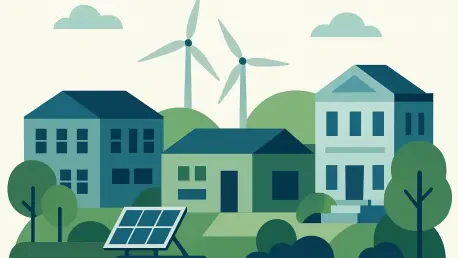

The European Investment Bank has reinforced its commitment to sustainable community development by finalizing a €200 million long-term loan agreement with Hemsö Fastigheter, a prominent Swedish developer specializing in properties for public use. This substantial financial arrangement is earmarked for the construction and extensive renovation of highly energy-efficient social infrastructure projects located in Sweden, Finland, and Germany. Representing the third major collaboration between the two entities, this initiative builds upon the successful foundations laid by previous agreements in 2018 and 2021, signaling a continued and deepening partnership focused on future-proofing essential public services. The core ambition of this venture is to tackle the pressing need for modern public facilities while simultaneously advancing rigorous environmental and climate action goals, creating a powerful synergy between social welfare and ecological responsibility across multiple European nations. This funding will directly support a portfolio of nine distinct projects designed to enhance community life and reduce the carbon footprint of the public sector.
A Strategic Partnership for Sustainable Development
Addressing Critical Infrastructure Needs
The loan agreement provides a crucial injection of capital into a diverse range of projects designed to meet the evolving needs of modern communities while addressing a legacy of underinvestment in public infrastructure. The funds are set to finance the development of nine key sites, including the ground-up construction of four new schools, a state-of-the-art health center, a municipal ice rink, and a new regional police headquarters. These new builds are complemented by the comprehensive renovation of two existing schools, tackling the dual challenges of aging building stock and the demand for contemporary, functional public spaces. This targeted investment directly confronts the issue of deteriorating facilities, ensuring that educational, healthcare, and recreational services are housed in environments that are not only safe and accessible but also conducive to learning, healing, and community engagement. By revitalizing these essential assets, the initiative aims to enhance the quality of public services and foster stronger, more resilient local communities across the three participating countries. This proactive approach ensures that vital social infrastructure keeps pace with societal demands and technological advancements.
Beyond the broad scope of educational and healthcare facilities, the financing underscores a growing recognition of security as a cornerstone of social infrastructure. A significant portion of the funds is allocated to the construction of a new regional police headquarters in Sweden, a project that aligns directly with the European Investment Bank’s recently expanded security and defense initiative. This investment is not merely about erecting a new building; it represents a strategic effort to bolster Europe’s security architecture from the ground up. By providing law enforcement with modern, efficient, and secure facilities, the project enhances their operational capabilities and their ability to ensure public safety. This focus on security infrastructure reflects a holistic understanding of community well-being, where access to safe public services is considered as vital as education and healthcare. The initiative demonstrates a multi-faceted approach to social investment, supporting climate action and community services while simultaneously addressing the continent’s evolving security needs in a tangible and impactful manner.
Championing Energy Efficiency and Climate Action
A central pillar of this financial operation is its unwavering commitment to ambitious energy performance standards, positioning the initiative as a leader in sustainable construction. All new buildings financed under the agreement are mandated to significantly exceed minimum legal energy-efficiency requirements, with a target of achieving an average energy performance that is more than 40% better than the applicable national baseline. This proactive stance ensures that the newly constructed schools, health center, and other facilities will operate with minimal environmental impact from day one. Furthermore, the two school renovation projects are projected to achieve dramatic energy savings, with an expected reduction in consumption of up to 50%. These stringent targets are in direct alignment with the European Union’s Energy Performance of Buildings Directive, actively supporting the continent-wide transition towards achieving Zero Energy Buildings by the 2028 deadline. This focus on high-performance design not only contributes to climate goals but also yields long-term economic benefits through lower operational and maintenance costs for public entities.
The project’s structure and objectives resonate perfectly with the European Investment Bank’s primary mandates of promoting Climate Action and Environmental Sustainability. Pilar Solano, a Director at the EIB, emphasized that investing in the energy efficiency of public buildings is one of the most effective strategies for concurrently reducing greenhouse gas emissions and strengthening the fabric of essential community services. This operation is designed to deliver a layered impact, contributing to climate mitigation while enhancing social infrastructure and promoting economic and social cohesion. By financing the modernization and construction of schools, healthcare facilities, and security centers to the highest environmental standards, the loan creates a virtuous cycle. It ensures communities have access to modern, high-quality public services, fortifies Europe’s security framework, and makes a substantial contribution to the EU’s broader environmental goals, showcasing a comprehensive model for sustainable public investment.
The Broader Implications and Future Outlook
A Model for Public-Private Financing
The €200 million loan agreement is not an isolated event but rather the latest chapter in a sustained and successful partnership between the European Investment Bank and Hemsö. As the third major operation following agreements in 2018 and 2021, it solidifies a proven model for leveraging public-private collaboration to deliver high-impact social infrastructure. This ongoing relationship highlights the EIB’s confidence in Hemsö’s capacity to develop and manage properties for public use effectively and sustainably. Nils Styf, CEO of Hemsö, affirmed that the expanded cooperation, now encompassing projects in Sweden, Finland, and Germany, is instrumental for the company. He noted that the loan not only diversifies Hemsö’s sources of financing but also critically enables its continued investment in sustainable social infrastructure, which remains a core strategic focus for both organizations. With a property portfolio valued at SEK 86.9 billion, Hemsö stands as Sweden’s leading private owner of facilities for nursing homes, education, healthcare, and the justice system, making this partnership a powerful engine for public good.
A Conclusive Step Forward
The finalization of this loan agreement marked a significant milestone in the journey toward a more sustainable and resilient Europe. It represented a tangible commitment to modernizing the very foundations of community life—our schools, healthcare centers, and public safety facilities—while embedding climate action into the core of public investment. The collaboration between the European Investment Bank and Hemsö provided a powerful blueprint for how long-term, strategic financing could effectively address multiple societal challenges at once. The initiative successfully integrated the goals of social cohesion, environmental sustainability, and regional security, demonstrating that these objectives were not mutually exclusive but deeply interconnected. This comprehensive approach set a new benchmark for future infrastructure projects, showcasing a viable and scalable pathway for other nations and private sector partners to follow. Ultimately, the impact of this investment was understood to extend far beyond the nine individual projects, creating a ripple effect that promised to strengthen communities and advance decarbonization efforts across the continent for years to come.