
Michael Donohue, a Skanska Koch veteran who began his journey with the firm as a superintendent back in 2000, is stepping into the role of General Manager. His appointment on January 1st marks a pivotal moment for the Skanska division, renowned for its work on iconic East Coast bridges and infrastructure. Taking the reins from Bill Matre, who has been with the company since 1982, Donohue brings a unique blend of on-the-ground experience and executive leadership to guide the company’s future. His tenure has seen him rise from project manager to vice president, and now he is tasked with overseeing all operations and steering long-term strategy.
You joined Skanska Koch in 2000 as a superintendent on the Brooklyn-Queens Expressway project. How did that initial on-the-ground experience shape your leadership style, and what specific lessons from that project will you bring to your new role overseeing the firm’s overall operations?
Starting on a project as intense and complex as the BQE was a true baptism by fire. You’re not just managing steel and concrete; you’re managing the lifeblood of a city. I remember the constant hum of traffic and the sheer scale of the operation. That experience taught me, in a very real way, that leadership isn’t about issuing orders from an office. It’s about being in the trenches with your team, understanding their challenges, and trusting their expertise. The most important lesson was that every single person is critical to success. I carry that sense of shared ownership and respect for the craft with me, and it will be the bedrock of how I oversee our operations.
Your predecessor, Bill Matre, successfully led Skanska Koch’s re-entry into the Philadelphia market. What is your step-by-step plan to build upon that expansion, and what key metrics will you use to measure success as you pursue new growth opportunities for the company?
Bill did a phenomenal job re-establishing our presence in Philadelphia; he laid a fantastic foundation. My plan is to build on that momentum. The first step is to deepen the relationships he cultivated and demonstrate seamless continuity. Then, we will strategically identify the next wave of infrastructure projects where our specialized expertise offers a clear advantage. Success won’t just be measured by the dollar value of contracts. I’ll be looking at the quality of our project pipeline, our ability to attract top talent in the region, and the feedback from our clients. True growth is about building a sustainable, respected presence.
Bill Matre will continue as a senior vice president during this transition. Could you describe how you two will collaborate to transfer his institutional knowledge from projects like the Bayonne Bridge and the 9/11 recovery, ensuring a seamless handover for your teams and partners?
Having Bill remain as a senior vice president is an invaluable asset. This isn’t a handover; it’s a partnership. You can’t just transfer 40 years of experience in a memo. We are dedicating time to walk through the nuances of past projects—the unique challenges of the Bayonne Bridge or the immense logistical weight of the 9/11 recovery efforts. He holds knowledge that isn’t written down. We want our teams and partners to feel that continuity, to know that the wisdom gained from decades of work on projects like the Benjamin Franklin Bridge and JFK AirTrain remains woven into the fabric of Skanska Koch.
As general manager, you will now lead long-term strategic planning. Looking back at your time as a vice president, can you share an anecdote that illustrates your approach to strategy and how it resulted in a positive outcome on a major project?
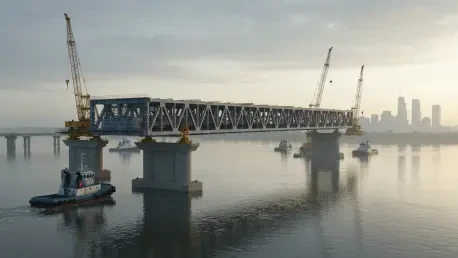
While I was vice president, we were pursuing a complex bridge rehabilitation with an incredibly aggressive schedule. The conventional approach involved closures that would have caused significant disruption. Instead of the standard playbook, my team and I explored alternative methodologies, ultimately proposing a float-in technique, a modern application of a method used years ago. It required more upfront logistical planning, but it drastically reduced the community impact. That approach won us the project because we didn’t just offer to build it; we offered a smarter way. That’s my strategic philosophy: challenge the conventional and focus on delivering value beyond the physical structure.
What is your forecast for the East Coast infrastructure market over the next five years?
I am incredibly optimistic. We are in a necessary period of renewal for East Coast infrastructure. A significant portion of our critical assets, especially bridges, is aging and requires not just repair but modernization to handle today’s demands. This creates a sustained need for firms with our specialized experience. I foresee a market driven by major rehabilitations, technological integration for smarter infrastructure, and a continued focus on resilience. For Skanska Koch, this is a chance to apply our decades of expertise to help shape a safer and more efficient future for the communities we serve.