
A recent comprehensive analysis has presented Canada with a stark economic and societal ultimatum, framing a critical choice between proactive investment in public infrastructure and a future of reactive, increasingly costly repairs. The report, issued by the Canadian Climate Institute, posits that by strategically climate-proofing essential public works before the escalating impacts of climate change inflict irreversible damage, the nation can achieve substantial annual savings estimated at a bare minimum of $5 to $10 billion. This conclusion stems from a deep dive into the current state of Canadian infrastructure, sophisticated financial modeling, and an acknowledgment of the vast uncalculated costs of inaction. The findings present a clear and urgent case for a fundamental shift in how Canada plans, funds, and maintains the foundational assets that underpin its economy and the well-being of its communities, moving from a cycle of neglect and emergency response to a strategic posture of resilience and foresight.
The Precarious State of Canada’s Foundational Assets
The Canadian Climate Institute’s report paints a sobering picture of the nation’s public infrastructure, revealing a foundation critically weakened by decades of neglect and deferred maintenance. This long-standing issue has rendered vital systems profoundly vulnerable to the predictable shocks of a changing climate. According to the institute, a significant 14% of the country’s core public assets—a vast network encompassing roads, bridges, storm sewers, and water treatment plants—are currently assessed to be in poor or very poor condition. This pre-existing vulnerability is now being dangerously exacerbated by the compounding challenges of climate change, transforming what was once a manageable maintenance issue into an impending crisis of resilience. The risks tied to this deterioration extend far beyond simple financial calculations of repair bills. When climate-driven pressures cause public infrastructure to fail, the consequences create deep and widespread disruptions. The failure of a bridge or highway can leave entire communities stranded, severing access to essential services and emergency aid, while damage to transportation networks disrupts critical supply chains, leading to shortages and economic paralysis. The total value of this national infrastructure inventory is staggering, estimated at $2.7 trillion. Citing data from Statistics Canada, the report underscores the sheer scale of the existing deficit: an investment of $294 billion would be required just to bring these assets into a state of good repair, a figure that does not even begin to account for the additional costs of adapting them to future climate impacts.
A central structural problem identified in the analysis is the profound fiscal imbalance faced by local governments, which places them in an untenable position. Canadian municipalities find themselves holding ownership and responsibility for over 60% of the nation’s core public infrastructure. Despite this immense responsibility, they collect a mere 10% of the country’s total tax revenues. The Canadian Climate Institute labels this a critical “mismatch,” which saddles local governments with the overwhelming duty to maintain, repair, and replace essential infrastructure but with severely limited financial capacity to do so. Consequently, deferring necessary investments becomes a common, though ultimately unsustainable, practice. This point is reinforced by the 2019 Canadian Infrastructure Report Card, which warned that even in the absence of climate change impacts, the costs of rehabilitation escalate sharply when maintenance is postponed, creating a vicious cycle of ever-increasing financial burdens. This chronic underfunding not only accelerates the physical decay of assets but also cripples the ability of municipalities to engage in the kind of forward-thinking, proactive planning required to build resilience against the growing threats of extreme weather events, leaving communities and their economies dangerously exposed.
Modeling the Future The Financial Case for Proactive Adaptation
To quantify the financial implications of different policy pathways, the report employed a sophisticated modeling methodology that projected three distinct future scenarios based on varying levels of government effort to climate-proof public infrastructure. The model considered a non-existent approach (taking no action), a reactive approach (repairing assets only after they fail due to climate events), and a proactive approach (investing in upgrades and adaptations in advance). The results of this modeling are unequivocal in their financial conclusions. In a future with a medium emissions trajectory, a scenario of complete inaction would see the direct infrastructure costs from extreme rainfall, heat stress, and select flooding events skyrocket to $14 billion per year by the 2050s. By 2085, this figure would climb to an unsustainable $19 billion annually. The report cautions that these already staggering costs would be substantially higher if global climate pollution continues to spiral further out of control, placing an even greater strain on public budgets. In stark contrast, taking adaptive measures yields dramatic savings. While a reactive response is better than inaction, it still results in higher lifetime costs but would generate annual savings of approximately $4.5 billion compared to doing nothing. The most financially prudent path, however, is proactive adaptation. This approach, focused on early and strategic investment, would produce annual savings of $9.9 billion.
The financial modeling demonstrates with striking clarity that a proactive strategy not only saves money but also delivers a more resilient infrastructure network far more quickly, a critical advantage in an era of accelerating climate impacts. According to the projections, by the year 2050, a proactive approach will have successfully upgraded 73% of Canada’s public infrastructure to be climate-resistant, providing a robust defense against extreme weather for the majority of the country’s essential assets. A reactive strategy, by comparison, would lag significantly, upgrading only 31% of the infrastructure in the same timeframe. This leaves a vast portion of the network vulnerable for decades longer, exposing communities to unnecessary risk and disruption. A policy of complete inaction, unsurprisingly, would result in zero percent of infrastructure being prepared, representing a total failure to adapt. These results powerfully underscore that proactive adaptation is not merely a defensive strategy against future costs but a smart investment that reduces the lifetime costs of assets. As the report concludes, “acting early prevents assets from deteriorating into costly conditions, reduces the frequency of emergency repairs, and extends the longevity of critical infrastructure systems.” The choice is not just about the final financial tally but about the speed and effectiveness with which Canada can protect its citizens and its economy from the clear and present dangers of climate change.
The Unseen Costs A Conservative Estimate and the Humanitarian Dimension
Ryan Ness, the Canadian Climate Institute’s director of adaptation, emphasized that the headline savings figure of nearly $10 billion per year represents a significant and “deep underestimate” of the true benefits of proactive investment. The consulting firm that conducted the modeling was constrained to calculating only the direct, quantifiable costs of repairing and replacing physical infrastructure. What this conservative accounting necessarily omits are the far greater, and often more devastating, indirect costs that cascade through society when infrastructure fails. These unseen costs include the immense health, social, and economic consequences of lost road access, overwhelmed storm sewers, or the failure of a community’s water treatment plant. As the institute’s report elaborates, these secondary costs manifest in various forms: governments are burdened with massive expenses for emergency response and disaster assistance; households and businesses suffer catastrophic losses that never appear on public balance sheets, such as property damage, disrupted mobility, severe supply-chain interruptions, and a broad reduction in economic output. Ness explained that the analysis was deliberately performed with the ruthless perspective of a “hard-hearted infrastructure accountant.” Even under this most stringent and conservative financial lens, the benefits of proactive investment overwhelmingly exceeded the costs, proving that the strategy “passes the test” even without factoring in the broader societal benefits.
Beyond the compelling economic argument, Ness highlights a critical “humanitarian element” to the issue that must not be overlooked. The functionality of public infrastructure is not merely an economic concern; it is fundamental to public safety and well-being. Infrastructure that allows citizens to access emergency services during a flood or to safely evacuate ahead of a wildfire is absolutely critical to saving lives and preserving community stability. While acknowledging the immense and extensive nature of the problem, the report advocates for a strategic and focused starting point. Rather than being paralyzed by the scale of the challenge, it recommends identifying where infrastructure is most critical from both a human and an economic standpoint. By concentrating initial efforts on “quick-start, big-win projects” in these high-priority areas, governments can achieve the greatest impact with early investments. This targeted approach ensures that the most vital services and the most vulnerable populations are protected first, building momentum and demonstrating the tangible benefits of adaptation. This strategy grounds the large-scale policy discussion in the practical reality of protecting people, ensuring that the drive for resilience is guided by a commitment to safeguarding human lives and livelihoods.
A Roadmap for Resilience and Reframing the Narrative
Drawing on successful examples of adaptation from cities like Calgary and Montreal to remote projects like the Dempster Highway in the Northwest Territories, the comprehensive report outlined a clear and actionable set of recommendations for governments at all levels. These policy directives form a cohesive roadmap for building national resilience. Key among them is the call to significantly expand infrastructure funding and develop innovative financial instruments to support municipalities and other infrastructure owners, including Indigenous governments, who are on the front lines of climate impacts. The report also urges the mainstreaming of climate adaptation, integrating it as a standard, non-negotiable component of all infrastructure asset management practices. To support this, it calls for investment in the development of superior, high-resolution hazard data and mapping on a nationwide basis to better predict and plan for climate risks. Further recommendations include accelerating updates to infrastructure codes, standards, and professional practices to fully incorporate future climate realities and making climate resilience a consistent and mandatory criterion for all public infrastructure funding programs. Finally, it stresses the importance of directing targeted support and resources to the most vulnerable communities and the most critical infrastructure assets to ensure an equitable and effective response.
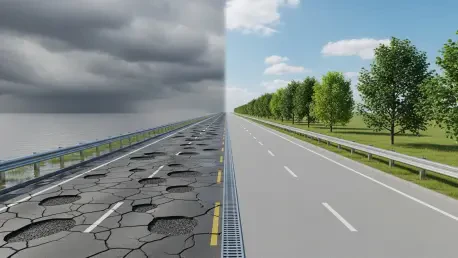
The report’s release was timed to reframe the national conversation around climate adaptation, providing solid, quantitative evidence to elevate its importance amid a crowded landscape of competing public priorities. The analysis argued that this work is not just a cost center or a drain on public finances, but rather a strategic investment that protects infrastructure, communities, and the economy over time, yielding dramatic cost savings. This perspective connected directly to the federal government’s stated interest in “nation-building projects,” as investing in climate-resilient infrastructure was presented as the quintessential nation-building activity for the 21st century. Such projects accomplished the core goals of protecting the national economy, enhancing competitiveness, securing trade routes, and ensuring economic stability. The report also grounded this high-level policy discussion in a universally relatable experience, featuring a simple pothole on its cover. This potent symbol of infrastructure decay resonated with citizens everywhere, making the abstract issue of resilience real and concrete. It was this powerful connection between an everyday annoyance and the potential for large-scale disaster that the report leveraged, urging Canada to prepare today to avoid the far greater costs of repair tomorrow.