
With its dramatic history of both fire and geological instability, the Florence on Fraser project has become a focal point for discussions on urban resilience and construction oversight in Langley City. To shed light on the complex rebuilding process and the broader implications for the community, we sat down with Luca Calaraili, a leading expert in construction and architectural design. We explored the technical intricacies of resurrecting a fire-damaged building, the engineering solutions required for a site with a troubled past, and the critical debate surrounding municipal authority over construction safety standards in the face of new provincial legislation.
Rebuilding the Florence on Fraser project involves installing a temporary roof before cleaning the surviving parkade and first floor. Could you walk us through the technical reasons for this sequence and the unique challenges crews face when working on a fire-damaged hybrid structure?
Putting up a temporary roof first is a crucial, methodical step that speaks to the fragility of the situation. It’s essentially creating a controlled environment. The concrete first floor and parkade, while they survived, were subjected to immense thermal stress from the fire and then doused with thousands of gallons of water. Leaving them exposed to the elements could lead to further degradation. This temporary shelter allows crews to work safely, pump out the remaining water, and thoroughly assess the structural integrity of the concrete without worrying about weather. The real challenge with a hybrid structure like this is the transition point between materials. You have to ensure the surviving concrete base, which has been severely compromised, is sound enough to bear the load of five new wood-frame stories. It’s a delicate, high-stakes operation.
With a projected completion of March 2027, this rebuild is a significant undertaking. Considering the site’s history, including a major sinkhole, what are the primary engineering and logistical hurdles crews must overcome, and what specific steps are being taken to mitigate these risks?
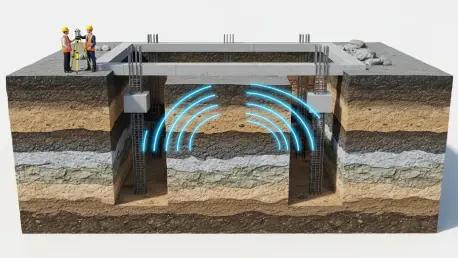
The primary engineering hurdle is, without a doubt, the ground itself. The 2024 sinkhole created a legacy of geotechnical instability that hangs over every phase of this project. You’re not just rebuilding a structure; you’re rebuilding confidence in the very foundation it sits on. This means the soil mechanics are under intense scrutiny. Logistically, every excavation and every load-bearing calculation has an added layer of complexity. The key mitigation step, and frankly the most important one, is the city’s policy change after that first incident. Requiring independent, third-party assessments of the geotechnical designs provides a critical second set of expert eyes. This peer review process is the best safeguard they have to ensure the new foundation is designed and built to a standard that accounts for the site’s known weaknesses.
The 2025 fire was intense enough to melt signs across the street and damage adjacent businesses. From a construction and safety standpoint, what new measures or materials are being implemented in the rebuild to minimize the impact of any potential future incidents on the surrounding community?
When you witness a fire hot enough to melt signs four lanes away, it fundamentally changes your approach to fire separation and radiant heat. While the core design of a six-story building with a concrete podium and wood frame is common, the rebuild will almost certainly incorporate enhanced fire-resistant materials and systems. This could include things like higher-rated exterior cladding, advanced sprinkler systems that exceed basic code requirements, and strategically placed fire breaks. There’s also a renewed focus on site safety during construction. With a project that was 75 percent complete when it burned, there will be stricter protocols for storing combustible materials and managing potential ignition sources on site to prevent a repeat disaster before the building is even occupied.
After a sinkhole incident in 2024, Langley City began requiring independent assessments of geotechnical designs. Can you explain the practical difference this made for development projects and what specific issues this peer review process is designed to prevent?
Practically, it introduced an essential layer of accountability. Before, the city accepted certified designs at face value, assuming the engineering firm had done its due diligence. Now, by requiring an independent review, another qualified geotechnical engineer scrutinizes the original plans, soil reports, and shoring designs. This process is designed to catch calculation errors, overlooked soil conditions, or designs that might be adequate on paper but lack a sufficient margin of safety for a site’s specific complexities. It’s about preventing catastrophic failures like the sinkhole by challenging assumptions and confirming that the proposed solution is not just viable, but robust. It’s a check-and-balance system that protects the project, the workers, and the public.
A proposed law, Bill M216, could limit a city’s ability to require technical peer reviews. What are the potential consequences for construction safety and project oversight in Langley City if local governments lose this authority, and what alternative safeguards might be necessary?
If that authority is removed, the consequences could be quite serious. Langley City implemented its peer review requirement in direct response to a real-world failure. Taking that tool away from them would essentially roll back a critical safety lesson learned the hard way. The city would lose its most effective mechanism for double-checking high-risk designs, potentially increasing the likelihood of future incidents like sinkholes. If this bill passes, cities might need to rely more heavily on their own in-house engineering staff, which can be a strain on resources, or implement much more stringent and frequent site inspection schedules. However, neither of those alternatives fully replaces the value of an independent, upfront design review by a third-party specialist.
What is your forecast for large-scale wood-frame construction in Langley City?
Despite the dramatic fire at the Florence site, I believe the future for large-scale, multi-story wood-frame construction in Langley City remains strong. These types of projects are a key solution to the region’s housing needs. However, what happened will undoubtedly serve as a catalyst for change. I forecast a much greater emphasis on fire suppression systems during the construction phase itself, not just in the finished building. We’ll likely see developers and the city alike pushing for enhanced safety protocols and perhaps the use of more advanced, fire-retardant treated lumber products. The incident will be a powerful, if painful, lesson that informs and ultimately improves the safety and resilience of wood-frame construction for years to come.