
The following interview features Luca Calarailli, an expert in construction and multifamily development with a profound background in design and architecture. Luca’s career is defined by a commitment to bridging the gap between high-level urban planning and practical, tech-driven innovation to solve the modern housing crisis.
This discussion explores the socio-economic influences on residential design, the technical hurdles of adaptive reuse, and the financial impact of urban parking requirements. We also examine the role of legislative shifts like the Live Local Act and the growing importance of modular construction and sustainability in the future of the built environment.
How does your experience witnessing housing disparities across different continents influence your approach to multifamily design? What specific architectural tools do you prioritize to ensure that a project remains dignified and high-quality for residents, regardless of their income level?
Witnessing the deep-seated disparities in places like South Africa and then seeing similar homelessness issues in Los Angeles in the early 90s profoundly shaped my mission to treat architecture as a tool for equity. My approach is rooted in the belief that everyone, regardless of whether they are low-income or very-low-income tenants, deserves a home that offers dignity and beauty. To achieve this, I prioritize the quality of space and light, ensuring that even a 15-story affordable residential tower feels like a sanctuary rather than a compromise. We use design to bridge the gap between social classes, ensuring that the 250 units we are developing in Miami, for instance, maintain the same architectural integrity as market-rate developments. It is about proving that cost-effectiveness does not have to come at the expense of the human experience or the aesthetic value of the neighborhood.
Converting commercial buildings often presents plumbing and layout challenges that can inflate budgets. When evaluating an aging office or motel for residential use, what specific structural indicators do you look for, and what steps do you take to ensure the conversion remains more cost-effective than new construction?
When we evaluate an existing structure for adaptive reuse, the first thing I look at is the existing plumbing infrastructure and how it aligns with a residential layout. Commercial buildings are notoriously difficult because their plumbing is centralized, whereas residential units require distributed water and waste lines for kitchens and bathrooms. I often find that motels or hotels are much better candidates for conversion because they already feature smaller, compartmentalized rooms with existing plumbing connections, making the addition of a kitchen far more feasible. To keep it cost-effective, we perform a rigorous feasibility study to ensure the “speed to market” actually outweighs the structural modification costs. If managed carefully, this path can be significantly faster than ground-up construction, which is a massive financial win for developers facing high interest rates.
Structured parking costs can reach $100,000 per space in dense urban markets like Miami. How do you leverage transit-adjacent locations to negotiate for reduced parking requirements, and what metrics do you present to developers to prove that these site selections significantly improve the project’s financial feasibility?
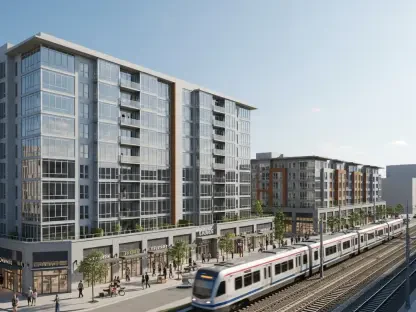
The financial burden of parking is one of the greatest obstacles to affordability, especially in areas like Edgewater where a single structured space can cost $100,000. I present developers with a clear “cost-per-unit” analysis that demonstrates how eliminating or reducing parking spaces—which traditionally require one to two spots per unit—can literally make or break the project’s return on investment. By selecting sites that are transit-adjacent, we can leverage local zoning incentives to swap expensive concrete garages for additional living units. This shift not only brings the development costs down from a luxury-tier threshold to an affordable one but also aligns with a more sustainable, urbanist lifestyle. We show that by cutting those 30,000 to 100,000 dollar-per-space costs, the project can actually serve residents with restricted incomes while remaining a viable business venture.
With large-scale residential towers underway in both Los Angeles and South Florida, how do local legislative shifts like the Live Local Act impact your planning? What are the primary logistical hurdles you face when scaling a project to 15 stories while keeping rents affordable for very-low-income tenants?
The Live Local Act has been a game-changer in Florida, sparking a surge in interest from developers who previously stayed away from the affordable sector. This legislation provides the necessary pathways to bypass certain local density and height restrictions, which is essential when you are trying to scale a project to 12 or 15 stories. The primary logistical hurdle at that height is managing the sheer cost of vertical construction and life-safety systems while keeping the eventual rents accessible for those at the lowest income rungs. We have to be incredibly disciplined with our floor plate efficiency and material selection to ensure that the increased cost of a high-rise doesn’t push us out of the affordable range. It is a constant balancing act between leveraging new legislation to build bigger and finding the internal efficiencies to keep the price per door at a minimum.
Research suggests that a vast majority of future housing will involve adapting existing structures. How are you integrating modular construction techniques into these projects to increase efficiency, and what environmental benefits do these methods provide compared to traditional ground-up builds?
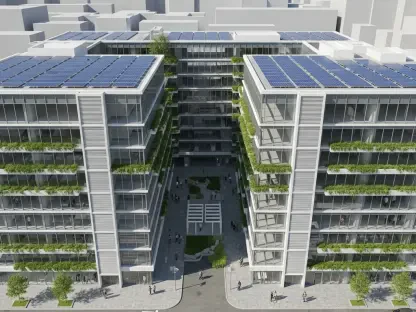
We are increasingly looking at modular construction as a way to standardize the “insides” of our buildings, which drastically reduces on-site labor and waste. By integrating prefabricated components into our designs, whether it’s for new builds or specific parts of a conversion, we can achieve a level of precision and speed that traditional methods can’t match. Environmentally, this is a much more responsible way to build because it minimizes the carbon footprint associated with long-term construction sites and material wastage. Statistics suggest that nearly 90% of future housing will likely involve some form of adaptation of existing buildings, which is inherently better for the planet than starting from scratch. Reusing the “bones” of a building while inserting modern, efficient modular systems allows us to create high-performing housing with a fraction of the environmental impact.
What is your forecast for affordable housing?
I believe we are entering a period of exponential growth and evolution for affordable housing, driven by a much more sophisticated public understanding of who these homes serve. We are moving away from the old stereotypes; today’s market realizes that affordable housing is for anyone whose income doesn’t keep pace with rising costs, not just those experiencing homelessness. I expect that over the next decade, we will see a massive shift toward adaptive reuse as the primary delivery method, supported by robust legislation that prioritizes people over parking spaces. As nearly half of U.S. renters are currently rent-burdened, the demand is so high that the industry will have no choice but to innovate through modular tech and creative density. Ultimately, my forecast is one of optimism, where better education and smarter design lead to a more stable and inclusive housing market for everyone.