
The relentless pace of technological integration has fundamentally redefined the construction landscape, moving the industry far beyond theoretical discussions of digital adoption into a new era of mandatory transformation. What was once considered a forward-thinking advantage has rapidly become the baseline for operational viability, compelling firms to overhaul their foundational processes. This year marks a critical point where the digital and physical worlds of construction have become inextricably linked, driven by a convergence of advanced data analytics, sophisticated software platforms, and evolving project delivery expectations. The conversation is no longer about whether to adopt new technologies but how to strategically implement them to optimize every phase of a project’s lifecycle. Companies that are successfully navigating this environment are those that treat digital transformation not as an isolated IT initiative but as a core component of their business strategy, essential for maintaining competitiveness and delivering value in an increasingly complex market.
The Dawn of Agentic Intelligence
Building on the significant momentum of generative artificial intelligence, the industry is now witnessing the rise of a more sophisticated and autonomous technology: agentic AI. This evolution represents a monumental shift from tools that merely generate outputs based on prompts to intelligent systems capable of executing multi-step tasks and making decisions within predefined parameters. In practical terms, this is transforming core business functions that have long been labor-intensive and prone to human error. For instance, AI agents are being deployed to autonomously manage design workflows, conduct complex project planning simulations, generate highly accurate cost estimates, and optimize dynamic construction schedules in real time. This is not a move toward replacing human expertise but rather augmenting it, freeing professionals from repetitive tasks to focus on strategic oversight and complex problem-solving. This deepening integration is widely seen as the beginning of a decade-long metamorphosis in how construction projects are conceived, planned, and executed from start to finish.
Redefining Roles and Reworking Processes
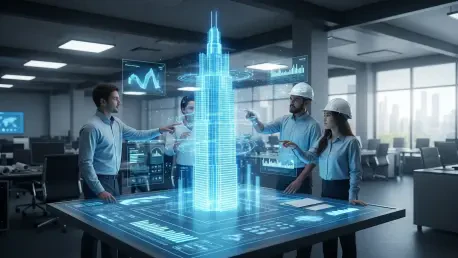
The successful integration of these advanced technologies ultimately hinged on a parallel evolution within the workforce and internal company structures. It became clear that simply acquiring new tools was insufficient; true transformation required a fundamental rethinking of roles, skills, and project execution models. The companies that thrived were those that proactively invested in upskilling their teams, fostering a culture of continuous learning, and adapting their organizational frameworks to support new, digitally driven workflows. This meant cultivating a workforce proficient in data analysis, digital collaboration, and technology management, moving beyond traditional construction competencies. The most successful firms demonstrated a strategic alignment of their people, processes, and technology, creating a synergistic ecosystem where innovation could flourish. This holistic approach proved to be the definitive factor in navigating the industry’s changing landscape, ensuring that technological advancements translated into tangible improvements in efficiency, safety, and project outcomes.