
The very structures that house our lives and work are undergoing a profound transformation, moving beyond inert collections of steel and glass to become dynamic, responsive ecosystems. In Tokyo, a significant expansion of the Hitachi Building Solutions Lab serves as a powerful testament to this evolution, establishing a collaborative research hub designed to directly address modern society’s most complex challenges. This initiative, reopening in March 2026, is a central pillar of a broader vision for a future where environmental sustainability, human wellbeing, and economic progress are not competing priorities but interconnected goals. By harnessing digital innovation, the facility aims to provide concrete answers to pressing issues like a shrinking global workforce and the imperative to achieve carbon neutrality, inviting industry leaders to co-create the next generation of intelligent architectural solutions. This venture moves beyond theoretical concepts, offering a tangible glimpse into a future where buildings actively contribute to a more resilient and efficient world.
A Vision for Integrated and Intelligent Environments
Unifying Technology under a Single Vision
The foundational philosophy driving this new wave of innovation is the concept of a unified, holistic approach, leveraging comprehensive expertise from disparate sectors to create cohesive building solutions. This strategy is vividly demonstrated through the integration of foundational technologies like artificial intelligence, digital twin, and augmented reality. These are not standalone novelties but are woven into a next-generation solution suite designed to combine deep industry knowledge with advanced AI. This platform, known as “HMAX for Buildings: BuilMirai,” aims to deliver unprecedented levels of operational insight and management capability. This reflects a pivotal industry-wide shift away from siloed systems toward interconnected, data-driven environments. The ultimate goal is to create buildings that not only operate with maximum efficiency and minimal environmental impact but also actively enhance the health, comfort, and productivity of the people who inhabit them, making the built environment a true partner in human progress.
This integrated approach seeks to dissolve the traditional boundaries between a building’s various operational systems, such as HVAC, security, and vertical transport. By creating a central nervous system powered by advanced analytics, facility managers can gain a comprehensive understanding of building performance in real time. For instance, data from security sensors about occupancy levels can automatically inform the climate control system to adjust energy usage in unoccupied zones, while elevator dispatch algorithms can be optimized based on predictive models of tenant movement. The digital twin component provides a virtual, dynamic replica of the physical building, allowing for simulations and “what-if” scenarios to be run without any real-world risk. This capability is invaluable for planning maintenance, testing emergency response protocols, or modeling the impact of retrofitting new, more sustainable technologies. It is this synergy between AI, IoT, and digital replication that elevates a structure from a passive space to a proactive, intelligent entity capable of self-optimization.
Tackling Labor Shortages with Physical AI
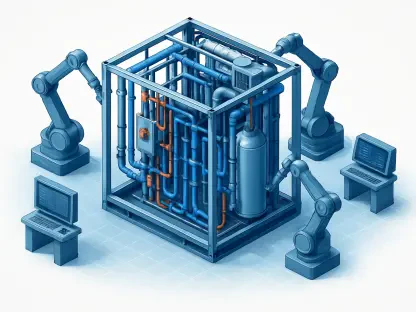
One of the most immediate challenges facing the facility management industry is the persistent shortage of skilled labor, a problem addressed head-on through the practical application of Physical AI and Digital Twin technology. This is brought to life in an interactive exhibit where visitors can experience a seamless fusion of the virtual and physical worlds. The demonstration begins with an AI agent performing a sophisticated analysis of real-time people-flow data to identify operational inefficiencies and propose optimal adjustments. From there, a visitor can step into the role of a remote operator, issuing commands to a physical guide robot not by direct control, but by manipulating its avatar within the virtual digital twin environment. They can then witness the real-world robot execute those instructions with precision, showcasing a revolutionary paradigm for remote supervision, task delegation, and intelligent facility management that transcends geographical limitations.
This technological leap promises to redefine the very nature of building operations, shifting the focus from manual intervention to strategic oversight. A single, highly skilled operator could potentially manage multiple sites from a centralized command center, deploying autonomous robots to handle routine inspections, security patrols, or even light maintenance tasks. The AI acts as an intelligent co-pilot, constantly monitoring building systems, predicting potential failures before they occur, and alerting human staff only when their expertise is required. This not only mitigates the impact of labor shortages but also enhances operational resilience and efficiency. By automating repetitive and physically demanding tasks, it frees up human personnel to focus on more complex, value-added activities, improving job satisfaction and safety. This model represents a future where human ingenuity and machine intelligence collaborate to create safer, more efficient, and responsive building environments for everyone.
Pioneering Sustainability and User Experience
Driving the Green Transformation
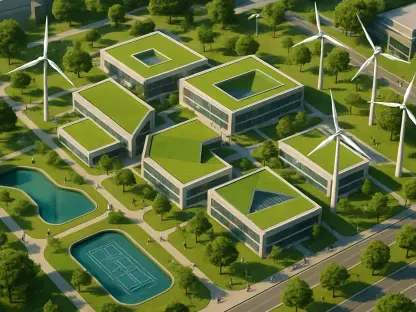
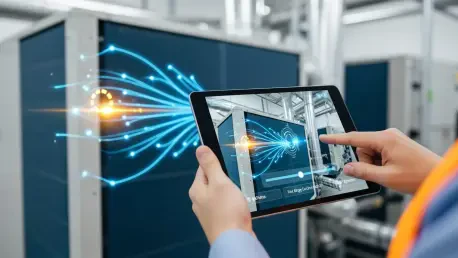
In direct support of global 2050 carbon neutrality targets, the innovation lab features a dedicated focus on Green Transformation (GX) and the development of Net Zero Energy Building (ZEB) solutions. This is not merely a theoretical exercise; an immersive exhibition allows partners to engage directly with the technology designed to decarbonize buildings and drastically reduce energy expenditures. A centerpiece of this area is a demonstration of an advanced air conditioning IoT solution called “exiida.” Leveraging augmented reality (AR) technology, visitors can use a tablet to overlay real-time operational data onto a physical, business-use air conditioning system. This interactive interface allows them to visualize energy consumption, temperature distribution, and airflow patterns, providing a clear and intuitive understanding of the system’s performance. More importantly, it empowers them to actively control the physical unit through the AR interface, offering a powerful, hands-on lesson in how modern IoT and immersive visualization can be used to optimize energy use and accelerate the transition to sustainable building operations.
The practical implications of such technologies are immense, offering a clear pathway for both new constructions and existing building retrofits to achieve ambitious environmental goals. The ability to visualize and interact with complex energy data in an intuitive way demystifies the process of optimization for building managers. Instead of relying on abstract spreadsheets and graphs, they can literally see where energy is being wasted and make immediate, targeted adjustments. This level of granular control, combined with AI-driven predictive analytics, enables systems to preemptively adjust to changing conditions, such as weather forecasts or anticipated occupancy levels, ensuring that energy is consumed only when and where it is needed. This proactive approach to energy management is critical for reducing a building’s carbon footprint, lowering operational costs, and ultimately contributing to a more sustainable urban landscape, proving that economic and environmental performance can go hand-in-hand.
Enhancing Occupant Wellbeing and Resilience
Beyond operational efficiency, the future of building design is increasingly centered on the holistic experience of its occupants, addressing their evolving needs for flexibility, safety, and overall quality of life. This human-centric approach is explored in an exhibit demonstrating how the seamless integration of various building systems can create a more intuitive and supportive environment. A key feature is a new standard elevator model, set for release in April 2026, which is designed to connect with mobile robots, enabling fully automated transport and logistics within a building. This could range from mail delivery to supply replenishment, streamlining internal processes and freeing up human staff. The exhibit also highlights enhanced building resilience through the “Hybrid-PCS” vehicle-to-everything (V2X) system. This innovative technology allows electric vehicles to function as mobile power sources, supplying electricity to critical equipment like elevators during a power outage, ensuring continuity and safety.
This focus on a seamless user journey extends to building access and security. The lab showcases a state-of-the-art contactless authentication system that utilizes Apple Wallet for real-time identity verification, eliminating the need for physical key cards and creating a frictionless entry experience. The integration of these diverse technologies—from smart elevators and autonomous robots to V2X power systems and mobile-based security—illustrates a fundamental shift toward creating environments that are not just smart, but also adaptive and resilient. These systems work in concert to support diverse workstyles, enhance safety protocols, and ultimately improve the daily lives of the people inside. It is a vision where the building itself becomes an active participant in ensuring the wellbeing and productivity of its community, capable of responding intelligently to both everyday needs and unexpected emergencies.
A Unified Ecosystem of Solutions
Showcasing Comprehensive Capabilities
To underscore the power of a deeply integrated strategy, a final exhibition area consolidates a wide array of solutions from different sectors, all unified under the comprehensive “HMAX for Buildings” framework. This section serves as a powerful demonstration of the “One Hitachi” approach, showcasing how diverse yet interconnected technologies can be brought together to solve complex, mission-critical challenges. Among the innovations featured is an AI-powered safety solution designed to significantly improve work efficiency and, more importantly, the safety of frontline engineers performing maintenance and repairs. This system can analyze environmental data and worker biometrics to predict and prevent accidents. Another highlight is a generative AI agent from Hitachi Industrial Equipment Systems, which provides dialogue-based operational and maintenance support for complex industrial equipment, allowing technicians to receive expert guidance in real time, directly at the point of need.
This holistic view extends to the occupant experience with connected home appliances from Hitachi Global Life Solutions, which can be integrated into the building’s central management system for enhanced energy efficiency and user convenience. By presenting these varied solutions side-by-side, the exhibit paints a clear picture of a truly unified ecosystem. It is a system where industrial-grade AI supports facility staff, where generative AI streamlines maintenance, and where smart appliances contribute to the building’s overall sustainability goals. This comprehensive showcase is designed to highlight the capacity to address the multifaceted demands of modern buildings not as a collection of individual problems, but as a single, interconnected system, delivering value from the boiler room to the boardroom and into every occupied space.
A Hub for Collaborative Innovation
The newly expanded facility, situated in Tokyo and accessible on a “by reservation only” basis to industry customers and partners, has been deliberately positioned as a dedicated crucible for professional co-creation rather than a public museum. This strategic focus reinforces its role as a serious platform for innovation, where real-world problems can be explored and solved collaboratively. The expansion represents a significant investment by the company’s Connective Industries Sector, a move designed to accelerate its overarching vision of “Integrated Industry Automation.” By offering a space where developers, design firms, construction companies, building owners, and management firms can engage directly with emerging technologies, the lab fosters a dynamic environment for shared learning and development. It moves beyond product demonstrations to facilitate genuine partnership, allowing stakeholders to influence the next generation of solutions.
The practical applications showcased within the lab, particularly those under the “HMAX for Buildings: BuilMirai” suite, represented a definitive statement about a commitment to leading the digital transformation of the entire building industry. The initiative was not just about displaying technological prowess; it was an open invitation to the industry to join in building a future that was more sustainable, remarkably efficient, and fundamentally human-centric. By providing this unique platform for hands-on experimentation and collaborative ideation, the project laid a crucial foundation. It ensured that the evolution of the built environment was a shared journey, shaped by the collective expertise and vision of all its key participants, ultimately aiming to create spaces that were better for business, for people, and for the planet.