
The familiar roar of diesel engines and the sight of operators manually guiding heavy machinery have long defined the construction landscape, but a fundamental transformation is quietly underway, driven not by brute force but by intelligent, interconnected systems. At the recent Consumer Electronics Show, Bobcat unveiled a comprehensive suite of technologies that charts a new course for the industry, moving beyond incremental improvements to equipment and proposing a complete reimagining of the modern jobsite. This vision is not centered on a single piece of hardware but on a cohesive digital ecosystem designed to make work simpler, safer, and significantly more productive for everyone involved.
Beyond a Bigger Bucket: Is the Future of Construction Equipment Hiding in Plain Sight?
This strategic pivot toward smart technology is a direct response to the mounting pressures facing the construction sector. The industry is at a critical juncture, grappling with a perfect storm of complex projects that demand unprecedented precision, a persistent shortage of skilled labor that threatens timelines, and a growing mandate for more sustainable and efficient operations. Bobcat’s presentation was more than a product showcase; it was an argument that the solution to these challenges lies in embedding intelligence directly into the equipment, transforming machines from passive tools into active partners on the jobsite.
The core of this new direction is the understanding that future progress will be measured in data, connectivity, and automation, not just in horsepower and lift capacity. By integrating advanced systems like artificial intelligence, augmented reality, and proactive safety features, the company aims to empower operators of all experience levels, streamline maintenance processes, and provide a level of operational awareness that was previously unattainable. This initiative represents a foundational shift from building stronger machines to building smarter ones that can think, assist, and even learn.
Responding to the Call: Addressing the Modern Jobsite’s Toughest Challenges
Modern construction projects have evolved into highly intricate endeavors, often involving complex digital blueprints, tight tolerances, and coordination across multiple teams. This growing complexity places immense pressure on operators to perform flawlessly, increasing the risk of errors that can lead to costly rework and project delays. The demand for equipment that can simplify these tasks and provide real-time guidance is no longer a luxury but a necessity for maintaining competitiveness and profitability in an increasingly demanding market.
Compounding this issue is the industry-wide shortage of skilled labor, a persistent challenge that shows no signs of abating. As veteran operators retire, construction companies struggle to attract and train a new generation of workers. This talent gap creates a critical need for equipment that is more intuitive and easier to operate, effectively lowering the barrier to entry and enabling novice operators to become productive more quickly. Technology that can automate repetitive functions and provide expert assistance directly in the cab is seen as a key strategy to bridge this experience gap.
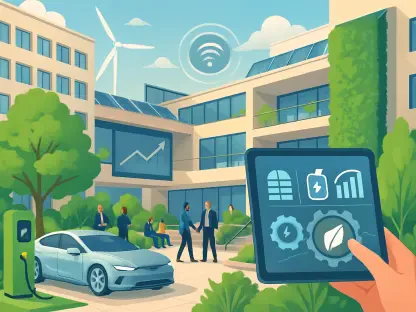
Furthermore, the global push toward sustainability is reshaping operational expectations. Clients and regulators alike are demanding greener, more efficient jobsites with a reduced carbon footprint. This has accelerated the transition toward electrification and intelligent operational methods that minimize fuel consumption, reduce emissions, and optimize machine performance. The development of scalable battery solutions and smart systems that enhance efficiency is therefore central to meeting these evolving environmental and economic standards.
The Pillars of Innovation: Deconstructing Bobcat’s Technological Ecosystem
At the heart of Bobcat’s vision is a collection of interconnected technologies, each designed to address a specific challenge while contributing to a unified operational platform. Leading this charge is the Bobcat Jobsite Companion, an AI-powered co-pilot that redefines the operator experience. Functioning as an intelligent assistant, it allows operators to use natural language commands to control over 50 machine functions, ask for operational guidance, and automatically adjust settings based on jobsite conditions. Critically, its proprietary AI model operates entirely onboard the machine, eliminating the need for cloud connectivity and ensuring reliable performance in remote locations.
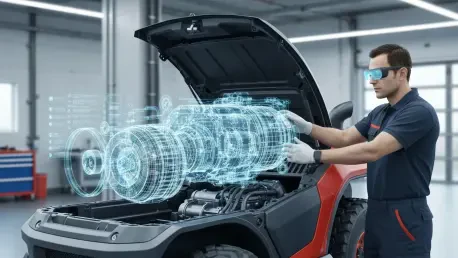
To combat equipment downtime, Service.AI was introduced as a virtual expert for technicians. This AI-driven platform provides instant access to a vast database of repair manuals, diagnostic procedures, and historical service data. It guides technicians through complex troubleshooting with step-by-step instructions, effectively placing the knowledge of a master technician in their hands. This innovation is designed to accelerate repair times, improve first-time fix rates, and help alleviate the strain caused by the shortage of experienced service personnel.
Safety receives a significant upgrade with a prototype Collision Warning and Avoidance System, the first of its kind in development for compact equipment. Using advanced imaging radar, the system actively tracks objects in the machine’s vicinity and can intervene by automatically slowing or stopping the equipment to prevent a potential impact. This proactive approach moves beyond simple alerts to provide an active layer of protection for both personnel and property. This is complemented by an Advanced Display Technology, a transparent MicroLED screen integrated into the cab window that overlays critical information like 360-degree camera views and machine data onto the operator’s line of sight, enhancing situational awareness without creating a distraction.
Looking further ahead, the RogueX3 concept vehicle demonstrates a radical approach to equipment design. This fully electric and autonomous platform features a modular construction that allows it to be configured with or without a cab, and with either wheels or tracks, adapting to a wide range of applications. Underpinning the company’s entire electrification strategy is the Bobcat Standard Unit Pack (BSUP), a rugged, scalable, and fast-charging battery system. Designed for the harsh realities of the jobsite, the BSUP is also intended for integration by other OEMs, positioning it as a potential industry standard to accelerate the adoption of electric power.
A Unified Narrative: The Core Philosophy Driving the Technology
The technologies unveiled at CES were not presented as isolated concepts but as integral components of a single, interconnected ecosystem. The underlying philosophy is that the future of construction equipment is not in adding more features but in creating a seamless, intuitive environment where the operator, the machine, and the jobsite are in constant communication. The Jobsite Companion, for example, is designed to work in concert with the Collision Warning System and the Advanced Display, providing a holistic and intelligent operational experience.
This approach marks a departure from the traditional model where technology is often treated as an optional add-on. Instead, Bobcat is integrating these smart systems into the core design of the equipment. This ensures that the technology is not an afterthought but a fundamental element that enhances the machine’s performance, safety, and usability from the ground up. This deep integration is what enables the various systems to share data and work together to simplify complex tasks and empower the user.
The overarching goal of this technological push is to make work easier and more accessible for people. By automating routine functions, providing on-demand expert knowledge, and enhancing situational awareness, these intelligent systems empower operators to work with greater confidence and efficiency, regardless of their skill level. This focus on human augmentation is the central theme that unites all of these innovations, aiming to solve real-world problems by making sophisticated technology feel simple and intuitive.
The Roadmap from CES to the Jobsite: Practical Steps Toward an Automated Future
The journey from a dazzling CES prototype to a mud-caked machine on a real jobsite is a carefully planned one. Bobcat has outlined a tangible strategy for bringing these advanced concepts to market, focusing on practical applications that deliver immediate value. The initial steps involve further development and field testing to ensure these systems are robust, reliable, and capable of withstanding the rigors of daily construction work.
A key benefit of this technological roadmap is its potential to significantly lower the barrier to entry for new operators. The intuitive nature of an AI assistant like the Jobsite Companion can drastically reduce the training time required to operate complex machinery, allowing companies to onboard new talent more rapidly. For technicians, the on-demand expertise provided by Service.AI promises to accelerate repair timelines, maximizing equipment uptime and improving overall fleet productivity.
Ultimately, this comprehensive vision aims to establish a new industry benchmark for safety, performance, and usability. By integrating proactive safety systems, intelligent operator aids, and efficient electric powertrains, this next generation of equipment is poised to redefine what is possible on the jobsite. The successful commercialization of these technologies would not only enhance the capabilities of individual machines but would also drive a broader industry shift toward a more connected, automated, and sustainable future. The innovations displayed at CES were not just a glimpse into a possible tomorrow; they represented the foundational steps being taken today to build the intelligent jobsite of the near future.