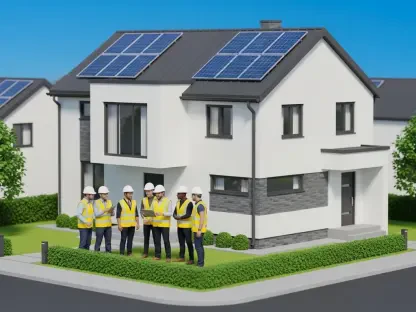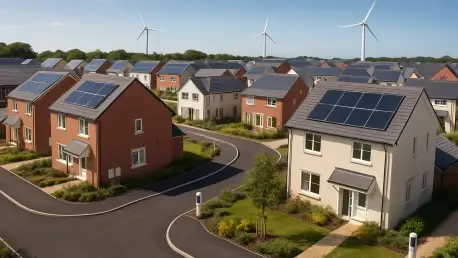

The transition toward carbon-neutral living is no longer a peripheral experiment but a central pillar of modern urban planning as evidenced by the launch of the United Kingdom’s largest net-zero housing development in Penarth, Wales. This ambitious initiative, centered at Cosmeston Farm, represents a significant partnership between the utility infrastructure provider GTC and the prominent homebuilder Barratt Redrow. By establishing a community of 576 residences, the project seeks to move beyond the minimum requirements of the UK’s Future Homes Standard, creating a flagship for residential sustainability across Europe. The development is designed to address the dual challenges of climate change and energy affordability by integrating advanced low-carbon technologies directly into the fabric of the community. This holistic approach ensures that environmental responsibility does not come at the expense of homeowner comfort or financial stability. As the energy landscape shifts, this site serves as a vital blueprint for how large-scale residential projects can contribute to national decarbonization goals while maintaining the reliability of local utility networks.
The Technological Foundation: Engineering Sustainable Living
Integrated Infrastructure for Smart Home Management
The core of the Cosmeston Farm project lies in a unified “whole-system approach” that departs from the traditional, fragmented method of installing green technologies. Rather than treating solar panels, batteries, and heat pumps as separate add-ons, GTC has implemented a fully integrated infrastructure where these components communicate through a centralized smart-home energy system. This technical harmony allows each of the 576 residences to optimize its energy consumption in real-time, balancing the load between the onsite solar photovoltaic panels and the home’s battery storage. Because GTC owns and operates the underlying electricity and water networks, the system can manage the overall demand on the national grid more effectively, preventing the local power spikes often associated with rapid electrification. Homeowners benefit from this integration through a seamless user experience that automates efficiency without requiring constant manual intervention. This system empowers residents to prioritize the use of their self-generated green energy, thereby reducing their reliance on external power and shielding them from the price fluctuations inherent in the global energy market.
Thermal Efficiency through Advanced Ground-Source Technology
A critical component of the development’s energy strategy is the deployment of networked ground-source heat pumps, specifically utilizing Kensa Shoebox units. Unlike individual air-source units that can fluctuate in efficiency based on weather conditions, these compact pumps are connected to a shared network of deep boreholes that tap into the stable thermal energy stored underground. This configuration provides a consistent and highly efficient source of heating and hot water throughout the year, regardless of external air temperatures. By sharing the borehole infrastructure across multiple properties, the project achieves economies of scale that reduce the installation cost per unit while maximizing the thermal performance of the entire site. The use of ground-source technology also minimizes noise pollution and visual clutter, as the primary heat extraction components are buried safely beneath the surface. This long-term investment in geothermal energy ensures that the community remains resilient against the rising costs of fossil fuels. The integration of these pumps into a managed utility network provides a level of reliability similar to traditional gas heating but with a fraction of the carbon footprint.
Economic Impact and Policy Development: Shaping the Future
Grid Flexibility and the Evolution of Prosumer Economics
The infrastructure at Cosmeston Farm transforms the role of the resident from a passive consumer to an active “prosumer” who contributes to the stability of the wider energy network. Through smart optimization and grid-flexibility services, the development allows households to utilize time-of-use tariffs, where energy is stored or consumed based on real-time pricing signals. During periods of low demand, the home batteries can be charged at lower rates, while during peak times, the stored energy can be used to power the home or even sold back to the grid to support local stability. This active participation creates a new economic model for housing, where the efficiency of the building itself generates financial returns for the occupant. As a regulated entity under the oversight of Ofgem, GTC ensures that these interactions are transparent and that homeowners receive dependable service within a protected consumer framework. This model demonstrates how modern housing can alleviate pressure on the national grid, reducing the need for expensive infrastructure upgrades elsewhere while providing residents with a tangible way to lower their monthly utility bills through smart energy management.
Empirical Evidence and the Path toward National Scalability
Beyond its immediate impact on residents, the Cosmeston Farm development functioned as a high-stakes data collection exercise aimed at influencing national housing policy. GTC and Barratt Redrow committed to monitoring the real-world energy performance of the site, providing the empirical evidence needed to prove that net-zero operation was achievable at a massive scale. This performance data was independently reviewed by researchers at Cardiff University to establish a new benchmark for the construction industry and provide government officials with a verified roadmap for future developments. Stakeholders such as GTC’s Chief Innovation Officer John Marsh and Welsh Cabinet Secretary Jayne Bryant emphasized that the success of this project relied on early-stage collaboration and the integration of technology into the initial design. The construction industry gained a clear example of how to balance high-performance environmental standards with the logistical demands of large-scale building. Moving forward, the lessons learned from this Welsh flagship provided the necessary confidence for developers to adopt similar whole-system strategies. These steps ensured that the next generation of housing in the United Kingdom was built to be resilient, affordable, and fundamentally aligned with the requirements of a zero-carbon economy.