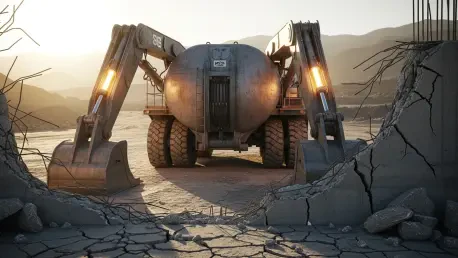

The high-stakes world of collaborative construction is about to face its most rigorous digital examination yet as Digital Vortex and Firevolt prepare to launch their latest simulation. In an environment where the laws of gravity serve as both the primary tool and the ultimate antagonist, players must reconcile their architectural ambitions with the cold reality of structural engineering. This project moves beyond the typical creative sandbox by introducing a relentless physics engine that dictates the success or failure of every joint, beam, and foundation. By transforming the act of building into a high-pressure survival scenario, the developers have created a space where coordination is not just encouraged but mandatory for survival. Currently entering a public playtest phase on PC, the title is positioning itself as a premier cooperative experience for the upcoming season, challenging teams to maintain their composure while the very ground beneath them threatens to give way under the weight of their own creations.
Advanced Mechanics of Structural Integrity
The Physics Engine as the Primary Arbitrator
The core experience of this simulation centers on a sophisticated physics model that treats every individual component as a physical object with realistic properties. Unlike traditional building games where structures often float or defy gravity until a specific “support” block is removed, every element here possesses specific weight, mass, and inertia. This technical foundation means that a tower’s stability is constantly being calculated in real time, forcing players to account for center of gravity and load distribution. If a team attempts to build too quickly or neglects the base of a skyscraper, the engine will simulate the resulting stress, leading to realistic buckling or a catastrophic domino effect. This constant pressure creates a unique tension where the joy of creation is balanced by the persistent threat of a sudden, gravity-induced collapse.
Structural failures are not merely aesthetic events but functional hurdles that require immediate intervention and creative problem-solving. When a support beam begins to bend under excessive load, the physics engine provides visual and auditory cues that signal an impending disaster, allowing players to react before the entire project is lost. This level of realism demands a high degree of precision, as even a minor misalignment in a foundation block can lead to a leaning structure that becomes increasingly difficult to manage as it grows taller. By making physics the ultimate judge of a player’s work, the game elevates the building genre from a simple creative exercise into a complex engineering challenge that rewards those who respect the fundamental laws of motion and gravity.
Specialized Tools for Architectural Management
To combat the inherent difficulties of working in a high-gravity environment, players are granted access to a suite of advanced personal gadgets designed for rapid response. Gravity guns allow for the precise placement of heavy materials from a distance, while jetpacks provide the verticality needed to inspect high-altitude connections or weld supports in hard-to-reach areas. One of the more innovative additions is the foam gun, which can be used to temporarily reinforce a failing joint or provide a cushioned landing for falling debris. These tools are not just conveniences; they are essential survival gear that allows a coordinated team to save a structure that would otherwise be doomed. The interplay between these gadgets ensures that each member of a four-person team can fulfill a specific role, such as a structural spotter or a rapid-response welder.
Beyond personal equipment, the simulation introduces massive construction machinery that radically changes the scale of what can be accomplished. Players can pilot gravity tanks to haul immense girders or use shredder bulldozers to quickly clear away the ruins of a failed attempt and recycle the materials for a new build. Levitating platforms serve as mobile workstations, allowing teams to assemble large sections of a building on the ground before lifting them into place. This mechanical variety ensures that the gameplay remains dynamic, as players must decide when to use delicate hand tools and when to bring in the heavy machinery. The integration of these vehicles adds a layer of logistical planning to the experience, as teams must manage their resources and equipment to ensure that the construction site remains organized and efficient.
Environmental Challenges and Collaborative Dynamics
Real-Time Cataclysms as Dynamic Stress Tests
The difficulty of maintaining structural integrity is further amplified by the introduction of environmental “cataclysms” that act as unpredictable stress tests for any build. These are not scripted story events but dynamic occurrences like meteor showers or seismic shifts that can strike at any moment, forcing players to pivot from construction to emergency defense. A team might be in the middle of a complex delicate assembly when a meteor strike threatens to shear off a primary support column. In these moments, the game shifts into a high-octane survival mode where players must use their tools to catch falling debris or instantly reinforce weak points. These events serve to expose any flaws in the original design, as a well-engineered building might survive a tremor, while a poorly balanced one will likely crumble.
This unpredictability ensures that no two sessions are identical and that players can never become too comfortable with their progress. The cataclysms also encourage a more robust style of architecture, pushing teams to build redundancies into their designs rather than just the bare minimum required for stability. Successfully weathering a storm or a meteor strike provides a profound sense of accomplishment, as it proves the structural soundess of the team’s work under the most extreme conditions. By forcing builders to react to external threats on the fly, the simulation creates a loop of constant improvement and adaptation. This dynamic environment transforms the construction site into a battlefield where the enemy is not a sentient force, but the chaotic and indifferent elements of nature itself.
The Psychology of Shared Architectural Failure
At its heart, the experience is designed to foster a specific type of social bond that arises through shared labor and collective responsibility. The developers have placed a significant emphasis on the “we did this together” sentiment, recognizing that the most memorable gaming moments often come from overcoming a difficult challenge as a group. When a massive tower begins to tilt, the resulting panic requires clear communication and instant trust between teammates; one person might stabilize the base while others scramble to lighten the load at the top. This level of interdependence means that a single person’s mistake can affect the entire group, but a single person’s quick thinking can also save hours of collective work. The game effectively simulates the high-stakes environment of a real construction site, where teamwork is the only path to success.
The various game modes further lean into this collaborative pressure by introducing material limits, strict time constraints, and unusual environmental scenarios. These constraints force teams to improvise and move away from “perfect” designs toward functional, “good enough” solutions that can withstand the immediate pressure. This focus on improvisation reveals the true depth of the physics engine, as players find creative ways to use the environment and their tools to solve unforeseen problems. Whether it is using a levitating platform to prop up a sagging roof or using a shredder to create a quick escape route, the game rewards creative thinking under fire. This psychological tension, combined with the satisfaction of a completed project, creates a compelling gameplay loop that keeps players engaged and motivated to refine their cooperative strategies.
Future Considerations for High-Pressure Simulations
The upcoming release of this construction simulation suggests a significant shift in how cooperative games can utilize physics to drive player interaction. For those looking to excel in this high-pressure environment, the first priority should be the establishment of clear communication protocols and defined roles within the team. Before a single block is placed, a group should determine who will manage heavy machinery and who will be responsible for structural monitoring, as disorganized building almost inevitably leads to collapse. Additionally, players should adopt a “safety-first” design philosophy, incorporating secondary supports and wider foundations than might seem strictly necessary. This proactive approach to engineering will provide the necessary buffer to survive the dynamic cataclysms that define the later stages of a build.
Moving forward, the success of this project was built on its ability to merge technical realism with chaotic, emergent gameplay. Developers in the simulation space should look toward this model as evidence that players are increasingly seeking experiences that offer genuine consequences for their actions. As the public playtest continues to provide data, the refinement of the physics engine and the balance of construction tools will be critical. For the community, the key takeaway is that success in complex simulations is rarely about individual skill, but rather about the ability to function as a cohesive unit under duress. By embracing the inevitability of failure and using it as a learning tool, teams can push the boundaries of what is possible within the game’s digital framework, eventually mastering the art of building against the odds.