
The traditional disconnect between the fluidity of architectural imagination and the rigid reality of manual workshop fabrication has long stifled the progress of complex structural designs. For decades, the construction sector accepted that bespoke formwork was a necessary bottleneck, requiring exhaustive manual detailing and weeks of intricate programming to translate a designer’s 3D model into a physical mold. PERI UK is now disrupting this outdated standard by replacing labor-intensive workflows with an AI-enabled system that slashes production times from several weeks to just a few days.
This transition marks a pivotal moment for bespoke construction, where the human margin for error has historically driven up costs and extended schedules. By automating the detailing process, project teams can now focus on the broader structural challenges rather than getting bogged down in the minutiae of manual fabrication. This shift not only accelerates the immediate construction phase but also empowers designers to pursue more ambitious geometries without the fear of hitting a practical manufacturing wall.
The End of Labor-Intensive Detailing in Bespoke Construction
Traditionally, the path from a digital 3D model to a physical timber mold was paved with tedious manual labor. Technicians had to spend hundreds of hours interpreting complex drawings and hand-coding machinery to ensure that every facet of a bespoke structure was accurately represented. This bottleneck often led to significant delays, as any minor change in the architectural vision necessitated a complete overhaul of the fabrication plan.
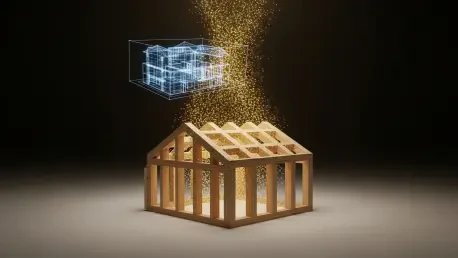
The introduction of AI-powered workflows has effectively removed these hurdles by automating the translation of complex data. Instead of relying on manual interpretation, the software analyzes the 3D model and generates the necessary production data instantly. This advancement ensures that the “bespoke” nature of a project no longer equates to a slow-moving fabrication schedule, allowing for a more agile response to evolving site requirements and architectural revisions.
Bridging the Gap Between Digital Design and Physical Fabrication
The construction industry is currently undergoing a massive shift toward digital construction, driven by a pressing need for greater commercial certainty and material efficiency. While standard formwork components have benefited from digitalization, custom solutions remained an outlier because their unique shapes often defied traditional automation. By partnering with dataform.work, PERI UK has addressed the critical need for a system capable of handling complex geometries like multi-faceted box-outs without the high risk of error.
This partnership facilitates a seamless flow of information from the architect’s digital environment directly to the factory floor. By bridging this gap, the system ensures that the physical components are a perfect mirror of the digital twin, minimizing the discrepancies that often plague bespoke builds. Consequently, contractors can achieve a level of precision that was previously unattainable, ensuring that even the most complex internal voids are executed with absolute fidelity to the original design.
Automating Complexity with CNC Precision and Intelligent Data
The backbone of this new service is a digital construction workflow that automates the conversion of 3D architectural models into production-ready CNC cutting data. Utilizing advanced 5-axis CNC machinery, the system mills plywood components directly from digital files, creating complex internal void formers in less than half the time of conventional methods. This process eliminates the need for manual programming, ensuring that ambitious architectural designs are translated into physical components with millimetric accuracy.
Beyond mere speed, the use of intelligent data allows for a more sophisticated approach to component assembly. The system optimizes the layout of every cut to minimize waste, directly contributing to the sustainability goals of modern infrastructure projects. By integrating precision machining with AI-driven design, the workflow ensures that every piece fits together perfectly on the first attempt, removing the need for trial-and-error adjustments in the workshop.
Proven Results: From High Speed 2 to High-Rise Developments
The efficacy of this AI-driven system was validated during the construction of footbridge foundations for the High Speed 2 (HS2) project in Warwickshire. The project required 13 different angles and facets to optimize structural load paths, a feat achieved with high precision and reduced concrete usage through automated production. This real-world application demonstrated that complex infrastructure could be delivered more efficiently by leveraging digital automation to handle intricate geometrical requirements.
Technical advancements in joint design also played a crucial role in the success of these developments. By utilizing innovative joints that eliminate the need for glue and minimize the use of screws, PERI has created formwork that is easier to assemble and strike. These integrated striking elements allow for the rapid removal and reuse of formwork units, providing a significant advantage for the high-rise market where speed and repeatability are essential for maintaining tight project timelines.
Implementing AI-Driven Workflows for Scalable Infrastructure Projects
Contractors are now able to apply a streamlined framework to manage complex builds by moving directly from a digital model to the fabrication floor. This approach leverages the strategic joint venture between PERI Group and DataB to ensure that data flows seamlessly into production-ready substructures. By adopting these automated production techniques, project managers minimized on-site remedial work, ensured planning reliability, and lowered the embodied carbon footprint of their projects through optimized material usage.
The transition to AI-driven fabrication moved the industry closer to a future where custom geometry is as accessible as standard components. Technical teams observed that the reduction in manual intervention allowed for more rigorous quality control and a higher degree of safety within the production environment. These efforts successfully demonstrated that digitalization was no longer a theoretical concept but a practical tool for scaling complex infrastructure. This evolution in manufacturing logic provided a robust foundation for the next generation of architecturally ambitious projects across the United Kingdom.