
The relentless demand for verifiable building data has fundamentally reshaped architectural liability, pushing firms to seek technological solutions that promise certainty in an uncertain world. The convergence of Light Detection and Ranging (LiDAR) and Building Information Modeling (BIM) represents a significant advancement in the architecture, engineering, and construction (AEC) sector. This review explores the strategic adoption of this technology through the lens of AWW Architects’ partnership with NavLive, examining the key drivers, performance metrics, and the impact it has had on their design and compliance workflows. The purpose of this analysis is to provide a thorough understanding of the technology’s current capabilities, its role in addressing regulatory pressures, and its potential to reshape the future of digital construction.
The Strategic Imperative for Digital Verification in Architecture
At its core, LiDAR BIM scanning merges the physical and digital realms by combining high-density 3D laser scanning with intelligent building models. This synergy produces a hyper-accurate digital replica of a physical space, providing a reliable foundation for design, construction, and management. Its growing relevance across the AEC landscape is not merely a trend but a direct response to increasingly stringent regulatory frameworks.
The implementation of legislation like the Building Safety Act has amplified the need for a verifiable “golden thread” of project data. Architectural practices, particularly those serving as Principal Designer on high-risk projects, now bear significant liability for data accuracy throughout a building’s lifecycle. Consequently, technologies that ensure a precise and immutable record of as-built conditions are transitioning from a competitive advantage to a fundamental requirement for compliance and risk mitigation.
Core Features of the NavLive LiDAR BIM Solution
Overcoming Traditional Surveying Bottlenecks
Traditional surveying methods have long been a source of inefficiency in the AEC industry. These manual processes are notoriously time-intensive and costly, especially when dealing with the complexities of existing or partially demolished structures where original documentation is often unreliable or nonexistent. Such bottlenecks at the outset of a project can create cascading delays and budget overruns, introducing a level of uncertainty that modern construction timelines cannot afford.
NavLive’s technology is engineered as a direct response to these chronic inefficiencies. By enabling the rapid capture of comprehensive site data, the system dramatically reduces the time spent on-site. What once took days or weeks of manual measurement can now be accomplished with a high degree of precision in a matter of minutes, freeing up valuable professional resources to focus on design and analysis rather than data collection.
From Point Cloud to Revit Ready Models
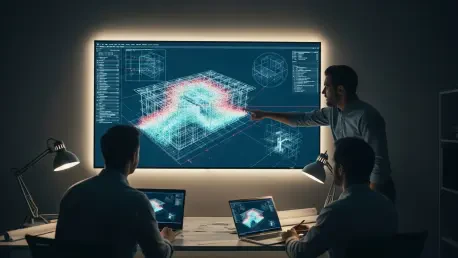
The technical workflow of the NavLive system demonstrates a significant leap in data processing efficiency. The process begins with an in-house scanner capturing a detailed point cloud of a site, a raw dataset composed of millions of data points. This initial capture is remarkably fast, completed in just a few minutes, providing an immediate and comprehensive digital snapshot of the physical environment.
The true innovation, however, lies in the automated conversion of this raw data into a functional design asset. The NavLive platform processes the point cloud to generate a Revit-ready outline model, effectively bridging the gap between raw scan data and a usable BIM environment. This seamless data conversion is a critical enabler for architectural design, allowing teams to begin work with an accurate baseline model almost instantly, thereby accelerating the entire pre-construction phase.
Enhancing Data Integrity and Risk Reduction
A key functional benefit of the system is its capacity to not only generate new models but also to correct, validate, and enhance pre-existing survey and planning information. In many projects, especially renovations or additions, architects must work with legacy data that may contain inaccuracies. The LiDAR scan provides a definitive source of truth that can be overlaid onto existing plans to identify discrepancies.
By improving data accuracy at the earliest stage, this validation process significantly reduces project uncertainty and professional liability. Firms like AWW, operating in high-stakes sectors such as nuclear and defense, can leverage this capability to de-risk projects, ensuring that all design decisions are based on verified, as-built conditions. This proactive approach to data integrity minimizes the potential for costly errors and disputes down the line.
Driving the Digitalization of the Construction Industry
The broader AEC industry is undergoing a profound shift toward digitalization, where integrated technologies are becoming essential for project success. The AWW-NavLive partnership serves as a compelling case study of this transformation, illustrating how forward-thinking firms are leveraging advanced tools to meet contemporary challenges. Such integrations are no longer a novelty but a strategic necessity for improving coordination among stakeholders, eliminating costly delays, and ensuring regulatory assurance.
This movement is fueled by the clear benefits of a data-centric approach. Digital tools that facilitate seamless information flow from the survey stage through design, construction, and operation are proving invaluable. They create a connected ecosystem where decisions are informed by accurate, real-time data, leading to better project outcomes and a more resilient built environment. As regulatory demands for transparency and accountability intensify, the adoption of such digital workflows will become the industry standard.
Real World Application and Measured Success at AWW
The tangible outcomes of the technology’s deployment at AWW are a testament to its practical value. Used across five separate buildings by staff at all levels, the NavLive system has delivered measurable improvements. The firm reports significantly accelerated design workflows, as teams can bypass the delays associated with traditional surveying and work from accurate models from day one. This has led to enhanced model accuracy and documented cost savings on these projects.
Reinforcing these results, AWW’s Managing Director, Nicholas Mulholland, has highlighted the system’s impact. He confirms the technology’s exceptional speed and its ability to produce enhanced, ready-to-use models that strengthen the firm’s ability to deliver accurate and coordinated design information. This real-world success demonstrates how strategic technology adoption can directly translate into improved efficiency, reduced risk, and a stronger competitive position.
Adoption Challenges and Mitigation Strategies
Integrating any advanced scanning technology is not without its challenges. The primary hurdles often include the initial capital investment, the need for comprehensive staff training on new digital workflows, and the complexities of data management, particularly for high-security projects. For firms like AWW, which frequently works in sensitive sectors, ensuring the security and integrity of vast point cloud datasets is a critical consideration.
These potential obstacles are often mitigated by robust support and development efforts from technology partners. Providers like NavLive offer support structures and continuous software improvements that help ease the transition. By working closely with clients to tailor implementation and training, they help firms overcome the initial learning curve and integrate the new technology smoothly into existing processes, ensuring a faster return on investment and minimizing disruption.
The Future of Integrated Scanning in Design and Compliance
Looking ahead, the trajectory of LiDAR BIM technology points toward even deeper integration and intelligence. The next wave of innovation will likely involve more sophisticated AI and machine learning algorithms for automated data analysis, enabling the system to not only capture a space but also to interpret it. This could include automated object recognition, progress tracking against a BIM schedule, and predictive maintenance analysis based on observed conditions.
The long-term impact on the AEC industry will be profound, particularly in the maintenance of lifecycle-long digital twins. These continuously updated digital replicas will serve as the backbone for ongoing building safety, facility management, and future renovations. As the technology evolves, it will become an indispensable tool for ensuring that the “golden thread” of information remains intact and relevant from a project’s inception to its decommissioning.
A New Standard for Accuracy and Assurance
AWW’s successful adoption of NavLive’s LiDAR BIM scanning solidified the technology’s position as an essential tool for modern architectural practice. The review of this partnership revealed that the strategic implementation of advanced scanning directly addressed critical industry pressures, most notably the stringent compliance requirements of the Building Safety Act. The system proved its value by delivering significant gains in efficiency, data accuracy, and risk reduction across multiple projects. This case established a clear precedent for how targeted technological investment can yield a substantial return, not only in cost savings but also in professional assurance and design excellence.