
The traditionally distinct worlds of professional-grade audiovisual systems and consumer smart home gadgets are now experiencing an unexpected convergence, a trend significantly accelerated by a global furniture retailer’s strategic pivot toward open-source technology. For years, the digital signage industry has relied on specialized, robust sensor systems engineered for the demanding 24/7 operational requirements of commercial environments like retail and hospitality. These high-end solutions were built for precision and durability, operating in a completely separate sphere from the often-fragmented and proprietary smart devices designed for the average home. However, Ikea’s comprehensive overhaul of its smart home ecosystem to natively support the Matter connectivity standard is poised to dismantle this barrier, inadvertently creating a vast, affordable, and standardized toolkit of interactive devices that could fundamentally reshape how businesses approach customer engagement and environmental responsiveness in commercial spaces.
The Unification of Smart Ecosystems
The Matter Standard as a Universal Translator
The fragmented landscape of consumer Internet of Things (IoT) devices has long been a barrier to widespread adoption, with different brands operating within closed, proprietary ecosystems that prevent seamless communication and interoperability. This digital Tower of Babel is being systematically dismantled by the introduction of Matter, an open-source connectivity standard that provides a universal language for smart devices. By ensuring that products from disparate manufacturers can communicate directly and reliably, Matter is fundamentally altering the B2C smart device market. Ikea’s strategic decision to rebuild its entire smart home platform for native Matter compatibility represents a watershed moment in this transition. While the company’s primary focus remains on the residential consumer, this move has profound, albeit unintentional, consequences for the professional AV sector. By committing to an open standard, Ikea is helping to cultivate a massive, globally available, and highly affordable ecosystem of interoperable smart devices, laying the groundwork for their integration into applications far beyond the living room.
Samsung’s SmartThings Pro B2B platform has emerged as the crucial intermediary that connects the burgeoning world of consumer-grade Matter devices with the rigorous demands of commercial digital signage installations. This professional-grade platform acts as a sophisticated bridge, enabling commercial integrators to securely and reliably incorporate devices from the consumer sphere into their complex B2B solutions. It effectively translates the simple triggers from an Ikea motion sensor or a smart plug into actionable commands within a professional content management system. This capability extends the functionality of these affordable gadgets well beyond their intended domestic use, unlocking their potential within retail stores, corporate lobbies, and hospitality venues. The existence of a robust B2B gateway like SmartThings Pro is the key that transforms Ikea’s consumer-focused strategy into a powerful catalyst for innovation in the commercial signage market, allowing businesses to leverage a standardized, cost-effective layer of smart technology without compromising the stability of their core professional systems.
A New Tier of Interactive Technology
The integration of consumer IoT technology into professional settings heralds a significant democratization of smart solutions for commercial spaces. Ikea’s extensive lineup of Matter-enabled products, including motion detectors, air quality monitors, and door/window sensors, presents an accessible and low-cost alternative for businesses looking to introduce basic interactivity into their digital signage deployments. It is crucial to understand that these consumer devices are not positioned to replace high-end, commercial-grade hardware from specialized providers. Those systems remain the undisputed standard for applications requiring mission-critical reliability, pinpoint precision, and the durability to withstand continuous 24/7 operation. Instead, Ikea’s offerings introduce a complementary layer of “smartness” that was previously cost-prohibitive for many. This new tier of technology allows for the enhancement of installations with simple, yet effective, triggers, lowering the barrier to entry and empowering a wider range of businesses to explore dynamic and responsive customer experiences.
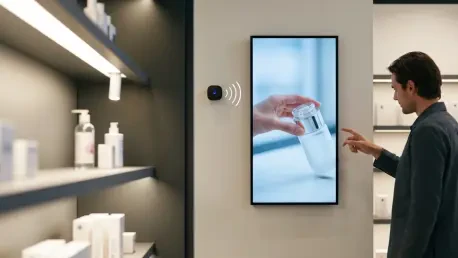
This newly accessible layer of technology enables a host of practical applications that can transform static displays into dynamic, context-aware communication tools. Imagine a retail environment where a simple VALLHORN motion sensor detects a customer approaching a specific product display, triggering the on-screen content to switch from a passive branding loop to a detailed product demonstration video. In a corporate setting, a VINDSTYRKA air quality sensor could monitor CO₂ levels in a meeting room, prompting the digital signage outside to display an “at capacity” message or even interface with the building’s HVAC system. A PARASOLL door sensor could cue a personalized welcome message on a lobby screen the moment a visitor enters. These scenarios, once requiring significant investment in specialized professional sensors and complex integration, can now be achieved with off-the-shelf components. This accessibility empowers smaller businesses, pop-up shops, and concept spaces to experiment with interactive elements that create more engaging and memorable environments.
Redefining Engagement with Accessible Hardware
The Arsenal of Consumer-Grade Triggers
The true potential of this market convergence becomes evident when examining the breadth and versatility of Ikea’s updated Matter-compatible product range, which provides a rich arsenal of sensory inputs. The ecosystem is anchored by a diverse lineup of sensors capable of interpreting the surrounding environment in sophisticated ways. For instance, the VINDSTYRKA air quality sensor does more than just detect pollutants; it measures a range of variables including CO₂, PM2.5 particles, temperature, and humidity, each of which can be used as a distinct trigger for digital content. A rise in humidity could prompt a display in a grocery store to advertise refreshing beverages, while elevated particulate levels in a public space could trigger on-screen public health advisories. Complementing this are devices like the PARASOLL door and window sensor, which provides a simple binary trigger for events like customer entry, and the VALLHORN motion sensor for presence detection. Even the BADRING water leakage sensor, designed for home safety, could be repurposed in commercial settings to trigger maintenance alerts on staff-facing displays, demonstrating how each device can serve as a trigger for creating an environment that intelligently reacts to its conditions and inhabitants.
A Symphony of Light and Control
Beyond sensory inputs, the ecosystem’s power lies in its ability to execute commands and control the physical environment, creating a complete feedback loop. The output and control elements of Ikea’s smart range offer a new palette for crafting immersive experiences that synchronize with digital content. This includes an impressive array of eleven variations of smart light bulbs, spanning different styles, brightness levels, and color spectrums. In a retail setting, these lights could dynamically alter the ambiance of a section to match the mood of the on-screen advertising, dimming to create a cinematic feel for a video presentation or shifting to a vibrant color to draw attention to a promotion. This orchestration of light and media transforms a simple display into a multisensory experience. Furthermore, control devices like the STYRBAR remote and the TRETAKT smart plug extend this interactivity to traditional appliances. A smart plug could activate a fan or a scent diffuser in coordination with on-screen content, while also providing valuable data on energy usage, adding another layer of operational intelligence and control to commercial installations.
A Foundation for Future Innovation
The mass adoption of an open standard like Matter, driven by a consumer-market powerhouse like Ikea, ultimately created an unforeseen yet powerful ripple effect across adjacent industries. This convergence provided the professional AV and signage sectors with an entirely new and highly accessible toolkit, effectively lowering the barrier to entry for creating more dynamic, responsive, and engaging commercial environments. What began as a strategy to unify the smart home inadvertently fueled a wave of innovation by placing affordable, interoperable technology into the hands of commercial integrators and their clients. The full impact of this paradigm shift was anticipated to become a major talking point at industry events like ISE 2026, where the creative applications of these newly available tools would showcase a future where the line between consumer and professional technology had become productively and permanently blurred.