
The architectural discipline is undergoing a fundamental metamorphosis, driven not by the introduction of a new stylistic movement or revolutionary material, but by the deep integration of artificial intelligence into its most essential digital frameworks. The fusion of AI with Building Information Modelling (BIM) is profoundly reshaping architectural education, shifting the pedagogical focus from teaching students the mechanics of design software to training them in the art of collaborating with intelligent, autonomous systems. This paradigm shift is not merely an incremental upgrade in tooling; it represents a redefinition of the architect’s identity, evolving the role from a solitary creator and master drafter into that of a strategic curator, ethical guide, and orchestrator of AI-generated possibilities. The core curriculum is moving beyond teaching how to design buildings and is now teaching how to conceptualize, guide, and critically evaluate intelligent platforms that can autonomously generate, analyze, and optimize the built environments of the future. This transition is cultivating a new breed of professionals who are fluent in the language of data and algorithms, yet firmly grounded in the humanistic principles that give architecture its ultimate meaning and purpose.
The Intelligent Blueprint: Redefining Design with AI-Powered BIM
From Digital Tool to Cognitive Partner
For many years, Building Information Modelling served as the undisputed digital cornerstone of the architecture, engineering, and construction (AEC) industry. Its primary function was that of a shared, multi-dimensional database—a sophisticated digital environment designed to coordinate the immense complexity of a building project. The principal benefits were clear and tangible: enhanced accuracy in documentation, streamlined collaborative efficiency between disparate teams, and robust consolidation of critical project data. BIM was, in essence, a highly structured and passive repository of information, a powerful tool for integrating the work of different professional disciplines into a single, cohesive model. It allowed architects, engineers, and contractors to speak a common digital language, mitigating errors and improving coordination.
However, the infusion of artificial intelligence has catalyzed a profound evolution, transforming BIM from a static data archive into a dynamic, cognitive ecosystem. The critical distinction lies in the capabilities of AI, which extend far beyond simple data processing into the realms of interpretation, prediction, and even creation. This marks a significant philosophical change in the technology’s role. Where traditional BIM was a platform for integrating disciplines, AI-driven BIM has become an environment for integrating decisions. It is no longer just a model of a building but an active participant in the design process. Every piece of information, from geological site surveys and material performance specifications to real-time climate data and supply chain logistics, is actively processed by AI algorithms to generate strategic insight, predictive foresight, and actionable recommendations. The model has become a thinking partner, capable of analyzing complex interdependencies and proposing solutions that a human team might overlook.
The New AI-Fueled Toolkit
One of the most transformative capabilities now embedded in BIM workflows is the generative design engine. This technology represents a fundamental departure from traditional, linear design methods. Instead of beginning with a preconceived form, students input a complex set of parameters and constraints, including spatial requirements, energy efficiency targets, structural limitations, desired levels of natural light, and material restrictions. The AI engine then processes these multifaceted criteria to generate thousands of viable, optimized design configurations in a matter of seconds. This radically transforms the student’s role from that of a solitary creator into a sophisticated curator of design possibilities. The educational focus consequently shifts from the manual skills of drafting and modeling to higher-order abilities like critical evaluation, comparative analysis, and strategic decision-making. Students must learn to weigh the intricate trade-offs between different AI-generated solutions and justify their final selection based on objective performance benchmarks and algorithmic rationale, rather than relying solely on aesthetic preference.
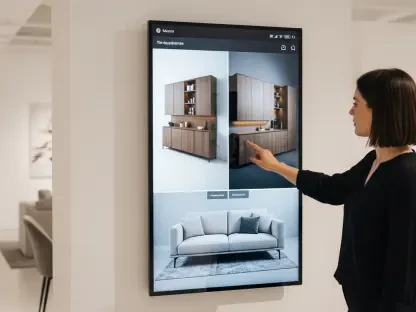
This data-centric approach is further amplified by predictive performance modeling and intelligent risk analysis. Historically, simulating a building’s performance was a laborious, often-delayed process. AI-integrated BIM tools now enable real-time, predictive modeling of critical metrics like energy consumption, daylighting quality, and structural stress points. Performance analysis becomes a “living parameter” embedded within the design process, providing immediate feedback on the consequences of creative choices and fostering an intuitive understanding of sustainability. Concurrently, AI’s capabilities have advanced beyond simple clash detection. Modern algorithms perform sophisticated risk analysis, predicting potential construction delays, logistical bottlenecks, or even material shortages. The system may also recommend proactive mitigation strategies, exposing students early to the complex, systems-level thinking of construction management. Furthermore, automated code compliance and novel user interfaces are making these powerful tools more accessible. AI can continuously review models against building codes and zoning laws in real time, turning regulatory adherence into an interactive learning experience. Natural language and vision-based interfaces allow students to verbally describe a concept or provide a rough sketch, which the AI translates into a detailed model, lowering the technical barrier to entry and allowing a greater focus on high-level creative problem-solving.
Cultivating the Architect of Tomorrow: A New Educational Philosophy
From Specialist to Systems Integrator
The very nature of AI-driven BIM is compelling a move away from the siloed thinking that has historically separated the disciplines of architecture, engineering, and construction. The platform’s inherently interconnected structure, where a change in one system instantly reveals its impact on all others, forces students to adopt a holistic, systems-thinking approach from the outset of their education. Design is no longer taught as a purely aesthetic or spatial exercise but as the art of coordinating a vast array of interdependent systems, encompassing everything from structural integrity and MEP (mechanical, electrical, and plumbing) logistics to lifecycle costs, material sourcing, and the quality of the human experience. This prepares students to become true integrators, professionals who understand that a building is not an object but a complex network of relationships.
This educational shift directly reflects the evolving demands of the AEC industry, which increasingly requires leaders who can manage complexity and facilitate collaboration across diverse fields. The curriculum is adapting to train architects who can navigate the intricate web of data, technology, and human factors that define contemporary projects. They learn to think beyond the building’s form to consider its performance, its constructability, and its long-term impact on its occupants and the environment. By working within an intelligent, integrated digital environment, students develop an intuitive grasp of how decisions made in one domain ripple through the entire project lifecycle. This cultivates a generation of architects equipped not just to design beautiful structures, but to lead multifaceted teams in delivering high-performance, resilient, and thoughtfully integrated built environments.
Fostering Critical Minds in an Automated World
The introduction of AI as a powerful design partner brings with it a new and complex set of ethical considerations that architectural education must address. As students learn to leverage these tools, educators are tasked with teaching them to view AI not as an infallible oracle but as a “studio collaborator” that must be interrogated, questioned, and sometimes challenged. The curriculum is being updated to include critical studies on the nature of algorithms, including the potential for hidden biases within datasets and software assumptions. Students are learning the vital importance of maintaining human accountability and ethical oversight in a world where key design decisions may be influenced or even generated by automated systems. This focus ensures that the next generation of architects understands their responsibility to guide technology toward humane and equitable outcomes.
This new human-machine collaboration also fundamentally alters the design process itself, replacing a traditional model of perfectionism with a pedagogy rooted in rapid and continuous iteration. The remarkable speed and efficiency of AI-powered generative tools remove the time-consuming labor of manual drafting, allowing students to explore a vast design space that was previously inaccessible. The emphasis shifts from investing immense effort into a single, “perfect” idea to a more dynamic process of generating dozens of viable options, comparing them empirically using performance data, and refining projects through successive cycles of feedback and improvement. This process-oriented approach promotes essential soft skills for a career defined by constant technological change, including intellectual curiosity, analytical rigor, and the resilience to adapt and evolve one’s thinking in response to new information.
Bridging the Gap Between Classroom and Construction Site
By integrating the same sophisticated AI-driven BIM platforms into the curriculum that are being deployed in leading professional firms, educational institutions are effectively closing the long-standing gap between academic theory and real-world practice. Students are no longer learning in a purely theoretical environment; they are engaging with the digital workflows, data standards, and collaborative tools of the contemporary industry. This approach ensures that graduates possess fluency not only in design theory and architectural history but also in the practical application of cutting-edge technology. They enter the workforce ready to contribute meaningfully to complex projects from their first day of employment, significantly reducing the learning curve and making them immediately valuable assets to their teams.
The connection between education and practice is further strengthened by the lifecycle of the BIM model itself, which now extends far beyond the completion of construction to become a “digital twin.” This intelligent, real-time virtual replica of the finished, operational building is continuously fed data from the physical structure via sensors and management systems, tracking metrics like actual energy use, maintenance schedules, and occupant behavior. AI algorithms analyze this stream of real-world performance data, creating a powerful feedback loop that feeds invaluable insights directly back into the educational curriculum. This transforms the classroom from a space of theoretical projection into a living laboratory. Students can study the actual, long-term performance of existing designs, learning from both documented successes and failures to inform and improve the next generation of projects in a continuous, data-rich cycle of innovation.
A New Foundation for Architectural Practice
The integration of artificial intelligence into Building Information Modelling had redefined the very essence of architectural and construction education. The fundamental transition was away from teaching students how to produce static forms and toward training them to design and manage dynamic, intelligent systems. Graduates emerged from this new educational framework equipped not only to design buildings but to collaborate with algorithms, interpret complex data ethically, and create environments capable of thinking, adapting, and evolving over their lifecycles. This represented more than a technological update; it was a profound philosophical revolution that had reshaped the profession. The architects and builders who were now shaping the world had been tasked not only with designing the physical environment but also with thoughtfully curating the intelligence that would animate it.