
Building Information Modeling is rapidly transitioning from an advanced technological tool into the indispensable central nervous system for the global Architecture, Engineering, and Construction industry. This profound digital evolution moves beyond simple three-dimensional models to establish a deeply collaborative, data-rich ecosystem that supports the entire lifecycle of a built asset. With the global market valued at nearly $9.4 billion and projected to surge past $20 billion by 2035, BIM is not merely a passing trend but the foundational framework for modern construction, set to unlock unprecedented levels of efficiency, precision, and sustainability for projects worldwide. This transformation is reshaping workflows, enhancing decision-making, and fundamentally altering the way buildings and infrastructure are designed, built, and managed for generations to come.
The Foundation of Modern Construction
Enhancing Collaboration and Efficiency
At its core, Building Information Modeling establishes a single source of truth for all project stakeholders, creating a unified digital environment where architects, engineers, contractors, and owners can work in concert. This shared platform effectively dismantles the traditional information silos that have long plagued the construction industry, paving the way for seamless communication and real-time collaboration. By enabling all parties to access and contribute to a coordinated digital model, BIM significantly reduces the likelihood of costly errors and on-site rework that arise from miscommunication or outdated information. This collaborative approach streamlines workflows, optimizes project schedules, and provides greater control over budgets, fundamentally transforming how complex projects are managed from their initial conception to final handover and beyond. The result is a more integrated, efficient, and predictable construction process.
The powerful influence of BIM extends across every phase of a building’s existence, delivering continuous value long after the physical construction is complete. During the initial design stages, it allows for the creation of sophisticated architectural visualizations and complex performance simulations, enabling teams to test and refine concepts before breaking ground. As a project moves into the construction phase, BIM becomes an invaluable tool for clash detection, identifying potential conflicts between structural, mechanical, and electrical systems early in the process. It also facilitates precise scheduling and meticulous resource management, preventing delays and budget overruns. Once construction is finished, the as-built BIM model evolves into a comprehensive digital record of the asset. This data-rich resource is essential for long-term facility maintenance, strategic asset management, and optimizing the operational efficiency of the building, ensuring that it performs optimally throughout its entire lifecycle.
A Tailored Approach for Every Stakeholder
One of the most significant advantages of BIM is its capacity to deliver distinct, tangible benefits to every professional involved in a construction project, catering to their specific needs and workflows. For architects and engineers, the technology provides a platform for enhanced design accuracy, allowing for the exploration of complex geometries and the early resolution of design conflicts that would otherwise emerge during construction. Contractors, in turn, leverage BIM for more precise cost estimations, streamlined construction sequencing, and improved on-site safety planning through detailed 4D simulations that visualize the entire build process over time. This level of foresight allows for better logistical planning and risk mitigation. For their part, building owners and government agencies utilize BIM for superior lifecycle asset management, using the digital model to track maintenance schedules and optimize operational costs, while also ensuring greater transparency and cost-effectiveness in publicly funded infrastructure projects.
The adaptability of BIM is further demonstrated in its flexible deployment models, which are designed to meet diverse organizational needs and security requirements. Cloud-based BIM platforms are rapidly gaining popularity across the industry, prized for their inherent flexibility, scalability, and ability to facilitate seamless collaboration among geographically dispersed teams. This model is particularly well-suited for large-scale international projects where real-time access to up-to-date project data is critical for success. In contrast, on-premises solutions remain the preferred choice for organizations with stringent data security protocols, such as government bodies or corporations managing sensitive intellectual property. By hosting the data on their own servers, these entities maintain direct and complete control over their digital infrastructure, ensuring that confidential project information remains secure and protected from external threats while still benefiting from BIM’s powerful capabilities.
Catalysts and Hurdles on the Path to Adoption
Driving Forces Behind the BIM Revolution
Two powerful, interconnected forces are serving as primary catalysts for the widespread adoption of Building Information Modeling across the globe, pushing the industry toward a digital-first future. Firstly, government mandates are playing a pivotal role in accelerating this transition. An increasing number of national and regional governments now require the use of BIM for publicly funded projects, a strategic move designed to promote standardization, improve transparency in procurement, and ensure greater accountability and efficiency in the use of public funds. These regulations create a top-down incentive for firms to invest in BIM capabilities, effectively setting a new baseline standard for public infrastructure development. This regulatory push is helping to embed BIM as a standard practice rather than an optional enhancement.
Secondly, the growing global emphasis on sustainability and the development of “green” buildings has found a powerful ally in BIM. The technology provides architects and engineers with sophisticated tools to conduct detailed energy performance analyses, allowing them to simulate a building’s energy consumption and carbon footprint under various conditions. This capability enables teams to make informed decisions about design, materials, and systems to optimize energy efficiency and minimize environmental impact. BIM facilitates the integration of sustainable materials, the design of efficient HVAC systems, and the reduction of construction waste, making it an indispensable tool for achieving ambitious environmental certifications and meeting the rising demand for eco-conscious construction. This alignment with sustainability goals is cementing BIM’s role as a cornerstone of modern, responsible building practices.
Overcoming Implementation Challenges
Despite its clear and compelling benefits, the road to full BIM integration is not without significant obstacles that can slow its adoption across the construction sector. The most immediate hurdle for many firms is the high initial cost of implementation. The combined expense of sophisticated software licenses, high-performance hardware capable of handling complex models, and comprehensive, ongoing employee training represents a substantial upfront investment. This financial barrier can be particularly daunting for small and medium-sized enterprises (SMEs) that may operate with tighter margins and fewer capital resources, making it difficult for them to compete with larger, more technologically advanced firms and potentially widening the digital divide within the industry.
Beyond the financial considerations, cultural and workforce-related challenges present persistent barriers. The construction industry has traditionally been characterized by its reliance on established, often century-old workflows, creating a natural resistance to the kind of transformative change that BIM demands. Overcoming this inertia requires a concerted effort in change management and a clear demonstration of the technology’s return on investment. Compounding this issue is a persistent shortage of professionals with the requisite skills and expertise in BIM software and digital construction processes. This skills gap means that even companies willing to invest in the technology may struggle to find qualified talent to effectively implement and manage it, creating a bottleneck that hinders industry-wide progress and full-scale adoption.
The Future Unveiled: Emerging BIM Trends
Integrating Intelligent Technologies
The future trajectory of Building Information Modeling is being shaped by its convergence with other cutting-edge technologies, which are expanding its capabilities far beyond its original scope. A paramount trend is the integration of BIM with Digital Twin technology. This synergy allows for the creation of a dynamic, virtual replica of a physical asset that is continuously updated with real-time data from sensors and IoT devices. This living digital model enables advanced simulations, continuous monitoring of operational performance, and predictive maintenance, allowing facility managers to identify and address potential issues before they result in costly failures. This powerful combination transforms the BIM model from a static design record into a dynamic tool for lifelong asset management and optimization.
Simultaneously, the infusion of Artificial Intelligence (AI) and Machine Learning (ML) is embedding a new layer of intelligence directly into BIM platforms. AI algorithms are being deployed to automate complex and time-consuming tasks such as clash detection and code compliance checks, freeing up professionals to focus on higher-value activities. Furthermore, ML models are analyzing vast datasets from past projects to optimize future project schedules, predict potential risks with greater accuracy, and suggest design alternatives that improve efficiency or reduce costs. This evolution toward generative design and predictive analytics is making project management more intelligent, proactive, and data-driven, fundamentally enhancing the decision-making process from the earliest design stages through to construction and operations.
A Glimpse into Global Adoption
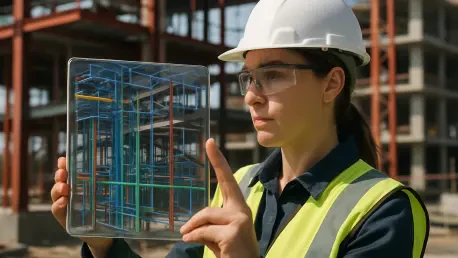
Immersive technologies are poised to fundamentally revolutionize how project stakeholders interact with and comprehend complex building data, making design and construction processes more intuitive and collaborative. Augmented Reality (AR) is set to become a common tool on job sites, allowing workers to overlay digital BIM models onto the physical environment through smart glasses or mobile devices. This provides real-time, on-site guidance for installations, verifies accuracy against the design plan, and enhances safety by visualizing hidden systems like pipes and wiring. In a complementary role, Virtual Reality (VR) will enable project teams and clients to conduct immersive walkthroughs of a building long before it is constructed. This capability allows for a more profound understanding of space, scale, and design intent, helping to identify potential design flaws and facilitate more effective collaboration in a highly engaging and intuitive virtual environment.
The global adoption of BIM reveals a clear and accelerating shift in worldwide construction practices, though the pace and maturity vary by region. North America and Europe currently lead the market, a position driven by early technology adoption, strong government support for infrastructure modernization, and the presence of many key industry players. Countries in these regions have established robust regulatory frameworks that often mandate BIM for public sector projects, fostering a mature and competitive ecosystem. However, the most rapid growth is now occurring in the Asia-Pacific region, which is being fueled by unprecedented urbanization, a multitude of large-scale infrastructure projects, and a growing government push for digital construction solutions. As emerging markets in Latin America and the Middle East also begin to recognize and embrace the benefits of digital construction, BIM has solidified its position as the universal standard for building in the 21st century.