
The construction industry has long struggled with a fragmented digital landscape where nearly thirty percent of project data is lost during the transition from design to construction. This systemic inefficiency forces architects and engineers to engage in redundant manual tasks, recreating conceptual models from scratch when moving into detailed documentation phases. Autodesk is currently spearheading a monumental shift in the architectural, engineering, construction, and operations (AECO) industry by moving away from traditional, file-based software towards a unified ecosystem. This transformation is centered on the concept of “design and make intelligence,” which seeks to unite disparate workflows into a single, cloud-connected data environment. By ensuring that project data remains a persistent and evolving resource, the software provider aims to eliminate the chronic problem of data loss during project handovers. This strategic evolution allows professional teams to build upon previous work seamlessly, reducing manual reentry and fostering a more efficient lifecycle for every project, regardless of its scale or complexity. The cornerstone of this initiative is the deep integration between a cloud-native platform, Forma, and the industry-standard BIM software, Revit. Historically, early-stage schematic design and detailed documentation have existed in isolated digital silos, causing friction and errors during the transition between phases. By establishing a bidirectional flow of information, the industry is bridging this gap, allowing architects and engineers to access AI-driven insights and sophisticated collaboration tools within their familiar software environments.
The Evolution: Bridging Early-Stage Concepts with Technical Execution
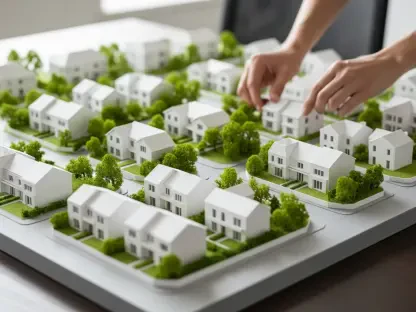
Forma Building Design has emerged as a dedicated solution for the critical schematic design phase, where the most impactful decisions are made regarding a project’s viability and environmental footprint. In the past, architects often struggled with tools that were either too simplistic for professional accuracy or too cumbersome for the rapid iteration required during the initial stages of a project. The current platform solves this by offering a suite of tools that allow for the rapid setup of geolocated sites using contextual data from a dedicated marketplace. This capability enables designers to establish a project’s physical environment in minutes, providing a solid foundation for more creative and data-driven exploration. By pulling in terrain, satellite imagery, and existing building data, the platform ensures that the conceptual phase is grounded in reality from day one. This integration of real-world context allows for more accurate massing studies and site analysis, reducing the likelihood of major design changes later in the process. Consequently, firms can present more refined and technically sound concepts to clients, enhancing the competitive edge of their proposals while minimizing the risk associated with early-stage assumptions.
Beyond site setup, the platform introduces design automations for complex elements like facades, floor plans, and unit layouts, which significantly accelerates the creative process. This allows architectural teams to explore a vast array of aesthetic and functional options without the burden of manual modeling for every single iteration. Crucially, the system integrates real-time performance analysis for factors such as daylight, sun hours, and carbon impact, providing immediate feedback on design choices. This “shift-left” approach ensures that sustainability and building performance are not afterthoughts but are instead baked into the project from the very first sketch. When a design moves forward, the designation of Revit as the inaugural “Forma Connected Client” ensures that the transition is seamless. Data moves from the cloud environment into the documentation environment as geolocated, native models, preserving the integrity of site context and building elements. This connection does more than just transfer geometry; it also extends the reach of environmental analysis tools, allowing capabilities once exclusive to the cloud to be utilized directly within the Revit workspace. By reducing the friction between exploration and documentation, the workflow provides teams with the confidence to move back and forth between different levels of detail throughout the project.
Advanced Analytics: Prioritizing Sustainability Through Carbon Insights
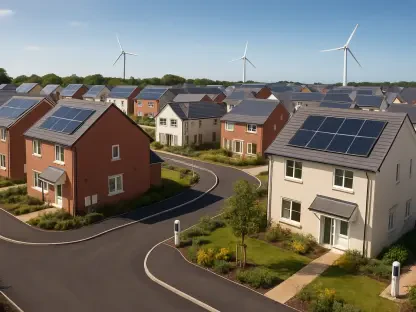
Sustainability has transitioned from an optional feature to a fundamental requirement in modern AECO projects, driven by both regulatory pressure and client demand for greener buildings. To meet this demand, the introduction of Forma Carbon Insights provides a tool designed to democratize carbon analysis for all designers, regardless of their specific technical specialization. By making carbon data accessible during the early design phases—where changes are most cost-effective—the platform empowers teams to make decisions that align with global environmental goals. This integration ensures that the carbon footprint of a building is monitored and optimized from the moment the project is conceived, rather than being assessed post-facto. Designers can now evaluate the trade-offs between different structural materials or building shapes in real-time, understanding how each decision impacts the total embodied and operational carbon of the structure. This level of transparency is essential for meeting the stringent carbon neutral targets that have become the standard for the 2026 to 2030 period. By providing a clear roadmap for reduction, the tool helps firms navigate the complexities of sustainable design without needing a dedicated team of specialists for every minor iteration.
The application of environmental analysis extends beyond carbon to encompass a wide range of factors that influence human comfort and energy efficiency. Real-time feedback on daylighting, wind patterns, and thermal performance allows architects to refine building orientations and window-to-wall ratios with unprecedented precision. This data-driven approach replaces intuition with evidence, ensuring that the final structure performs exactly as intended once constructed. Moreover, the connectivity between these cloud-based analyses and the detailed Revit model ensures that as the project evolves, the performance metrics remain up to date. If a change is made to the structural system or the facade treatment in Revit, the updated data can be analyzed to see if it still meets the initial sustainability goals. This continuous loop of feedback prevents the gradual erosion of performance targets that often occurs during the long and complex documentation phase. Ultimately, the focus on integrated analytics represents a shift toward a more responsible form of architecture where environmental impact is a primary design driver. By lowering the barrier to entry for sophisticated analysis, the industry is moving toward a future where every building is optimized for both its inhabitants and the planet.
Intelligent Orchestration: Leveraging AI in Modern Design Workflows
Artificial Intelligence is playing an increasingly central role in the digital ecosystem through the rollout of the Autodesk Assistant, which serves as a functional co-pilot. Unlike a standard chatbot that simply provides information, this assistant functions as an orchestrator of actions within Revit, AutoCAD, and Civil 3D. It understands the specific context of a user’s model, allowing it to execute complex tasks, catch potential design errors, and provide guidance based on industry best practices. For example, the assistant can identify inconsistencies in a building’s life safety systems or suggest more efficient routing for mechanical equipment based on the established geometry. This move represents a shift toward AI acting as a sophisticated partner that handles tedious technical details while human designers focus on high-level strategy and aesthetic vision. By automating repetitive tasks like sheet set management or basic clash detection, the assistant significantly increases the productivity of the entire design team. This enables firms to take on more complex projects without necessarily increasing their headcount, as the technology absorbs much of the traditional administrative burden.
The application of machine learning extends into generative exploration and visual storytelling through features like the Building Layout Explorer and new rendering capabilities. The layout explorer helps teams evaluate thousands of floor plan options based on specific performance criteria, such as maximizing leasable area while ensuring adequate emergency egress. Simultaneously, AI-driven rendering tools can turn simple sketches or massing models into atmospheric visualizations, allowing architects to communicate materiality and mood to stakeholders much earlier in the process. These tools allow for a more interactive relationship with clients, who can see the impact of their requests in high fidelity almost instantly. By automating the generation of options and visualizations, the technology is freeing designers to spend more time on the creative aspects of their work that require human empathy and cultural context. This synergy between human creativity and machine efficiency is defining the modern design process, where the ability to rapidly iterate and visualize ideas is more valuable than manual drafting skills. As these AI tools become more deeply embedded in the daily workflow, they are not replacing designers but are instead elevating the quality and speed of their output.
Digital Connectivity: Modernizing Core Portfolios and Infrastructure
While the industry is rapidly adopting cloud-native solutions, there is a parallel effort to ensure that core desktop applications remain vital components of the platform ecosystem. Notable updates to AutoCAD, such as the “Checkout” feature, allow multiple users to collaborate on shared files within the global data management system without the risk of overwriting each other’s work. By reserving specific geometry rather than locking an entire file, teams can avoid versioning conflicts and streamline their coordination, which is particularly beneficial for large-scale infrastructure projects. This ensures that even legacy workflows benefit from the increased connectivity of the cloud, providing a bridge for firms that are transitioning their processes at different speeds. The objective is to create a “single source of truth” where a drawing in AutoCAD is perfectly synchronized with a model in Revit and a site plan in Civil 3D. This level of synchronization is essential for reducing errors in the field, where discrepancies between different sets of documents can lead to costly delays and rework.
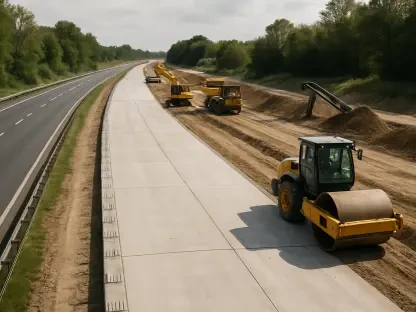
Infrastructure design is also seeing significant improvements through machine learning and enhanced data integration across various engineering disciplines. In Civil 3D, new “Horizontal Regression Analysis” uses pre-trained models to automate the generation of alignments for complex linear infrastructure like roads and railways. Furthermore, the partnership with GIS leaders like Esri has been strengthened to make geographic information the “system of record” for water asset management and urban planning. These updates to the core portfolio ensure that infrastructure and building projects are no longer designed in isolation but are instead part of a coordinated, data-rich environment. For instance, the integration of water portfolio tools allows engineers to simulate storm and sewer networks directly within the design environment, validating performance before a single shovel hits the ground. This holistic view of the built environment is necessary for creating resilient cities that can withstand the challenges of the current era. By breaking down the barriers between civil engineering, architecture, and GIS, the platformization of design is enabling a more comprehensive and collaborative approach to city building.
Strategic Realization: The Shift Toward Unified Industry Ecosystems
The primary finding from the recent advancements in the AECO sector was the successful execution of a unified industry cloud that bridged the gap between planning and documentation. By combining the agility of cloud-native tools with the deep technical capacity of traditional BIM software, the industry addressed the historical disconnect that led to project delays and data fragmentation. It was observed that firms adopting this connected approach reduced their rework cycles by significant margins, as conceptual models no longer required recreation in a professional BIM environment. The transition prioritized the continuity of data, ensuring that the intelligence gathered during the initial site analysis remained accessible and actionable throughout the building’s entire lifecycle. This shift established a new standard for project delivery where the digital twin was not an afterthought but a living document that evolved alongside the physical structure. The focus moved toward accessibility, making sophisticated analytical tools available to the general practitioner rather than being restricted to specialized consultants.
Ultimately, these developments represented a fundamental change in how the built environment was conceived and constructed, fostering a “design and make intelligence” that followed a project from inception to operation. To capitalize on these advancements, professional teams prioritized the migration of their legacy data into unified environments to ensure long-term interoperability. Organizations that invested in training their staff on AI-assisted workflows and real-time carbon analysis found themselves better positioned to meet the complex demands of modern urban development. The industry moved toward a more transparent and collaborative model, where the sharing of geolocated data and performance metrics became the basis for stakeholder trust. As the AECO sector continues to evolve, the emphasis will remain on maintaining this digital thread to maximize value and minimize environmental impact. The integration of these various technologies was not merely about software updates, but about a holistic transformation of professional practice to create a more resilient and efficient world. Professional firms adopted these tools to secure a future where data served as the foundation for every creative and technical decision.