
The true measure of a sophisticated smart home is not found in the number of applications installed on a smartphone, but rather in the degree to which those applications become entirely unnecessary for daily operations. For many homeowners, the initial excitement of controlling a light bulb from a mobile device quickly fades, replaced by the realization that manual digital control is often more cumbersome than simply flipping a physical wall switch. To escape this cycle of “gadget fatigue,” the focus must shift toward a philosophy of autonomous living, where the environment anticipates needs and responds to habits without requiring constant human intervention. This transition from a collection of isolated smart devices to a cohesive, self-regulating ecosystem is what defines the “set and forget” approach. By prioritizing background operations, a living space can be transformed into a highly efficient tool that reduces cognitive load and eliminates the friction of repetitive household chores. This strategy requires a move away from the novelty of remote control and toward the implementation of logic-based triggers that allow technology to function like a well-oiled machine, quietly enhancing the quality of life while remaining largely invisible to the inhabitants.
Achieving this level of seamless integration involves more than just purchasing the latest high-end appliances; it necessitates a strategic deployment of affordable bridging technologies, such as smart plugs, to modernize traditional household items. These devices act as a crucial link between the analog past and the digital present, allowing “dumb” appliances like fans, lamps, or humidifiers to participate in complex automation sequences. Whether a homeowner chooses a professional-grade DIY platform like Home Assistant or a more accessible consumer hub such as Amazon Alexa or Samsung SmartThings, the ultimate goal remains the same: offloading mundane responsibilities to the infrastructure of the house itself. When routines are correctly established, the mental energy previously spent on remembering to lock the front door, check the laundry, or prepare a morning beverage is reclaimed. This systematic reduction of small, nagging tasks creates a profound aggregate impact, fostering a sense of peace and order within the home that persists without the need for daily management or troubleshooting.
Streamlining Morning Rituals and Family Schedules
One of the most effective ways to experience the immediate benefits of a set-and-forget ecosystem is by automating the primary rituals of the morning, specifically the preparation of hot beverages. For many, the first action of the day involves navigating to the kitchen to boil water, a task that introduces a minor but consistent delay in the morning routine. By utilizing a standard electric kettle paired with a heavy-duty smart plug, this process can be fully automated to ensure that water reaches the desired temperature precisely as the household wakes up. This specific automation serves as an excellent case study in the human-machine partnership, where the user performs a simple physical preparation—filling the kettle and depressing the mechanical switch—the night before. The smart ecosystem then handles the execution of power delivery based on a predefined schedule or a trigger tied to an alarm clock. This synergy between manual preparation and automated execution ensures that the technology serves a practical purpose, providing a tangible reward for minimal effort and effectively streamlining the busiest part of the day.
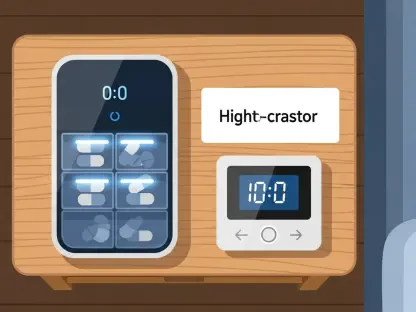
The utility of scheduled automations extends deeply into the realm of childcare and parental sanity, where maintaining rigid environmental consistency is often the key to successful bedtime routines. For toddlers and young children, predictable cues like the activation of a humidifier or the shifting of a bedroom clock to a specific “sleep color” provide vital behavioral markers that signal the end of the day. By automating these environmental factors to occur at a precise time, such as 7:30 PM, the smart home reinforces a structure that persists even when parents are exhausted or distracted. This consistency is particularly valuable during transitions, such as moving a child from a crib to a larger bed, as the familiar automated cues remain a constant source of comfort and discipline. Because these systems function autonomously, they eliminate the need for parents to manually toggle switches or adjust settings during the chaotic bedtime window. Over time, these routines become so deeply ingrained in the household fabric that they require no further thought, illustrating how technology can support developmental milestones and maintain domestic harmony through simple, reliable repetition.
Maximizing Utility with Sensors and Interoperability
Extending the smart ecosystem to the exterior of the property offers a significant opportunity to enhance both functional utility and aesthetic appeal through the use of motion-sensing technology. Outdoor environments, such as decks and patios, often benefit from lighting that responds to human presence, yet these areas are frequently plagued by “over-active” sensors that trigger lights due to distant movement or passing animals. Achieving a true set-and-forget state in these zones requires a focused effort on technical fine-tuning, specifically by adjusting the sensitivity and distance parameters of motion detectors. When a system like Govee Outdoor Lights is calibrated correctly, it ensures that illumination is provided only when the space is intentionally occupied, preventing light pollution and energy waste. Once these refined parameters are established, the automation operates flawlessly in the background, requiring no further manual adjustment for years at a time. This level of precision transforms a potentially annoying gadget into a reliable architectural feature that anticipates the user’s arrival and departure with perfect accuracy.
Within the interior of the home, the challenge of interoperability between disparate brands often prevents a truly cohesive experience, yet bridging these gaps is essential for solving common frustrations like forgotten laundry. It is a frequent occurrence for damp clothes to be left in a washing machine because the appliance’s audible chime was too quiet to be heard from a home office or another floor. By leveraging the cross-platform capabilities of systems like Samsung SmartThings and Amazon Alexa, homeowners can create a notification bridge that broadcasts an announcement through smart speakers throughout the house. When a washer or dryer finishes its cycle, a vocal alert can be triggered in the specific rooms where people are most likely to be located, ensuring that the transition of laundry happens promptly and preventing the need for repeat cycles. This type of inter-device communication solves a specific, recurring logistical problem by using the strengths of different ecosystems to compensate for the physical layout of the home, effectively closing the gap between the chore and the inhabitant.
Enhancing Security and Biological Well-Being
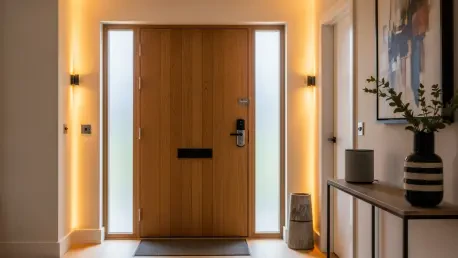
Modern security solutions have moved beyond simple alarms to focus on the elimination of daily friction, particularly during the transition of entering or leaving the home. The integration of high-quality smart locks, such as those from the Yale Assure series, provides a significant upgrade to the standard deadbolt by introducing the concept of the “auto-lock” feature. This automation addresses a universal psychological burden: the nagging doubt regarding whether the front door was secured after a hurried departure. By configuring the lock to engage automatically after a set duration, the smart home takes full responsibility for the perimeter, allowing the occupants to focus on their commute or their tasks without a second thought. Furthermore, the ability to verify the lock’s status remotely via a smartphone provides an additional layer of reassurance that traditional hardware cannot match. This transformation of home security from an active, high-stakes task into a passive background process exemplifies the core objective of a set-and-forget ecosystem, where the technology provides peace of mind through silent, reliable performance.
Beyond physical security, a well-designed smart home can actively support the biological needs of its inhabitants, particularly during physically demanding periods such as the arrival of a newborn. Circadian-rhythm lighting, achieved through color-changing bulbs like those from WiZ, can be programmed to emit specific wavelengths of light that do not disrupt the production of melatonin. During nighttime feedings or diaper changes, the automation of red-hued lighting ensures that both the parent and the infant remain in a “sleep-ready” state, making it far easier to return to rest once the task is completed. This targeted application of lighting science addresses a fundamental physiological requirement, proving that the value of a smart home lies in its ability to adapt to the biological realities of human life. While such a specific routine may only be needed for a few months, the modular nature of smart ecosystems allows these configurations to be saved and reactivated as needed. This adaptability ensures that the initial investment in smart hardware continues to provide customized support as the needs of the family evolve over many years.
Future-Proofing Through Modularity and Adaptation
The long-term success of an automated household depended on the modularity of its components and the ability to reactivate specific routines when life circumstances shifted. Homeowners who invested in versatile ecosystems discovered that the time spent on initial configurations yielded dividends far beyond the first year of use. By saving successful automation profiles for tasks like infant care, seasonal holiday lighting, or guest room management, users were able to toggle complex behaviors on or off with minimal effort. This approach moved away from the idea of a “fixed” smart home and toward a dynamic environment that grew alongside the family. The modularity of smart plugs and interoperable hubs meant that as technology advanced, individual pieces were replaced without dismantling the entire logic of the household. This flexibility proved to be the most critical factor in maintaining a set-and-forget environment that did not become obsolete as new devices entered the market or as the residents moved between different stages of life.
The most effective smart home strategies were those that prioritized reliability and the removal of digital friction through thoughtful, low-maintenance triggers. Practical next steps for any enthusiast involved auditing current household pain points—such as the forgotten laundry or the dark entryway—and identifying the simplest possible automation to resolve them. It was found that a single smart plug used for a morning kettle provided more daily value than a dozen complex voice-controlled gadgets that lacked a clear purpose. To achieve a truly seamless experience, users were encouraged to focus on one room at a time, ensuring that each new automation was “set” correctly before moving on to the next. By treating the smart home as an evolving project rather than a one-time installation, inhabitants were able to create a living space that felt genuinely intelligent. Ultimately, the transition to a fully autonomous home was reached when the technology became so dependable that it was no longer noticed, allowing the focus of the household to remain entirely on the people living within its walls.