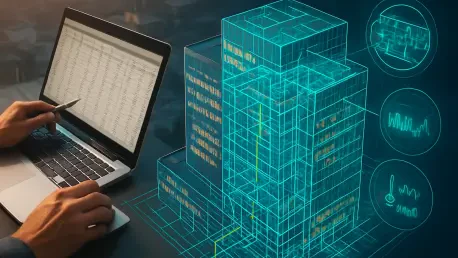

The historical approach to managing large-scale commercial real estate has long relied on fragmented spreadsheets and reactive maintenance schedules that often address problems only after they have caused significant operational disruptions. Today, however, digital twin technology has successfully transitioned from a conceptual, high-tech novelty into an essential cornerstone of modern facilities management. These sophisticated digital replicas function as comprehensive, real-time databases that meticulously track every single component of a building’s infrastructure, far exceeding the capabilities of basic three-dimensional visualizations. By integrating a constant stream of live data from HVAC systems, intelligent lighting, and occupancy sensors, organizations can move beyond static blueprints to gain a truly dynamic understanding of their physical assets. This evolution allows stakeholders to visualize the invisible, turning raw sensor data into a coherent narrative of building health.
This profound technological shift is fundamentally altering the way commercial real estate operates by providing unprecedented visibility into previously hidden inefficiencies that once drained budgets and resources. With the strategic guidance of industry experts, modern enterprises are now treating digital twins as indispensable tools for interrogating building data rather than just viewing it passively. This transition facilitates much more informed decision-making processes, ensuring that the physical environment remains perfectly optimized for both mechanical performance and individual occupant comfort throughout the day. The ability to simulate various environmental scenarios before implementing them in the physical space allows for a level of precision that was previously impossible to achieve. As a result, facility managers are no longer guessing how a building might react to heatwaves or capacity crowds; they are operating based on precise, empirical evidence provided by their digital counterparts.
Enhancing Asset Performance and Fiscal Efficiency
One of the most immediate and tangible impacts of implementing digital twins is the decisive shift from traditional reactive maintenance to a highly sophisticated model of predictive intelligence. Facilities teams are now empowered to monitor the real-time health of critical mechanical equipment, identifying subtle anomalies or potential faults well before they escalate into catastrophic and expensive failures. By leveraging this granular level of operational intelligence, businesses can implement smarter, more flexible maintenance schedules that minimize unexpected downtime and significantly extend the functional lifespan of high-value machinery. This proactive stance is particularly vital for complex components like large-scale centrifugal chillers and integrated building management systems that are the backbone of facility operations. The outcome is a resilient infrastructure where the risk of sudden mechanical collapse is replaced by a controlled, data-driven cycle of continuous improvement and hardware preservation.
Beyond the obvious benefits of operational reliability, the financial justification for investing in digital twins is becoming increasingly clear through measurable energy savings and cost reductions. Recent industry data indicates that organizations typically experience a reduction in energy consumption by up to twenty percent, paired with a ten percent decrease in overall operational expenses. To maximize this return on investment, forward-thinking leaders are adopting a specific strategy known as “data with purpose,” which prioritizes the digitization of high-impact systems. Rather than attempting to map every minor or inconsequential detail of a facility, which can lead to data fatigue and bloated budgets, the focus remains on resource-intensive areas like climate control and lighting. This targeted approach ensures that the digital twin provides immediate value by addressing the most significant contributors to a building’s carbon footprint and operational overhead, creating a lean enterprise.
Securing Lifecycle Integrity and Executive Transparency
The utility of a digital twin begins long before the first tenant occupies a space, offering distinct strategic advantages during the complex phases of construction and operational commissioning. These digital records act as a “single source of truth,” allowing property owners and developers to verify with absolute certainty that contractors have met exact performance standards and that systems are functioning correctly. This high level of transparency ensures a much smoother handover process between the construction crew and the facilities management team, eliminating the common information gaps that plague new developments. Furthermore, the digital twin creates a permanent, immutable historical log that supports the building through its entire functional lifecycle, from inception to eventual renovation. This digital thread provides future managers with a comprehensive understanding of the building’s hidden anatomy, ensuring that every repair or upgrade is informed by the original design intent and operational history.
At the executive level, digital twins serve as a vital bridge that connects daily facility operations with high-level corporate objectives and long-term strategic goals. Chief Financial Officers and Sustainability Officers can now utilize real-time analytics to track environmental, social, and governance performance with a level of accuracy that satisfies modern regulatory demands. By aligning granular building data with carbon neutrality targets, leadership teams can make data-backed commitments to stakeholders regarding their ecological footprint and operational efficiency. As the technology continues to mature, the focus is also expanding to include robust cybersecurity protocols at the network edge, ensuring that as buildings become smarter, they remain defended against digital threats. The integration of secure, scalable platforms allows executives to oversee vast portfolios of properties from a single interface, transforming the basement mechanical room into a dashboard for global corporate strategy.
Achieving Long-Term Scalability through Data Governance
The path forward for smart building strategy was defined by a commitment to rigorous data governance and the integration of interoperable software platforms that allowed diverse systems to communicate. Successful organizations moved away from siloed applications, opting instead for unified environments where digital twins acted as the central nervous system for all facility operations. By establishing these secure and scalable frameworks, companies ensured that their digital assets remained resilient against emerging cyber threats while providing a flexible foundation for future technological upgrades. This shift towards a unified networking environment allowed for the seamless addition of new sensors and AI-driven analytics without compromising the integrity of existing infrastructure. Consequently, the digital twin was no longer viewed as a standalone project but as a foundational layer of the corporate IT landscape, providing the necessary agility to adapt to changing workplace trends and evolving environmental regulations.
To fully realize these benefits, leadership teams prioritized the recruitment of specialized talent capable of interpreting complex datasets and translating them into actionable operational insights. They also established clear protocols for data sharing between third-party contractors and internal departments, ensuring that the “single source of truth” remained accurate and updated in real time. This proactive approach to data management mitigated the risks of information decay and ensured that the digital twin remained a valuable asset throughout the building’s lifespan. By focusing on purposeful data collection and robust security at the edge, organizations created a sustainable model for smart building management that balanced performance with security. These steps transformed the built environment into a responsive, high-performing asset that supported both business growth and environmental stewardship. Ultimately, the integration of digital twins proved to be the defining factor in achieving a truly intelligent, cost-effective property portfolio.