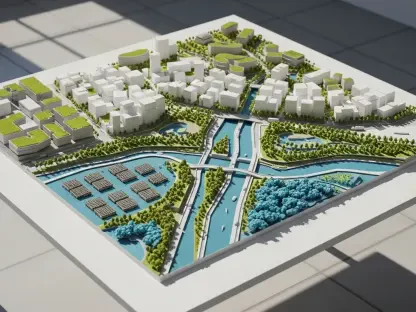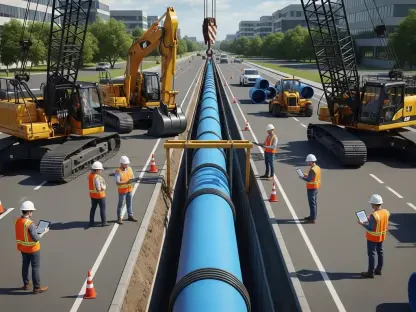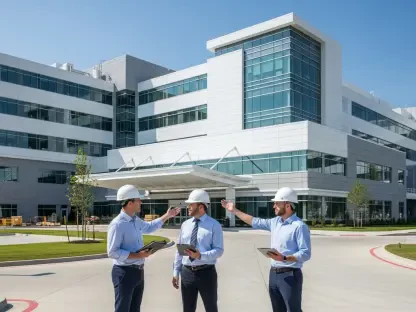

The global skyline serves as a breathtaking testament to human ingenuity, yet the digital workflows powering these multi-billion dollar feats of engineering are shockingly antiquated. While sectors like finance, telecommunications, and media have undergone multiple cycles of radical digital transformation, the Architecture, Engineering, and Construction (AEC) industry remains a historical anomaly, operating largely on principles established decades ago. This $13 trillion sector is the backbone of modern civilization, responsible for everything from critical power grids to the massive data centers fueling the current artificial intelligence boom, yet it ranks among the least digitized components of the global economy. This profound disconnect between the physical sophistication of our built environment and the primitive software used to design it has created a structural bottleneck that threatens to stifle global growth and infrastructure development.
The Architecture of Inefficiency
Fragmentation and Fragmented Communication
The AEC ecosystem is a complex web of specialized stakeholders, including developers, architects, structural engineers, and mechanical, electrical, and plumbing (MEP) consultants, who often work in isolation. Each professional group operates within its own silo, maintaining proprietary datasets and focusing strictly on a narrow slice of the building’s overall lifecycle. This fragmented structure is the primary source of the industry’s systemic inefficiency, as critical knowledge is rarely shared through an integrated, fluid data stream. Instead, the industry relies on a “batched” communication style, where information is handed off at specific milestones rather than being synchronized in real-time. This lack of cohesion means that a change made by an architect to a floor plan might not be reflected in the structural engineer’s model for several days, creating a perpetual state of data misalignment that plagues even the most prestigious projects.
Because information is often exchanged through static mediums such as PDFs, spreadsheets, and emails rather than live, interoperable data environments, critical updates frequently fail to reach the parties who need them most. A simple adjustment to a structural steel beam can go unnoticed by an MEP consultant who is simultaneously routing heavy HVAC ductwork through that exact spatial coordinate. These “clashes” are not merely logistical inconveniences; they represent significant financial liabilities that result in expensive field orders and construction delays. By the time these errors are discovered on the construction site, the cost of remediation is exponentially higher than it would have been during the design phase. This persistent failure to achieve true interdisciplinary coordination is a direct byproduct of a communication model that prizes individual document production over holistic project intelligence, leaving the industry vulnerable to avoidable mistakes.
The Dynamics of Project Silos
Within the traditional project delivery framework, the “contractual wall” often prevents the early sharing of information that could optimize the buildability of a design. General contractors and specialty subcontractors are frequently brought into the process only after the design is largely finalized, leading to a phenomenon known as “value engineering,” where designs are stripped back to meet budgetary constraints that should have been addressed months earlier. This late-stage intervention creates a friction-filled environment where the original design intent is often sacrificed for the sake of survival. Furthermore, the lack of a “single source of truth” means that every stakeholder maintains their own version of the project reality, leading to endless hours of manual reconciliation and cross-checking that adds zero value to the final product but consumes a massive portion of the professional fee.
Moreover, the heavy reliance on manual data entry across these silos introduces a high probability of human error that compounds as a project moves from concept to completion. When an electrical engineer manually transcribes room requirements from an architect’s PDF into a separate load calculation spreadsheet, the risk of a typo or an overlooked revision is ever-present. This systemic issue is exacerbated by the sheer scale of modern infrastructure, where a single data center project might involve thousands of individual components and miles of internal piping and cabling. Without a unified digital fabric to weave these disparate threads together, the AEC industry remains trapped in a cycle of reactive problem-solving, where the primary goal of the professional is often to mitigate the risks created by their own disconnected workflows rather than pushing the boundaries of design innovation.
The Legacy of Software Monopolies
The Revit Dominance and Its High Costs
At the center of this technological stagnation sits Autodesk’s Revit, a platform that has maintained a near-total monopoly on the Building Information Modeling (BIM) market since its strategic acquisition in the early 2000s. While Revit was revolutionary at its inception for introducing the concept of a parametrically linked 3D model, its core engine and user interface have seen remarkably little innovation over the last twenty years. The software remains a desktop-heavy application that relies on a “save and sync” model, which is fundamentally incompatible with the high-speed, collaborative, and cloud-centric requirements of modern project management. Despite the global shift toward web-native applications and real-time multiplayer editing, Revit users are still forced to navigate a clunky, resource-intensive environment that often requires specialized hardware just to open a complex project file.
This monopoly is sustained by a powerful “lock-in” effect that permeates both the academic and professional worlds, making the barrier to entry for competitors incredibly high. Revit is the de facto standard curriculum in almost every architecture and engineering school globally, ensuring a self-perpetuating talent pool that is trained to work within the Autodesk ecosystem. Furthermore, major design firms have invested millions of dollars and decades of labor into developing proprietary templates, custom component libraries, and historical project data formats that are strictly compatible with Revit. This deep institutional entrenchment makes it financially and operationally daunting for any large firm to migrate to a newer, more efficient platform. Consequently, the incumbent has been able to focus its efforts on aggressive licensing models and price increases rather than delivering the transformative feature updates that the industry desperately needs to evolve.
Resistance to Platform Innovation
The industry’s reliance on a single software provider has also stifled the development of open standards that would allow for better interoperability between different design tools. While initiatives like Industry Foundation Classes (IFC) exist, the implementation within proprietary software is often flawed, leading to data loss when moving models between different applications. This “walled garden” approach ensures that firms remain tethered to a specific suite of products, even when specialized tasks could be handled more effectively by niche software. For the professional, this translates into a daily grind of fighting against software limitations rather than utilizing tools that enhance their creative and technical capacity. The lack of a competitive marketplace has removed the incentive for rapid iteration, leaving the AEC sector with tools that feel like relics of a previous computing era.
Furthermore, the hardware requirements for running such legacy BIM software have created a significant overhead cost for firms, necessitating frequent and expensive workstation upgrades. Because the software architecture is not optimized for modern cloud computing, the burden of processing complex 3D geometry falls entirely on the local machine, leading to frequent crashes and slow performance when handling large-scale models. This technical debt acts as a hidden tax on the industry, draining resources that could otherwise be allocated to research and development or sustainable design practices. The stagnation of the primary toolset has essentially frozen the industry’s methodology in time, preventing architects and engineers from adopting the agile, data-driven approaches that have become standard in virtually every other high-stakes engineering discipline.
The Economic Toll of Stagnation
The true cost of this digital stagnation is most visible in construction productivity data, which has remained remarkably flat or even declined in real terms while other sectors have seen triple-digit gains. Professionals in the AEC space reportedly spend roughly 35% of their time—over 14 hours per work week—on non-productive tasks such as manually hunting for project information, reconciling conflicting data sets, and fixing errors caused by poor coordination. This massive waste of human capital directly contributes to a global crisis where 85% of large-scale construction projects exceed their original budgets and 75% finish behind schedule. In an era where the demand for rapid infrastructure deployment is at an all-time high, these inefficiencies are no longer just an industry problem; they are a significant drag on the global economy.
In the United States alone, the financial impact of design errors and miscommunication is estimated at a staggering $177 billion in annual rework costs. Critically, a significant majority of these errors—nearly 70%—originate in the design drawings themselves rather than being caused by mistakes made by laborers on the construction site. This suggests that the tools used to create the “blueprints” for our world are fundamentally failing to provide the clarity and accuracy required for modern builds. The resulting legal disputes are equally massive, with North American construction litigation often valued at tens of millions of dollars per case. These battles usually revolve around “who knew what and when,” a direct consequence of disconnected design files and the lack of a transparent, auditable trail of digital decisions.
Consequences for Global Infrastructure
Beyond the immediate financial losses, the inefficiency of the AEC sector has profound implications for our ability to address global challenges such as climate change and urbanization. When design and construction are mired in manual, error-prone processes, there is little room for the rigorous optimization required to minimize the carbon footprint of new buildings. Architects and engineers are often so consumed by the basic task of coordinating pipes and beams that they lack the time to run sophisticated energy simulations or explore innovative, low-carbon materials. This results in a built environment that is less efficient and more resource-intensive than it needs to be, locking in high operational costs and carbon emissions for decades to come. The stagnation of our design tools is effectively a barrier to a more sustainable future.
The economic toll also manifests as a reduced capacity to deliver social infrastructure, such as affordable housing and modern healthcare facilities. When projects are consistently over budget and late, fewer public and private resources are available to fund the next wave of essential developments. The “productivity gap” in construction means that society is getting less for its investment, making it harder for cities to keep pace with growing populations. As the cost of labor and materials continues to rise, the only remaining lever for improving project viability is a radical leap in digital productivity. Without a shift toward more intelligent, automated, and collaborative systems, the AEC industry will remain an expensive bottleneck in the global effort to rebuild and modernize the physical world.
The Technological Turning Point
Semantic Understanding and Global Urgency
For decades, design software lacked the fundamental intelligence to “understand” what it was looking at, treating a 3D model merely as a collection of lines, planes, and shapes rather than a complex, interconnected system. However, the emergence of Large Language Models (LLMs) and advanced computer vision has fundamentally changed the technological landscape. Modern AI can now perform semantic classification of unstructured metadata, recognizing that a specific object is not just a “box” but a terminal heat pump that must adhere to specific fire codes, electrical requirements, and cooling loads. This shift allows software to move from being a passive drawing board to an active participant in the engineering process, capable of flagging regulatory violations and suggesting optimizations in real-time as the design evolves.
This technological shift is occurring at a moment of unprecedented global urgency for new infrastructure. The massive demand for hyper-scale data centers to support the AI revolution itself, combined with the global housing crisis and the race toward electrification, has placed an unbearable strain on the traditional AEC talent pipeline. There are simply not enough human engineers and architects in the workforce to meet these demands using the manual, Revit-based workflows of the past. This labor gap is no longer a localized issue but an existential threat to the delivery of critical projects. Consequently, firms that were previously hesitant to adopt new technologies are now looking toward AI-driven automation not just as a way to increase profit, but as the only viable way to maintain operational capacity in a high-demand environment.
The Convergence of Data and Design
The transition toward intelligent design systems is also being driven by the availability of massive datasets from previous construction projects. Historically, the knowledge gained from one building was rarely captured in a way that could be applied to the next; every project was essentially a “prototype” built from scratch. Today, AI models are being trained on millions of design files, allowing them to recognize patterns in how buildings are successfully assembled and operated. This allows for a move toward “generative design,” where an engineer can define the constraints of a project—such as site area, budget, and energy targets—and the AI can produce thousands of optimized options in a fraction of the time it would take a human to draw one. This doesn’t replace the designer but elevates their role from a manual drafter to a curator of high-performance solutions.
Moreover, the rise of the “digital twin” concept—where a physical building is mirrored by a live digital model—is creating a feedback loop that was previously impossible. Sensors embedded in modern structures provide real-time data on energy usage, occupancy, and structural health, which can be fed back into the AI design engines to inform future projects. This creates a continuous improvement cycle that mirrors the rapid iteration seen in the software industry. As the built environment becomes more data-rich, the tools used to design it must become more data-literate. The convergence of these trends suggests that we are moving toward a future where “building” a project will involve a sophisticated digital simulation that accounts for the entire lifecycle of the asset before a single shovel ever hits the ground.
New Pathways for Market Disruption
Three Strategies for AI Integration
Disruptive startups are currently attacking the AEC market through three distinct methodologies designed to bypass the traditional hurdles of legacy software. The most ambitious approach is “Direct BIM Replacement,” which focuses on building cloud-native, AI-first platforms that aim to replace Revit entirely. While this “rip-and-replace” strategy was historically considered a graveyard for startups due to the immense difficulty of matching Revit’s deep feature set, the speed of modern AI-driven development is shortening that gap. These new platforms are designed from the ground up for real-time collaboration, allowing multiple users to edit the same model simultaneously without the need for manual file syncing. By eliminating the “local file” bottleneck, these tools provide a level of agility that older desktop applications simply cannot match, appealing to a new generation of digital-native architects.
A second, more tactical approach is the “Workflow Overlay” strategy, which targets the massive “white space” of tasks that currently occur outside of the primary design software. These AI tools are designed to sit on top of existing workflows, using computer vision and natural language processing to scan sets of PDFs, spreadsheets, and emails to identify coordination errors before they reach the field. This “Trojan Horse” model is gaining rapid adoption because it doesn’t require a firm to abandon its investment in Revit. Instead, it provides immediate, quantifiable value by solving the multi-billion dollar rework problem. As these tools become an essential part of the quality control process, they slowly become the new “system of record” for project intelligence, eventually marginalizing the legacy software that they once merely supported.
Scalable Solutions for Complex Engineering
The third strategy focuses on “Services Automation,” specifically targeting the labor-intensive mechanical, electrical, and plumbing (MEP) sector. MEP engineering is largely a rule-based discipline dictated by rigid building codes and physical constraints, making it an ideal candidate for AI-driven automation. New platforms can now take an architect’s floor plan and automatically route thousands of feet of piping, ductwork, and electrical circuits in a matter of minutes—a task that previously took teams of engineers several months to complete manually. This doesn’t just improve efficiency; it fundamentally changes the economics of the engineering firm. Instead of billing for thousands of manual hours, firms can transition to a model where they provide high-speed, high-accuracy design products, allowing them to take on a much larger volume of work without increasing their headcount.
This automation is particularly critical for the development of highly complex facilities like hospitals and semiconductor fabs, where the density of internal systems is extreme. In these environments, the “clash detection” capabilities of AI are far superior to human oversight, ensuring that the design is 100% buildable before construction begins. As these automated services prove their worth, we are seeing a shift in how value is captured in the industry. The business model is evolving from selling software licenses (“seats”) to selling “outcomes,” such as a completed, code-compliant MEP design. This aligns the incentives of the technology provider with those of the project owner, creating a more sustainable and performance-driven ecosystem that rewards efficiency and accuracy over the mere passage of billable time.
A Future Built on Intelligence
Overcoming the Bottleneck of Progress
The collective realization that the status quo is unsustainable has reached a tipping point, signaling the end of the AEC industry’s “analog hangover.” For the first time in thirty years, the connective tissue of the construction industry is being fundamentally rewired to meet the demands of a high-speed, high-stakes global economy. The transition from 1990s-era desktop applications to AI-native, cloud-first platforms is more than just a software upgrade; it is a total reimagining of how society conceptualizes and executes its physical environment. As the “local save and sync” model of the past is replaced by intelligent, real-time systems, the industry is finally shedding the inefficiencies that have made it a drag on global GDP for so long.
Moving forward, the successful AEC firms will be those that embrace AI not just as a tool for drafting, but as a core component of their project delivery strategy. This shift requires a cultural change within firms, moving away from a protectionist mindset regarding data and toward a more collaborative, transparent approach to project management. To remain competitive, organizations should prioritize the integration of AI-driven quality control tools that can immediately reduce their exposure to rework and litigation. Furthermore, firms should begin the process of “cleaning” their historical project data, turning decades of experience into a structured asset that can be used to train custom AI models. This proactive approach to data management will be the primary differentiator between firms that thrive in the new era and those that are left behind by the pace of technological change.
Recommendations for the Path Ahead
For stakeholders across the AEC spectrum, the immediate focus should be on building a flexible digital infrastructure that can adapt to a rapidly changing toolset. Rather than remaining locked into a single vendor’s ecosystem, firms should advocate for and adopt open data standards that facilitate the flow of information between different AI-driven platforms. Developers and project owners have a unique role to play by mandating the use of automated coordination and performance-tracking tools as a contractual requirement. By setting high standards for digital delivery, owners can drive the necessary innovation through the entire supply chain, ensuring that they receive a higher-quality asset with fewer delays and cost overruns.
Ultimately, the goal of this digital transformation is to free the human designer from the drudgery of manual drafting and coordination, allowing them to focus on the high-level creative and strategic decisions that define great architecture and engineering. By leveraging AI to handle the “engineering” of the building—from code compliance to system routing—the industry can reclaim the time and resources needed to build a more sustainable, resilient, and beautiful world. The path forward is clear: the AEC industry must transition from being a consumer of antiquated tools to being a leader in the application of intelligent technologies. The buildings of the future are already being designed today, and they are being built on a foundation of digital intelligence that was once thought impossible.