
At an event typically dominated by consumer gadgets and sleek electronics, one of the world’s most iconic heavy equipment manufacturers redefined the boundaries of industrial technology with a forward-looking strategy unveiled at CES 2026. Caterpillar Inc. presented a comprehensive vision that firmly positions the company not merely as a builder of powerful machines, but as a crucial architect of the modern digital economy. Led by CEO Joe Creed and other key executives, the announcement detailed a decisive pivot toward a future where artificial intelligence and autonomy are deeply embedded in the very fabric of heavy industry. This strategy transcends simple technological upgrades, instead presenting a holistic ecosystem where intelligent equipment, data-driven insights, and a highly skilled workforce converge to tackle the most significant operational challenges facing customers worldwide. The company is charting a course toward what it calls the “next frontier,” a landscape where industrial machinery is a foundational enabler of everything from semiconductor production to the construction of vast data centers.
The Dawn of Industrial AI
A New Era of Intelligent Machinery
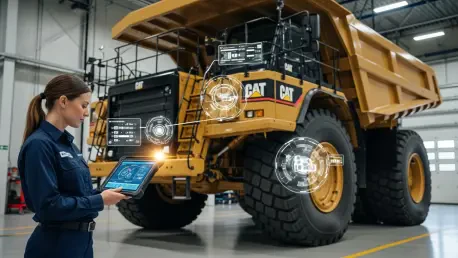
Caterpillar’s strategy is anchored by the deep integration of what it terms “Industrial AI” directly into its machinery, moving far beyond superficial software overlays to create truly intelligent and connected systems. The company underscored its fundamental role in the digital world, pointing out that its equipment is responsible for mining the raw materials essential for semiconductors and constructing the critical infrastructure, like data centers, upon which the global digital economy relies. This creates a powerful feedback loop where the tools of industry are becoming as intelligent as the technologies they help create. The vision is one where machines, vast streams of data, and real-time decision-making are intrinsically linked, allowing for unprecedented levels of efficiency and operational awareness. This foundational shift aims to transform how industries operate, turning traditional heavy equipment into sentient nodes within a larger, interconnected network of industrial intelligence, capable of optimizing their own performance and contributing to broader project goals.
A key pillar of this initiative is the newly unveiled Cat AI Assistant, a sophisticated conversational AI tool designed to unify the company’s extensive digital applications and data streams into a single, intuitive interface. Developed on Caterpillar’s proprietary Helios data platform, the assistant is engineered to provide customers with context-rich, actionable insights derived from a massive repository of operational information. This tool will empower users, from executives in the office to managers on the jobsite, to easily query complex datasets regarding machine performance, predictive maintenance requirements, and emerging operational trends without needing specialized data science skills. The goal is to democratize data analysis, making it accessible and immediately useful. Future development plans include integrating the Cat AI Assistant directly into the machine cab, allowing operators to interact with the system in real time, further bridging the gap between human expertise and machine intelligence to optimize tasks as they are being performed.
Strategic Alliances for Technological Supremacy
To accelerate its ambitious technological leap, Caterpillar announced a significantly expanded collaboration with NVIDIA, a move designed to harness the power of advanced AI infrastructure at an industrial scale. This strategic partnership is more than a simple supplier agreement; it represents a deep synergy between Caterpillar’s century of industrial expertise and NVIDIA’s undisputed leadership in the field of artificial intelligence. The primary goal of this alliance is to deploy powerful onboard AI features across Caterpillar’s entire equipment portfolio, effectively turning every machine into an intelligent, data-processing edge device. Furthermore, the collaboration will focus on scaling the deployment of AI agents that can learn from and adapt to their operating environments, leading to continuous improvements in efficiency and safety. By integrating NVIDIA’s technology, Caterpillar aims to set a new benchmark for automation and digital transformation, ensuring its systems are powered by the most capable AI platforms available.
The implications of this enhanced partnership extend beyond the equipment itself, promising to revolutionize Caterpillar’s own manufacturing processes. By leveraging NVIDIA’s AI capabilities within its factories, the company plans to create safer, more resilient, and highly efficient production systems. This involves using AI for predictive quality control, robotic automation, and optimizing supply chain logistics, thereby building a more robust and adaptive manufacturing ecosystem. This synergy allows Caterpillar to not only produce smarter equipment but to do so in a smarter way. The collaboration provides the computational horsepower and software frameworks necessary to rapidly develop, test, and deploy sophisticated AI models, shortening the innovation cycle and solidifying Caterpillar’s position as a leader at the intersection of heavy industry and high technology. It is a clear statement that the future of manufacturing is inextricably linked to advancements in artificial intelligence.
Expanding Autonomy and Empowering the Workforce
From the Mine to the Megaproject
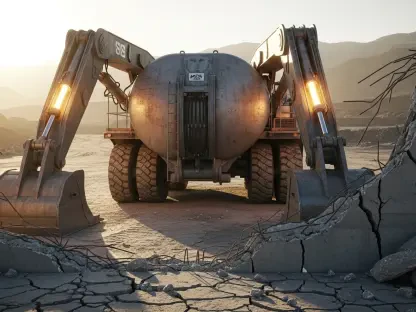
Leveraging over three decades of proven success in autonomous mining operations, Caterpillar is now strategically expanding its autonomous technology into the far more dynamic and complex construction sector. The company’s deep experience in creating self-operating fleets for mines—environments that are controlled but immensely challenging—has provided a robust foundation of knowledge and tested technology. At CES 2026, the company previewed five new autonomous construction machines, signaling a major strategic push to bring the transformative benefits of autonomy to large-scale construction and infrastructure projects. This transition is not a simple porting of existing technology; it requires adapting sophisticated systems to the unpredictable and constantly changing nature of a construction jobsite, where terrain, obstacles, and operational plans can shift daily. This move is designed to address some of the construction industry’s most pressing challenges by introducing a new level of precision and predictability.
The introduction of autonomous solutions to the construction industry promises to deliver the same core benefits that have revolutionized mining: enhanced safety, greater productivity, and improved consistency. By automating repetitive and often hazardous tasks, these machines can significantly reduce the risk of human injury on site. Autonomy also enables near-continuous operation, maximizing equipment uptime and accelerating project timelines, a critical factor in an industry where delays can lead to substantial cost overruns. Furthermore, autonomous machines execute tasks with a level of precision and consistency that is difficult for human operators to maintain over long shifts, ensuring higher-quality outcomes for grading, excavation, and hauling. This expansion represents a pivotal moment for the construction industry, offering a clear path toward safer, more efficient, and technologically advanced jobsites capable of meeting the demands of modern megaprojects.
Investing in Human Capital
Underpinning these profound technological advancements is a deep and tangible commitment to the human element of this industrial transformation. Caterpillar pledged a significant $25 million over the next five years to a new global innovation prize. This initiative is not merely a philanthropic gesture but a core strategic investment designed to identify, test, and scale effective solutions for workforce development. The prize will focus on programs that equip current and future workers with the essential skills needed to thrive in an increasingly digital and autonomous industrial landscape. This includes training in data analytics, robotics maintenance, and the operation of semi-autonomous systems. The company’s leadership has emphasized the belief that people are a core component of innovation, and that technological progress cannot be fully realized without a parallel investment in human capability. This initiative ensures that the transition to an automated future is inclusive and empowers the workforce rather than displacing it.
This commitment to human capital is situated within a much broader and long-term financial strategy, demonstrating its integral role in the company’s vision. The $25 million prize is part of a larger pattern of investment that includes approximately $30 billion dedicated to research and development over the past two decades. Looking ahead, Caterpillar plans a 2.5-fold increase in its digital and technology investments by 2030, a clear signal of its dedication to leading this industrial evolution. By placing a significant workforce development initiative alongside these massive R&D and technology expenditures, the company is creating a holistic ecosystem. This vision is one where intelligent machines, powerful data-driven insights, and a skilled, adaptable workforce are not separate pillars but a tightly integrated and mutually reinforcing system designed to solve the most complex operational challenges for its customers around the globe.
A Blueprint for a Connected Future
In a landmark presentation, Caterpillar laid out a vision that decisively shifted its identity from a traditional manufacturer of heavy equipment to a foundational technology company for the modern industrial age. The strategy detailed at CES 2026 was not an incremental update but a comprehensive blueprint for an interconnected future, where the digital and physical worlds merge on jobsites across the globe. By embedding Industrial AI into its core products, expanding a strategic alliance with an AI powerhouse, and extending its proven autonomous capabilities into new sectors, the company established a clear trajectory for the next generation of industry. This technological push was thoughtfully balanced with a substantial investment in the human workforce, acknowledging that the most advanced tools are only as effective as the skilled people who manage and maintain them. The initiatives revealed a holistic ecosystem designed to deliver unparalleled value through a convergence of intelligent machines, actionable data, and human expertise, setting a new standard for what is possible in the world’s most essential industries.