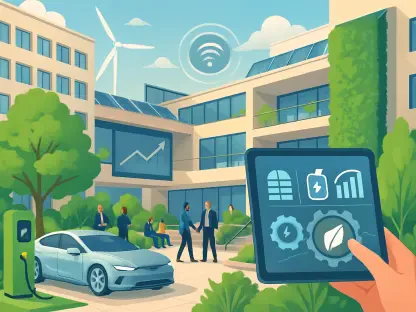

The global proliferation of connected devices has reached a stage where the environmental and logistical costs of maintaining power are becoming fundamentally unmanageable. As billions of sensors are deployed across smart cities and industrial landscapes, the reliance on traditional alkaline and lithium-ion batteries presents a looming ecological crisis characterized by toxic waste and resource depletion. This sustainability gap has catalyzed the development of wood-based supercapacitors, specifically the S-Cap technology, which leverages organic materials to provide a renewable energy storage alternative. By shifting away from the destructive cycle of heavy metal mining, these innovations offer a pathway toward a self-sustaining digital infrastructure that does not compromise the health of the planet. The core of this transition lies in utilizing lignin, a natural polymer found in plant cell walls, to create high-performance power sources that are both biodegradable and efficient. This evolution is not merely a technical upgrade but a necessary shift in how the industry perceives the lifecycle of electronic components in a hyper-connected world.
The Role of Lignin: Transforming Industrial Waste into Power
At the structural heart of this technological breakthrough is lignin, a complex organic polymer that provides rigidity to trees and plants, which has long been treated as a secondary byproduct of the pulp and paper industry. By repurposing this carbon-rich material, researchers have unlocked a method to produce energy storage devices that are entirely free from the rare earth elements and volatile chemicals found in conventional batteries. These lignin-based supercapacitors, or S-Caps, represent a transition from resource extraction to resource regeneration, as they utilize a renewable feedstock that is already produced at a massive scale globally. Unlike lithium-ion cells, which pose significant fire risks and environmental hazards during disposal, wood-based capacitors are non-toxic and inherently safe for use in sensitive indoor environments. This organic chemistry ensures that at the end of a device’s functional life, the power component does not contribute to the growing mountain of hazardous e-waste but instead aligns with the principles of a circular economy.
The manufacturing techniques employed to create these supercapacitors further distinguish them from the energy-intensive processes used in traditional battery production. S-Caps are manufactured using high-speed printing methods, allowing for the creation of thin, flexible energy storage units that can be integrated into nearly any form factor, from curved architectural elements to wearable textiles. This printing-like process significantly reduces the carbon footprint of production, as it requires less energy and fewer hazardous solvents than the assembly of metallic battery cells. Furthermore, the physical flexibility of these wood-based components allows designers to embed power storage directly into the structural materials of a building or a device, eliminating the need for bulky battery compartments. This adaptability is crucial for the next generation of IoT hardware, where aesthetic integration and spatial efficiency are as important as electrical performance. By combining sustainable materials with scalable manufacturing, the industry is establishing a new standard for responsible electronics.
Achieving Autonomy: The Shift to Maintenance-Free Systems
A primary challenge facing the expansion of smart building technology is the staggering labor cost associated with the periodic replacement of batteries across thousands of individual nodes. In a typical commercial high-rise, maintaining a network of temperature, occupancy, and air quality sensors can require a dedicated team of technicians constantly swapping out dead cells, a process that is both expensive and prone to human error. Wood-based supercapacitors address this operational bottleneck by functioning as the storage heart of energy-harvesting systems, which draw power from the surrounding environment. When paired with high-efficiency indoor photovoltaic cells, these capacitors store energy captured from ambient light, allowing sensors to operate indefinitely without any manual intervention. This creates a “set and forget” infrastructure where the power supply is as permanent as the building’s wiring, yet remains entirely wireless and modular. This shift effectively removes the concept of a “depleted battery” from the operational lexicon of modern facility management.
The value proposition for professional installers and building owners is often defined as “invisible sustainability,” where environmental benefits are achieved alongside significant cost savings. By eliminating the recurring expense of purchasing and disposing of thousands of batteries, the total cost of ownership for IoT networks drops dramatically over a multi-year horizon. Moreover, the reliability of these systems is enhanced because supercapacitors do not suffer from the chemical degradation or leakage common in traditional batteries, especially in fluctuating indoor temperatures. Installers can guarantee long-term performance to their clients, meeting rigorous green building certifications while ensuring that the smart infrastructure remains functional for decades. This reliability is essential for critical applications, such as emergency lighting sensors or security monitors, where a dead battery could lead to a systemic failure. As the industry moves away from planned obsolescence, the integration of organic energy storage ensures that smart environments are built on a foundation of durability and operational excellence.
Designing the Future: Scalable Infrastructure and Ecological Responsibility
The current trajectory of the Internet of Things suggests that the industry is approaching a critical juncture where traditional power solutions can no longer scale with the sheer volume of required devices. As the density of sensors in urban environments increases, the environmental impact of maintaining those devices through conventional means becomes a barrier to progress. Technology leaders are increasingly recognizing that energy harvesting, supported by sustainable storage like lignin-based capacitors, is the only viable path forward for the creation of truly smart cities. This transition marks the end of the 20th-century “disposable” mindset, replacing it with a model where electronic components are designed to be as enduring as the structures they inhabit. By moving toward organic systems, the digital world can continue to expand its data-gathering capabilities without placing an undue burden on the earth’s natural resources. This evolution reflects a growing maturity in the tech sector, where innovation is measured not just by speed or connectivity, but by the long-term viability of the systems being deployed.
Looking ahead, the integration of wood-based supercapacitors into the broader electronics ecosystem should be prioritized by manufacturers and urban planners alike. Organizations must move beyond pilot programs and begin incorporating these sustainable storage solutions into standardized hardware specifications for all low-power IoT applications. This shift requires a collaborative effort between material scientists, electrical engineers, and policy makers to ensure that the supply chains for organic components are robust and that recycling protocols are optimized for these new materials. In practice, this means moving toward “energy-neutral” buildings where every sensor is powered by the light or heat already present in the environment. By adopting these technologies today, the industry can avoid the looming waste crisis and build a digital infrastructure that is both technologically advanced and ecologically benign. The transition to lignin-based power is not just a strategic choice for individual companies but a foundational requirement for the sustainable growth of the global digital economy.
The adoption of wood-based supercapacitors represented a definitive departure from the unsustainable practices that characterized the early eras of mobile and connected technology. Industry leaders successfully demonstrated that organic materials like lignin could meet the rigorous performance demands of professional installations while providing a superior environmental profile. By integrating these capacitors with energy-harvesting technologies, the sector moved toward a model of permanent, maintenance-free connectivity that significantly reduced the total cost of ownership for smart infrastructure. This transition proved that the ecological footprint of the digital world could be managed through intelligent material selection and innovative manufacturing processes. As these systems became the standard for IoT deployments, the reliance on traditional, toxic battery chemistries declined, paving the way for a more resilient and responsible technological landscape. The shift toward organic energy storage ultimately ensured that the expansion of the Internet of Things remained compatible with global sustainability goals and resource conservation.