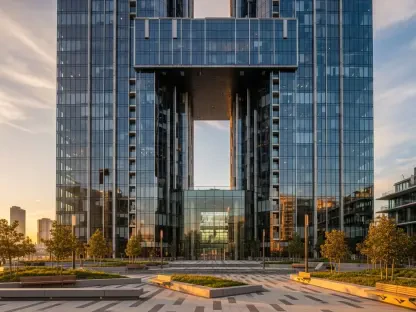

A groundbreaking AI-driven digital twin technology is poised to fundamentally reshape the architectural design process for zero-energy buildings, directly addressing the longstanding challenge of balancing energy efficiency with occupant comfort. As urban centers intensify their efforts to reduce carbon emissions, this innovation provides architects and engineers with a powerful tool for real-time analysis, overcoming the significant limitations of traditional design methods. The new system enables more informed, sustainable building strategies from the earliest stages of planning, promising to move the industry beyond theoretical models and into a new era of data-driven, high-performance architecture. This shift allows for the dynamic evaluation of complex variables, ensuring that the structures of tomorrow are not just environmentally friendly but also optimized for the human experience, a critical integration that has often been elusive in sustainable design practices until now.
The Persistent Bottleneck in Green Architecture
The central challenge in designing high-performance, zero-energy buildings lies in the profound inadequacy of existing design tools, which predominantly rely on static simulations. These conventional models can calculate projected energy use and comfort levels for a completed design, but they are fundamentally unable to provide dynamic, instantaneous feedback as that design evolves. This means that when an architect experiments with different layouts, materials, or window placements, they cannot immediately see the complex, cascading effects on heat flow, air circulation, and thermal comfort. Consequently, crucial decisions are often made based on estimations or past experience rather than on clear, data-driven insights derived from the active design process. This disconnect between creative exploration and empirical validation creates a significant barrier to achieving optimal performance, often leading to compromises that undermine a building’s sustainability goals before a single foundation is laid.
This problem is particularly acute for the implementation of advanced climate control systems like Task-Ambience Air Conditioning (TAAC), which are known for their considerable energy-saving potential. These systems operate by creating customized microclimates around individual workspaces while maintaining a more moderate temperature in the wider, ambient environment. Although their efficiency is well-documented post-installation, designers have historically lacked a practical method to test, compare, and optimize their impact during the conceptual or planning phase of a project. This inability to evaluate TAAC strategies early on has been a significant barrier to their wider adoption and effective integration into zero-energy building designs. Without a tool to visualize and quantify their performance in real time, architects are left to speculate on their effectiveness, slowing the progress of truly intelligent and responsive building climate management.
A Digital Twin Solution Emerges
To bridge this critical gap, a research team has developed an innovative AI-powered digital twin designed to revolutionize the design workflow. This sophisticated model, named VEEM-ZEB (Virtual Environment for Energy Management in Zero-Energy Buildings), is specifically engineered to analyze buildings that utilize task-ambience air conditioning. By running continuous, real-time simulations, the digital twin allows design teams to see precisely how their choices affect both energy consumption and indoor comfort while the building is still a blueprint. At its core, VEEM-ZEB is a rule-based symbolic AI model, an architecture that allows it to process complex variables and provide transparent, interpretable results. This approach empowers designers with immediate, actionable feedback, transforming the design process from a series of static calculations into a dynamic, interactive dialogue with the building’s future performance.
The key innovation of the VEEM-ZEB model is its sophisticated dual-zone approach, which moves beyond treating a room or building as a single, monolithic climate zone. It separately analyzes the air immediately surrounding individual workstations, known as the “task” environment, and the air in the larger, shared space, referred to as the “ambient” environment. This granular analysis enables the system to simultaneously evaluate two critical, often competing, factors: the localized thermal comfort of occupants and the overall energy expenditure of the building. To quantify comfort, the model integrates standardized and universally accepted indicators, such as the Predicted Mean Vote and the Predicted Percentage of Dissatisfied. The results are not just presented as raw data; they are visualized through a built-in Virtual Reality interface, allowing designers to “step into” their virtual building and immediately observe how changes in occupancy, layout, or climate settings impact energy usage and create thermal variations in real time.
A New Blueprint for Decision Making
The primary contribution of this research was the empowerment of architects and engineers to make smarter, data-informed decisions from the very beginning of the design process. By providing a platform to directly compare different air-conditioning setups and control strategies, the system ensured that the final design could be optimized for both performance and comfort. This approach of showing energy savings and comfort metrics side-by-side helped teams holistically understand the real-world implications of their architectural choices. The implementation of such a tool facilitated the creation of next-generation zero-energy buildings that were not only environmentally sustainable but also healthier and more pleasant places to live and work. By integrating advanced AI simulation directly into the creative workflow, this technology paved the way for a future where high-performance building design became more accessible, efficient, and effective.
The VEEM-ZEB system represented a significant leap forward by moving the complex evaluation of TAAC systems from the post-construction operational phase directly into the pre-construction design phase. This paradigm shift armed designers with predictive insights, effectively replacing guesswork with quantifiable data. The digital twin was built on a three-layer architecture that combined the clear logic of its rule-based AI with the intuitive, user-friendly VR environment. The robustness of the model was validated through extensive testing, during which it ran approximately 48,000 different design and operating scenarios. These simulations incorporated a wide range of standard parameters, including seasonal variations in external temperature, different occupancy levels, and diverse occupant behavioral patterns typical in office environments. The results of these tests demonstrated that the model could reliably and accurately identify more efficient and comfortable building configurations, providing a solid, evidence-based foundation for design choices.