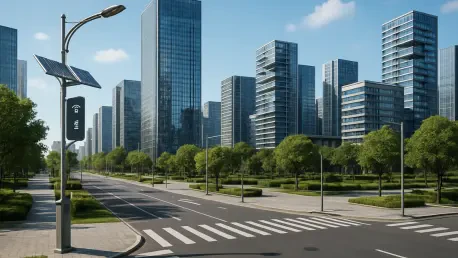

The unprecedented pace of urbanization across the African continent has created a critical juncture where traditional infrastructure must either evolve or succumb to the pressures of a rapidly growing population. Current projections from the United Nations Economic Commission for Africa suggest that more than 60 percent of the population will reside in urban centers by the middle of this century, necessitating a radical shift in how cities manage resources. This demographic surge is not merely a challenge of housing but a complex puzzle involving energy reliability, transportation efficiency, and environmental stewardship. As African municipalities seek to balance economic expansion with climate commitments, the integration of intelligent technologies has moved from an aspirational goal to a fundamental requirement for survival. By deploying sophisticated electrification and automation solutions, regional leaders are attempting to bypass the inefficient developmental stages experienced by older global cities, moving directly toward a decentralized and digitalized utility model that prioritizes sustainability.
Integrated Solutions for Urban Resilience
Building Automation: The Foundation of Energy Efficiency
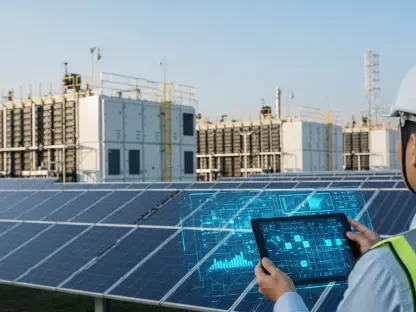
The transformation of African skylines begins with the modernization of individual structures through advanced automation platforms that unify disparate building systems. By utilizing standardized communication protocols such as ABB i-bus® KNX and flexible management tools like ABB Cylon®, developers are now able to consolidate lighting, climate control, and renewable energy monitoring into a single, cohesive data-driven framework. This level of integration allows commercial and residential buildings to respond dynamically to occupancy patterns and external weather conditions, significantly reducing wasted energy. In cities like Johannesburg and Nairobi, where energy costs and grid stability are constant concerns, these intelligent nodes serve as the first line of defense against inefficiency. The “Mission to Zero™” program provides a scalable blueprint for this transition, demonstrating that carbon-neutral operations are achievable through a combination of on-site solar generation and digital optimization that balances demand with available supply in real time.
Beyond simple energy savings, the adoption of smart building technologies fosters a safer and more responsive environment for urban dwellers across the continent. When sensors and automated logic control the internal climate and safety protocols of a high-rise, the operational burden on facility managers decreases while the reliability of essential services increases. This approach is particularly vital for critical infrastructure such as hospitals and data centers, where even a momentary power fluctuation can have severe consequences. By embedding intelligence directly into the electrical distribution boards and environmental controllers, ABB ensures that structures are not just passive shells but active participants in the city’s energy ecosystem. This shift toward self-optimizing buildings is essential for creating the resilient urban fabric required to support Africa’s industrial ambitions while simultaneously meeting the rigorous international standards for environmental performance and sustainability.
Electrified Mobility: Redefining Public and Private Transport
The shift toward sustainable urban environments is perhaps most visible in the rapid electrification of transportation networks within Africa’s major metropolitan corridors. As air quality and traffic congestion become major hurdles for economic productivity, the deployment of scalable electric vehicle charging solutions has become a top priority for forward-thinking municipal planners. ABB is addressing this need by introducing a comprehensive range of hardware, from compact AC wallboxes for residential use to high-performance DC fast chargers designed for the rigorous demands of public transit and commercial fleets. In cities like Cape Town and Kigali, the installation of this infrastructure is already facilitating a transition away from internal combustion engines, providing the necessary confidence for both private citizens and logistics companies to invest in electric alternatives. This infrastructure serves as the backbone of a new mobility paradigm that reduces local emissions and lowers the long-term costs of urban movement.
Strategic regional projects are currently demonstrating the viability of these technologies in large-scale applications that go far beyond individual vehicle charging. The development of the Lanseria Smart City and the modernization of the Durban Smart Port illustrate how integrated electrification can streamline complex logistics and residential hubs. In these environments, high-capacity charging stations are integrated with smart grid management to ensure that the influx of electric vehicles does not overwhelm the existing power supply. Instead, vehicle-to-grid capabilities and intelligent load balancing allow the transport sector to act as a buffer for the energy network, storing excess renewable power and releasing it during peak demand periods. This convergence of transport and energy management represents a significant milestone in the continent’s journey toward decarbonization, proving that modern engineering can solve multiple urban challenges through a single, unified technological approach.
Future Path for African Urbanization
The successful implementation of these technologies across Africa during this period suggests that the most effective route to sustainable development lies in the seamless convergence of power digitalization and automated infrastructure. Moving forward, the focus must remain on the integration of decentralized renewable energy sources with intelligent distribution networks to ensure that the growing energy demand does not compromise environmental goals. Municipalities should prioritize the adoption of open-standard digital platforms that allow for interoperability between different utility providers and technology vendors. This openness will prevent vendor lock-in and encourage a competitive ecosystem of innovation that can adapt to the unique socioeconomic conditions of each region. Furthermore, the expansion of high-speed EV charging corridors between major cities will be essential to support the broader regional trade and mobility required for long-term economic prosperity. Leaders and planners succeeded in laying the groundwork for a resilient future by treating technology not as an add-on, but as the core architecture of the modern African city.