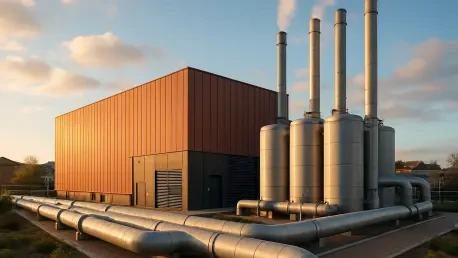

A silent revolution is currently unfolding beneath the pavement of Bristol, where a massive network of pipes is poised to replace the outdated reliance on individual gas boilers with a unified, carbon-free pulse. The recent planning approval for the Bath Road Energy Centre marks a definitive transition for the city, moving it from experimental green initiatives toward a robust, industrial-scale commitment to decarbonization. This facility is not merely a utility building; it is a declaration of intent for a city aiming to redefine how urban populations consume heat in an increasingly climate-conscious world.
Beyond the Boiler: A 13MW Shift in Urban Infrastructure
The realization of the Bath Road Energy Centre represents a seismic shift in how large-scale urban heating is conceived. By securing planning permission, Vattenfall Business Solutions UK has cleared the path for a 13MW facility that serves as a vital catalyst for regional change. The environmental statistics are staggering, with the project projected to slash annual emissions by 65%. This reduction is equivalent to removing approximately 3,700 diesel vehicles from the streets, providing a tangible breath of fresh air for the local community.
By centralizing heat production, the project successfully challenges the traditional, fragmented reliance on fossil fuels. Instead of thousands of individual boilers operating at varying levels of inefficiency, this single hub provides a streamlined solution. It effectively bridges the gap between old-world industrial practices and modern environmental requirements, proving that dense urban environments can indeed decouple growth from carbon output.
The Strategic Role of District Energy in Modern Cities
Bristol has set an ambitious target to heat at least half of its population via low-carbon grids by 2050, and the Temple Quarter regeneration area is the primary testing ground for this vision. This “city-scale network” concept relies on high-capacity hubs that can scale alongside urban development. The Bath Road site is strategically located to feed into this expanding grid, ensuring that as new buildings rise, they are plugged into a sustainable source from day one.
The transition toward a centralized thermal strategy represents a move away from localized, high-maintenance systems that are difficult to upgrade. In contrast, a district network allows the city to swap out heat sources as technology evolves without disturbing the end-user. This future-proofed approach ensures that the infrastructure remains relevant for decades, providing a reliable backbone for the city’s broader regeneration goals.
Engineering Innovation and Architectural Integration
Technically, the facility is a marvel of modern engineering, utilizing a sophisticated combination of industrial air source heat pumps and electric boilers to achieve maximum efficiency. This multidisciplinary collaboration between Vattenfall and Buro Happold has turned a disused plot into a landmark of functional design. The engineering focus remains on high-output reliability, ensuring that the 13MW capacity can meet the fluctuating demands of a growing urban core while maintaining a minimal carbon footprint.
Furthermore, the project successfully merges utility with aesthetics, a feat often neglected in civic infrastructure. Designed by Stride Treglown, the building features ribbed GRC panels and intricate lattice motifs that pay homage to Bristol’s Byzantine and industrial heritage. This thoughtful architectural integration ensures that the energy center is viewed as a point of civic pride rather than an eyesore, blending the city’s historical identity with its high-tech future.
Expert Perspectives on Decarbonization and Regeneration
Project leaders view the Bath Road facility as a critical milestone for UK energy transition targets, providing a blueprint for other metropolitan areas to follow. The social impact is substantial, as the center is expected to provide low-carbon heat to over 7,000 homes, alongside various schools and offices. This widespread reach demonstrates that sustainable infrastructure can be inclusive, delivering benefits to both private residents and public institutions simultaneously.
The consensus among the engineering community is that the synthesis of industrial functionality and civic design is essential for public buy-in. By creating a visible, attractive landmark, the project demystifies the technology behind the energy transition. This transparency fosters a sense of community involvement in the city’s sustainability journey, proving that the technical challenges of decarbonization can be met with solutions that enhance the urban fabric.
Implementing District Heating: Frameworks for Urban Success
Success in urban energy hubs depends on a precise mix of location, technology, and community integration. The Bristol model demonstrates that identifying disused land within high-density zones allows for significant infrastructure upgrades without displacing existing residents. For other cities to replicate this success, stakeholders must prioritize long-term municipal goals over short-term cost-cutting, ensuring that the technology implemented today can support the densities of tomorrow.
The next steps for urban planners involve scaling these networks beyond isolated regeneration zones. This requires a robust regulatory framework and sustained investment in sub-surface infrastructure. As Bristol moves forward, the focus shifted toward connecting existing neighborhoods to the new grid, ensuring that the transition to low-carbon heat was not a luxury for new developments but a standard for the entire city. Stakeholders identified that early adoption of these centralized models provided the necessary stability for further green investments.