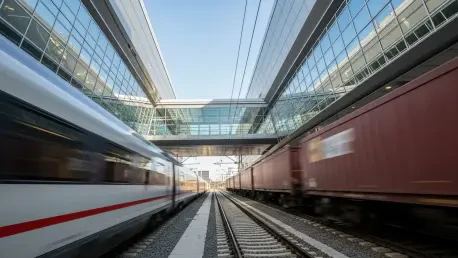

The British landscape is currently undergoing its most significant logistical transformation in a generation as the government maneuvers to salvage the strategic value of massive infrastructure investments. By pivoting the High Speed 2 (HS2) project into a dedicated freight-only artery and introducing “Rail Loop F” for passengers, Whitehall is attempting to bypass a decade of political gridlock. This analysis explores how this shift toward a bifurcated rail system aims to modernize the nation’s supply chain while simultaneously resetting the public’s expectations for high-speed travel.
The Legacy of Complexity and the Need for a Reset
For years, the HS2 project served as the primary vehicle for bridging the economic divide between the North and the South, yet it ultimately became a symbol of budgetary excess. The initiative was plagued by shifting scopes and administrative hurdles that rendered the brand politically unviable for future passenger expansion. Recognizing that the “legacy delivery complexity” of the previous model was a barrier to progress, officials have opted for a clean-sheet approach that preserves the physical work already completed while distancing new efforts from past failures.
This historical context is essential for understanding why a simple rebranding would not suffice. The government’s internal data suggested that public trust had eroded to the point where only a structural decoupling could restore momentum. Consequently, the transition to Rail Loop F is not just a tactical name change but a strategic pivot designed to regain the confidence of both taxpayers and institutional investors who had grown weary of the previous framework.
Reimagining Connectivity Through Segregation and Innovation
Repurposing HS2 as a Dedicated National Freight Artery
The decision to transform the existing HS2 infrastructure into a freight-focused corridor marks a major shift in utility toward national logistics. Instead of luxury passenger seating, the tracks will now prioritize the movement of supermarket goods and construction materials, effectively unclogging the West Coast Main Line. This move addresses a chronic bottleneck in the domestic supply chain, allowing for more reliable “just-in-time” delivery cycles across the country.
Rail Loop F: A Strategic Rebranding for Passenger Ambition
Rail Loop F represents the “reputational reset” required to bring high-speed passenger service back to the forefront of national policy. By focusing on a fresh procurement model and updated technology, the project aims to fulfill the original goals of connecting London, Manchester, and Leeds without the emotional baggage of its predecessor. The government is banking on the fact that while voters disliked the management of HS2, their appetite for shorter travel times remains higher than ever.
Addressing the Logistics of a Dual-Track National Strategy
Managing two separate high-capacity lines introduces a layer of operational complexity that requires precise synchronization. This “split-utility” model promises significant efficiencies by ensuring that slow-moving freight and high-speed passenger trains never compete for the same signals. While the initial costs of maintaining dual infrastructures are substantial, proponents argue that the long-term resilience of the supply chain justifies the upfront capital expenditure.
Future Trends in High-Speed Logistics and Transit
Looking forward, the UK’s strategy aligns with global movements toward decarbonizing heavy transport through rail electrification. As regulatory frameworks shift to favor green alternatives over long-haul trucking, a dedicated freight spine provides a massive advantage for carbon-neutral shipping. We can expect future developments to include automated cargo handling and advanced digital signaling, which will likely be standardized across both the freight line and Rail Loop F to maximize interoperability.
Navigating the Transition: Strategies for Success
To ensure this new era of rail succeeds, the government must prioritize transparency and meet immediate milestones to prove the viability of the freight corridor. Logistics firms should begin optimizing their routes now to take advantage of the increased capacity, as those who adapt early will likely see significant cost savings in distribution. For the broader public, the success of this transition will be measured by the reliability of the new passenger loop and its ability to deliver on the long-promised “Northern Powerhouse” connectivity.
Restoring Trust in the UK Rail Network
The move toward a segregated rail model was a pragmatic response to the political and financial exhaustion surrounding earlier projects. By utilizing existing infrastructure for industrial needs and launching a fresh passenger initiative, the administration sought to balance immediate utility with long-term national ambition. This strategy eventually allowed for a more specialized approach to transit, proving that even the most troubled projects could be salvaged through creative restructuring. Ultimately, the shift helped secure the UK’s position in a global market that increasingly values efficiency and environmental sustainability.