
The arrival of spring traditionally signals a profound psychological shift in how inhabitants interact with their domestic environments, necessitating a move away from the heavy, insulating layers that defined the winter months. As the sun begins to hold a higher position in the sky, the home’s relationship with natural light undergoes a significant transformation that requires more than just a superficial cleaning; it demands a strategic re-evaluation of the window as a focal point. Designers suggest that the window is the most vital element for this seasonal transition, serving as the primary conduit through which the outside world enters the interior. By modifying window treatments, homeowners can instantly alter the mood of a room, making it feel more expansive, airy, and deeply connected to the burgeoning outdoor landscape. The consensus among elite design experts is that these treatments should not merely be functional barriers against the elements but should serve as intentional art pieces that elevate the architectural integrity of a space.
One of the most prominent trends identified for the current 2026 season is the triumphant return of the Austrian blind, a style once relegated to the formal drawing rooms of historic European estates but now reimagined for contemporary living. The defining characteristic of the Austrian blind is its ruched, scalloped bottom edge, which provides a sense of drama and whimsy that standard roller shades simply cannot replicate. Modern iterations frequently appear in airy spaces such as bathrooms and dressing rooms, where the goal is to soften hard surfaces like tile or marble. Designers emphasize the use of high-quality fabrics such as silk and blue moiré, chosen specifically for their unique ability to hold volume and maintain a structured shape while remaining light enough to drape beautifully. When paired with secondary treatments like café curtains, these blinds create a layered look that blends historic charm with modern luxury, providing a romantic crown to the window without obstructing the lower view.
Balancing Privacy and Natural Illumination
Strategic Half-Window Solutions and Café Curtains
A recurring trend for smaller or high-traffic windows, such as those found in kitchens and pantries, is the deliberate implementation of the café curtain to solve the perennial conflict between light and seclusion. This specific treatment covers only the lower half of the window pane, offering a strategic balance that allows for street-level privacy while keeping the upper half completely unobstructed. By leaving the top section exposed, café curtains facilitate a phenomenon known as light streaming, where natural illumination cascades deep into the room even when the curtain is fully closed. This makes them an ideal choice for urban environments or rooms where daylight is essential for daily tasks but a sense of exposure to the outside world is undesirable. The architectural benefit is immediate, as it draws the eye to the center of the window rather than the floor, creating an illusion of height and openness that enhances even the smallest of utilitarian spaces.
The aesthetic versatility of these half-window solutions has expanded significantly, with experts recommending lace for a vintage, farmhouse feel or crisp stripes and small-scale geometrics for a more contemporary classic look. Selection of the mounting hardware is just as critical as the fabric itself, as simple brass or wrought iron rods provide a structural anchor that complements delicate patterns without overwhelming the frame. In the current design climate of 2026, many homeowners are opting for unlined linens that filter light into a soft glow, adding a tactile warmth to the room that feels both lived-in and meticulously curated. This approach naturally leads to a more relaxed atmosphere, where the window treatment acts as a subtle filter rather than a heavy barrier. Furthermore, the ease of installation and the minimal fabric requirements make café curtains an accessible entry point for those looking to refresh their space without committing to a full-scale structural renovation or expensive custom drapery.
Innovative Upholstery for Architectural Challenges
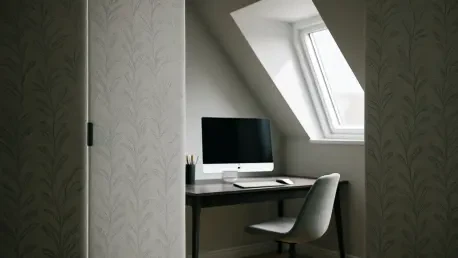
For unique architectural challenges, such as small dormer windows in lofts or cramped home offices, the upholstered shutter has emerged as a sophisticated alternative to traditional wooden or plastic slats. This trend moves away from hard-edged materials toward a fabric-forward approach, allowing designers to inject color, pattern, and softness into spaces that might otherwise feel stark or overly industrial. By wrapping a solid frame in high-quality textile, the shutter becomes a decorative panel that mimics the look of a custom headboard or a piece of wall art. Using botanical motifs or foliage-inspired block prints can turn a functional blackout tool into a genuine design moment, bridging the gap between the outdoors and the interior. This method is particularly effective in spaces with irregular angles where traditional curtains might look bulky or misplaced, providing a clean, tailored finish that respects the original lines of the building.
The practical benefits of upholstered shutters extend beyond their visual appeal, as the bi-fold design ensures they can be tucked away entirely during the day to maximize workspace lighting and views. This versatility is essential for the modern professional who requires a bright, energizing environment during morning hours but needs complete darkness or acoustic softening for evening relaxation or focus. The fabric padding acts as an effective sound dampener, reducing the echo in rooms with hard flooring and high ceilings, which is a common issue in contemporary loft conversions. During the night, the thick padding provides a superior blackout option compared to standard blinds, ensuring that external light pollution does not interfere with sleep. This fusion of textile art and structural functionality represents a shift toward more personalized home solutions where every element serves a dual purpose, catering to both the aesthetic desires and the practical needs of the modern inhabitant.
Layering Techniques for Depth and Texture
Combining Organic Materials with Traditional Fabrics
A major trend gaining momentum is the double-dressed window, an sophisticated technique that involves layering different types of treatments to create a sense of three-dimensional depth and visual complexity. This strategy is particularly useful for homeowners who wish to retain their existing heavy drapes for their insulating properties while introducing a lighter, spring-appropriate element into the composition. Designers suggest pairing traditional, tailored floral curtains with organic, textured blinds made of rattan, bamboo, or specialized chik materials. The juxtaposition of a structured, soft textile against a raw, natural fiber creates a sophisticated tension that grounds the room. The natural materials of the blind serve a functional role by diffusing harsh spring sunlight, which prevents the sun from bleaching interior fabrics and artworks, while the floral drapes provide the necessary warmth and pattern to frame the outdoor views effectively.
Building on this concept of material synthesis, the integration of organic textures allows for a more granular control over the atmosphere of a room throughout the day. When the sun is at its peak, the textured blind can be lowered to create a dappled light effect reminiscent of sunlight filtering through a forest canopy, adding a serene and calming quality to the interior. As the evening approaches, the heavier floral curtains can be drawn to provide a cozy, enclosed feeling that signals the transition to private time. This layered approach also offers an opportunity to experiment with color theory, such as matching the undertones of a bamboo blind with the stems in a floral print, creating a cohesive narrative that feels intentional rather than accidental. This method effectively turns the window into a multi-sensory feature of the room, where the rustle of the natural fibers and the softness of the fabric work together to enhance the overall living experience.
Modern Iterations of the Classical Pelmet
Pelmets, which are the decorative frameworks used to conceal curtain fixtures and tracks, are currently seeing a significant renaissance as designers find new ways to strip away their traditional stuffiness. While once considered a hallmark of formal or overly heavy Victorian decor, modern iterations use clever texture-mixing and simplified silhouettes to keep the look fresh and seasonally adaptable. Recent successful designs have utilized unexpected combinations, such as vibrant pink corduroy curtains paired with oatmeal-striped linen blinds, creating a playful yet sophisticated aesthetic. This mix of richness and simplicity is perfect for creating a dedicated reading nook or a cozy living area that feels anchored within the home’s architecture. The pelmet acts as a frame for the entire window assembly, drawing the eye upward and providing a clean finish that hides the mechanical components of the curtain system.
By utilizing a pelmet-and-blind combination, the window treatment becomes highly adjustable and responsive to the movement of the sun throughout the day. The blinds can be shifted independently of the curtains, allowing the inhabitant to follow the path of the light and maintain a bright interior without compromising the cozy, architectural feel that the pelmet provides. This structural element also offers an additional layer of insulation and light-blocking at the top of the window, where light leakage most frequently occurs. In contemporary settings, designers are opting for sleek, straight-edged pelmets covered in neutral fabrics like wool or heavy linen to provide a minimalist backdrop for more expressive curtain patterns. This approach ensures that the window remains a focal point that can be easily updated by simply changing the fabric of the curtains while the permanent pelmet remains a timeless fixture of the room’s design.
Contemporary Shifts in Fibers and Motifs
The overarching consensus among interior design experts for the 2026-2028 period is that the spring window refresh is primarily defined by a commitment to texture, sophisticated layering, and nuanced light-filtering. There is a clear and decisive shift toward natural fibers such as linen, silk, and rattan, which reflect a broader societal movement toward sustainable and biophilic design. Botanical motifs and large-scale floral prints are being utilized to mirror the awakening of the outdoor world, bringing a sense of organic growth into the domestic sphere. Styles that were once considered dated, such as Austrian blinds and pelmets, are being rejuvenated through the use of a contemporary color palette featuring shades of mauve, indigo, and oatmeal. These updates offer a high return on aesthetic investment, as they allow homeowners to transform the character of a room without the need for extensive painting or furniture replacement.
To implement these trends effectively, homeowners should look toward modular solutions that allow for seasonal flexibility and ease of maintenance. The transition to spring is the perfect time to audit existing window coverings and replace heavy, dust-trapping velvets with breathable, light-diffusing fabrics that promote air circulation and enhance the entry of natural light. Investing in high-quality hardware, such as brass rods or hidden tracking systems, ensures that these decorative elements function smoothly and remain durable for years to come. Future considerations should include the integration of smart-home technology, where motorized blinds can be programmed to adjust automatically based on the sun’s position, further optimizing energy efficiency and comfort. Ultimately, the goal of a spring refresh is to create an environment that feels as vibrant and rejuvenated as the season itself, turning every window into a curated view that celebrates the return of the sun and the renewal of the natural world.