
The sight of a Victorian glasshouse glowing against the industrial silhouette of the Pittsburgh skyline traditionally evoked a sense of Gilded Age nostalgia, yet today this iron-and-glass marvel serves as the epicenter of a radical ecological revolution. Originally gifted to the city of Pittsburgh by real estate magnate Henry Phipps in 1893, the conservatory spent its first century as a cherished but conventional municipal site, functioning primarily as a seasonal escape for local residents. However, the trajectory of the institution shifted dramatically following its transition from city management to a private, non-profit model known as Phipps Conservatory, Inc., in 1993. This structural pivot allowed for a level of operational agility that was previously unattainable under municipal oversight, setting the stage for a metamorphosis that would eventually redefine the role of botanical gardens in the modern era. When Richard Piacentini assumed the role of president and CEO in 1994, he encountered a stunning physical structure that lacked a significant presence within the broader international horticultural community. Recognizing the untapped potential of the site, leadership embarked on a long-term strategy to modernize operations while honoring the historical sentimentality that Pittsburghers felt for the venue. This transition was not merely administrative; it represented a fundamental reimagining of how a cultural landmark could address the burgeoning environmental challenges of the twenty-first century. By balancing the preservation of its nineteenth-century aesthetics with a forward-facing commitment to regenerative thinking, Phipps evolved from a local treasure into a global powerhouse of sustainability and climate leadership.
Cultivating Community through Enhanced Visitor Engagement
Maintaining deep-seated emotional ties with the local population proved essential for the conservatory’s growth, as these connections provided the social capital necessary to implement radical changes. Management recognized that for many Pittsburghers, the glasshouse was synonymous with childhood excursions and multi-generational family traditions, making it imperative that any modernization efforts did not alienate the core audience. To achieve this, the institution adopted a “something is always blooming” philosophy, which effectively eliminated the “down-time” typically seen between seasonal flower shows. In the past, the gaps between exhibits often left the conservatory looking empty or in a state of disarray, which frequently led to visitor dissatisfaction and lower engagement. By turning the behind-the-scenes labor of exhibit installation into a transparent part of the educational and aesthetic experience, the staff transformed the act of gardening into a year-round performance. This operational shift ensured that the facility remained a vibrant destination every day of the year, reinforcing its relevance in the daily lives of residents while simultaneously attracting a new generation of visitors who valued the intersection of art, history, and horticulture. The result was a profound strengthening of community loyalty, which served as the foundation for the more ambitious environmental projects that would follow in the subsequent decades.
Strategic physical expansion and the refinement of the guest experience further solidified the institution’s role as a major regional asset and a primary driver of local tourism. Over the past few decades, the property has grown to encompass 15 acres and 23 distinct gardens, significantly increasing the “stay time” for guests and transforming a quick walkthrough into a comprehensive half-day destination. A critical component of this expansion was the 2005 opening of a modern Welcome Center, which served as the first LEED-certified visitor center in a public garden and became a beacon for arriving guests. This facility, housing a custom Dale Chihuly glass chandelier and a high-quality café, provided the amenities necessary to support a growing audience that now exceeds 450,000 annual visitors. This nearly fourfold increase in attendance since the early 1990s demonstrates the success of a business model that prioritizes visitor comfort and engagement without compromising the institution’s core mission. By focusing on the logistical and emotional needs of the public, the administration created a sustainable revenue stream that could be reinvested into groundbreaking research and conservation efforts. This approach proved that historical landmarks do not have to remain static to survive; instead, they can thrive by evolving into dynamic spaces that offer both recreation and education within a world-class architectural framework.
Establishing a Global Standard for Sustainable Architecture
The most defining aspect of the conservatory’s recent history is its emergence as a world leader in green building and sustainable architectural design. This transition was catalyzed by a master plan that sought to prove that even energy-intensive facilities like greenhouses could operate in harmony with the environment. Following the success of the Welcome Center, Phipps pushed the boundaries of innovation with the 2006 opening of the Tropical Forest Conservatory. This facility was designed to eliminate the traditional “greenhouse effect” through the use of high-efficiency double-pane glass, earth tubes for passive temperature control, and a unique roof design that facilitates natural ventilation. These features allowed the institution to maintain a delicate tropical ecosystem without the massive carbon footprint typically associated with such environments. Furthermore, the 2012 completion of the Production Greenhouse shattered industry myths regarding the feasibility of greening horticultural infrastructure. Despite initial skepticism from experts who claimed that greenhouses could not meet rigorous environmental standards, the Phipps team earned LEED Platinum certification for the facility, demonstrating that net-zero energy goals were attainable even in the most challenging technical contexts. These projects served as proof-of-concept for the idea that human-made structures can function as part of a healthy, self-sustaining ecosystem.
Building on these milestones, the Center for Sustainable Landscapes, often referred to as the CSL, became the centerpiece of the campus’s green revolution and remains one of the most sustainable buildings in the world. Completed in 2012, the CSL achieved multiple high-level certifications, including the Living Building Challenge, by proving that it could generate all its own energy and manage all captured storm and sanitary water on-site. The facility operates as a living laboratory, where researchers and the public can observe the practical application of regenerative technologies in real-time. This project, along with the subsequent Nature Lab in 2015 and the Exhibit Staging Center in 2019, solidified the “lower campus” as a global blueprint for carbon-neutral development. These buildings do not merely reduce harm; they are designed to have a positive impact on their surroundings by restoring the local ecology and improving the health of those who occupy them. By integrating advanced engineering with biological systems, Phipps has demonstrated that the built environment can serve as a catalyst for environmental restoration. The success of these facilities has attracted international attention from architects, urban planners, and environmentalists, positioning Pittsburgh as a hub for the next generation of green technology and proving that sustainable design is both technically viable and aesthetically compelling.
Harmonizing Historic Preservation with Aggressive Decarbonization
A recurring theme in the management of the conservatory is the belief that historical preservation and modern sustainability goals are not mutually exclusive but are, in fact, complementary. The institution has gone to great lengths to meticulously restore its original Victorian-era structures, ensuring that the architectural integrity of the 1893 glasshouse remains intact for future generations. One notable preservation project involved the restoration of the “ogee”—the specific architectural molding at the top of the Palm Court—which had been missing from the structure since a severe storm in 1938. By reintroducing these lost details, the conservatory has honored its heritage while simultaneously upgrading the underlying systems that keep the building operational. This commitment to the past provides a sense of continuity that grounds the radical technological changes occurring elsewhere on the campus. It sends a powerful message that the transition to a green economy does not require the destruction of cultural heritage; rather, it requires a thoughtful integration of old-world craftsmanship and new-world innovation. This balance has allowed the conservatory to maintain its status as a historic landmark while becoming a pioneer in the fight against climate change, proving that even the most venerable institutions can lead the way toward a cleaner future.
Currently, the institution is engaged in its most ambitious technical undertaking to date: a comprehensive glasshouse decarbonization project that seeks to transition the entire campus to 100% renewable energy. This initiative is particularly significant because it addresses the inherent challenges of heating and cooling a 130-year-old historic glasshouse without relying on fossil fuels. The project involves retrofitting the aging infrastructure with cutting-edge geothermal and solar technologies while maintaining the aesthetic appearance of the iconic Victorian glass. By successfully decarbonizing such a complex and historically sensitive site, Phipps is creating a global blueprint for other world landmarks and cultural institutions that face similar environmental pressures. This effort extends beyond the physical walls of the conservatory, as it provides a practical roadmap for how historic districts can adapt to modern environmental standards without losing their unique character. The decarbonization project serves as a testament to the idea that sustainability is a continuous process of improvement rather than a final destination. As the campus moves closer to its goal of total energy independence, it reinforces its role as a radical laboratory where the solutions for a warming planet are tested, refined, and shared with the rest of the world.
Expanding the Global Reach of Regenerative Horticulture
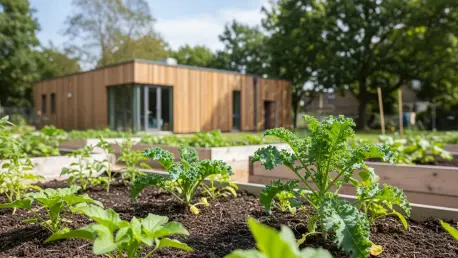
The influence of the conservatory has successfully moved beyond its physical gates in Pittsburgh, as it has transformed into an international educator and a leader in community-based ecological initiatives. This broader impact is exemplified by the Homegrown program, which focuses on community greening by installing hundreds of raised-bed vegetable gardens in local neighborhoods. Many of these areas are classified as “food deserts,” where residents lack easy access to fresh, healthy produce. By providing the tools, soil, and training necessary for people to grow their own food, Phipps is addressing the intersection of environmental health and social equity. This program has already seen the installation of over 250 gardens, and its expansion into a new satellite site at the former Irish Centre in Squirrel Hill marks a significant step forward. This new location will serve as a headquarters for outreach efforts, a nursery for exhibit plants, and a research laboratory for regenerative gardening practices. These initiatives demonstrate that the conservatory’s mission is not just about displaying plants for observation, but about actively improving the lives of people through a deeper connection to the natural world and a more resilient local food system.
In 2019, the institution further extended its global reach by launching the Climate Toolkit, a collaborative platform designed to help museums, zoos, and botanical gardens worldwide share effective strategies for addressing climate change. This initiative recognizes that cultural institutions have a unique ability to influence public opinion and model sustainable behavior. Today, the toolkit includes over 250 participating institutions across 30 different countries, fostering a global network of peers who are committed to reducing their collective environmental impact. This shift from viewing components in isolation to seeing the institution in relation to the entire ecosystem is the core of “regenerative thinking.” As Richard Piacentini has frequently explained, this philosophy prioritizes human and environmental health over short-term gains, measuring success through long-term ecological and community impact. By moving away from a nineteenth-century mindset of “conquering nature” and toward a modern goal of harmony with the environment, Phipps has become a source of wonder and a vital resource for the global climate movement. This holistic approach ensures that the conservatory remains both a tranquil urban oasis for local residents and a powerful engine for global change, proving that horticulture can be a primary tool for environmental and social restoration.
Actionable Strategies for a Sustainable Future
The transformation of Phipps Conservatory from a traditional municipal asset into a global leader in sustainability was achieved through a dedicated focus on regenerative systems and long-term institutional stability. Organizations seeking to replicate this success should prioritize the integration of environmental goals into every level of their master planning, rather than treating sustainability as a series of disconnected projects. The Phipps model suggests that significant progress is made when institutional leadership commits to a philosophy where human health and ecological integrity are viewed as the primary metrics of success. To move forward, leaders in the cultural and horticultural sectors must move beyond the goal of “doing less harm” and instead aim for projects that actively improve their local environments. This involves adopting net-zero energy and water standards for all new construction and embarking on the difficult but necessary work of decarbonizing existing historic infrastructure. By documenting and sharing the technical details of these transitions through platforms like the Climate Toolkit, institutions can accelerate the global response to climate change and ensure that their individual successes contribute to a broader movement of environmental restoration.
Looking ahead, the next phase of global green leadership will require a deeper focus on community integration and the democratization of environmental knowledge. The success of outreach programs like Homegrown indicates that the most effective climate solutions are those that are grounded in the specific needs of local populations. Actionable next steps for similar organizations include the repurposing of underutilized urban spaces into ecological hubs that serve as both research facilities and community resources. Furthermore, institutions should seek to eliminate the boundaries between the “back-of-house” operations and the public-facing experience, using every aspect of their facility to educate the public about the systems that sustain life. The journey of the conservatory has shown that even the most established historical entities can reinvent themselves to meet the urgent needs of the present. By embracing the principles of regenerative thinking, other organizations can transform their own operations into models of resilience that inspire public confidence and drive meaningful ecological change. The legacy of Phipps serves as a reminder that the pursuit of “instruction and pleasure” can also be a pursuit of a more sustainable and equitable world for all.