
The historic bricks of North Kensington are currently undergoing a transformation that many skeptics once deemed impossible for aging public housing structures. By initiating a £30 million low-carbon retrofit for the Lancaster West Estate, the Royal Borough of Kensington and Chelsea is proving that mid-century urban architecture can indeed be salvaged and reimagined for a carbon-neutral future. This initiative represents a fundamental shift from the reactive maintenance of the past toward a comprehensive green overhaul designed to meet the highest environmental standards of the 21st century.
This ambitious undertaking serves as a blueprint for how cities can handle the delicate balance of preserving heritage while modernizing infrastructure. Instead of opting for demolition, which carries a massive carbon footprint, the council is opting for deep refurbishment. This strategy sets a significant precedent for local authorities across the United Kingdom, showing that the path to a sustainable future is often found by breathing new life into the buildings we already have.
The Critical Intersection: Resident Safety and Environmental Stewardship
The Lancaster West Estate carries a weight of historical significance that extends far beyond its physical boundaries, serving as a constant reminder of the 2017 Grenfell Tower tragedy. That event fundamentally reshaped British building safety and social housing standards, making this current project a matter of profound communal healing and responsibility. This project matters because it addresses the urgent need to provide safe, warm, and dignified homes in one of London’s most densely populated districts.
By targeting a carbon-neutral status for the entire estate by 2030, the council is responding to a global trend of urban decarbonization while directly improving the daily lives of residents. For those who have faced years of uncertainty, these upgrades offer more than just energy efficiency; they provide the security of living in a building that meets modern safety codes. It is a dual-purpose mission where environmental stewardship and the moral obligation to protect citizens finally align in a tangible, street-level way.
Engineering Efficiency: Thermal Performance and Modern Design
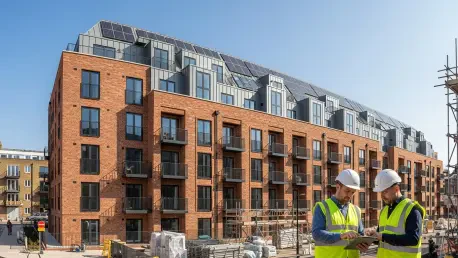
The initial refurbishment focuses on 79 residential units across Morland House and Talbot Grove House, utilizing specialized designs from AEW Architects and Rider Levett Bucknall. A core element of the technical plan is the strict adherence to PAS 2035 standards, which prioritize airtightness and high-grade thermal insulation. These improvements are specifically engineered to eliminate common housing ailments like dampness and mold, which have plagued older residential blocks for decades.
Beyond the technical specifications, the scheme is a collaborative effort with local residents to ensure the transition to energy-efficient living is tailored to actual community needs. This targeted investment serves as a critical pilot for the remaining blocks on the estate, showcasing how high-quality retrofitting can lower energy bills during a period of volatile utility costs. By integrating smart ventilation and better windows, the project ensures that internal climates remain stable regardless of external weather patterns.
Navigating the Financial Realities: Large-Scale Urban Revitalization
Despite the clear environmental and social benefits, the project highlights the staggering financial hurdles currently facing the construction and public sectors. Initial estimates for retrofitting all 14 blocks on the Lancaster West Estate have skyrocketed from £118 million to an eye-watering £244 million. This 106% increase was driven by a combination of hyperinflation, the complexity of high-quality refurbishments, and the necessity of meeting rigorous new building safety requirements.
The Ministry of Housing, Communities and Local Government is currently reviewing these financial demands, underscoring the fact that achieving national sustainability goals requires more than just local ambition. This fiscal gap illustrates a broader national challenge: the cost of the green transition is rising faster than many municipal budgets can accommodate. It emphasizes the need for a sustained partnership between central government funding and local execution to ensure that no community is left behind in the race to net zero.
Strategic Procurement: The Roadmap to Completion
The council is actively engaging the market to refine its procurement strategy, ensuring that the contractors selected are capable of handling such a sensitive and complex site. This process began with dedicated bidders’ days and site walkthroughs to provide industry experts with a firsthand look at the engineering challenges involved. By fostering this early dialogue, the borough hoped to avoid the delays and cost overruns that often haunt large-scale public works.
The construction phase, scheduled to run from 2026 to 2028, required a phased approach to minimize disruption for the people currently living on the estate. This timeline allowed for the integration of innovative construction methods while maintaining the rigorous oversight necessary for a project of such national importance. Stakeholders remained focused on the long-term vision, recognizing that the lessons learned here would likely dictate the future of urban renewal across the country.
Policy experts looked toward new revolving credit facilities and specialized green bonds as potential solutions for the remaining blocks. The successful implementation of these first 79 units provided the data needed to lobby for more aggressive federal subsidies. Moving forward, the focus shifted toward creating a repeatable supply chain model that could lower costs for other boroughs facing similar aging infrastructure crises. This transition ensured that the technical successes at Lancaster West became a permanent fixture of urban planning policy.