
In an industrial landscape where heavy manufacturing is often seen as a relic of a bygone, less environmentally conscious era, one company is actively proving that a legacy rooted in centuries of craftsmanship can become the very foundation for a cutting-edge, sustainable future. PAM Building has successfully merged its profound industrial heritage with a forward-thinking strategy centered on the circular economy and decarbonization, demonstrating that traditional industries can not only survive but thrive in Western Europe. By strategically balancing its history with relentless innovation, the company is not just manufacturing cast iron pipes and fittings; it is engineering a new blueprint for responsible industrial production. This approach has allowed it to cultivate a unique identity in the global market, proving that environmental stewardship and commercial success can be seamlessly integrated.
A Foundation of Heritage and Modern Strategy
At the core of PAM Building’s operational identity is a unique duality that harmonizes a deep-rooted history with a decidedly modern approach to manufacturing and logistics. The company proudly operates two historic foundries—one in France with origins tracing back to the 1500s and another in the United Kingdom established in 1757—which together represent a legacy of “continuous industrial craftsmanship.” Rather than treating this heritage as a static museum piece, the organization leverages it as a dynamic foundation for future-focused innovation. The leadership is committed to proving that a traditional foundry can embody a cutting-edge ethos, using its long-standing expertise not as a limitation but as a competitive advantage. This strategic blend allows PAM Building to maintain a distinct and authentic character in a market where such long-standing industrial operations are becoming increasingly rare in Western Europe, securing its place as both a custodian of tradition and a pioneer of progress.
This blend of old and new is underpinned by a meticulously planned and symbiotic operational structure that enhances efficiency across its European base. The two foundries function not in isolation but as integrated partners, each serving as a center of excellence. The French plant specializes in the production of pipes, while the UK facility is dedicated to manufacturing the corresponding fittings. This intelligent division of labor optimizes production capabilities at each site and creates a streamlined, highly efficient supply chain. The components from each facility supply the other, minimizing logistical complexities and ensuring a consistent flow of products to a broad distribution network. This integrated system effectively serves its core markets in France, Germany, and the UK, which constitute approximately two-thirds of its business, while also supporting a global reach that extends to Southeast Asia, South America, and the Middle East. The inherent durability of cast iron makes it ideal for long-distance transport, enabling the company to service a diverse international clientele from its historic European heartland.
Pioneering a Circular Economy in Manufacturing
The most defining characteristic of PAM Building’s business philosophy is its profound and long-standing commitment to the principles of the circular economy, a factor that is its biggest differentiator in the market. This is not a recent initiative but a foundational element embedded in its core processes. The company’s manufacturing cycle is fundamentally circular, starting with its exclusive use of recycled steel scrap as its primary raw material. This scrap is sourced locally, typically within a 100-kilometer radius of each plant, a practice that significantly reduces transportation-related emissions, minimizes the need for virgin resources, and actively supports local economies. The sourcing is also highly strategic; the UK plant primarily utilizes pre-consumer scrap from the automotive industry, while the French facility processes post-consumer materials like old brake discs and machinery components. This meticulous approach to material sourcing is complemented by the intrinsic properties of cast iron, which is infinitely recyclable without any degradation in quality, effectively closing the loop and preventing landfill waste after a long service life.
Complementing its circular material use is an aggressive and forward-looking decarbonization strategy that places the company at the forefront of sustainable heavy industry. This journey began decades ago when the UK foundry transitioned from a traditional coke-fired furnace to a modern electric one in the late 1990s. For the last ten years, this facility has been powered by 100% renewable electricity, resulting in a remarkably low carbon footprint for such an energy-intensive operation, with the site producing around 800 tonnes of CO₂ annually. Building on this success, a cornerstone of the company’s future strategy is a major investment to install a new, state-of-the-art electric furnace at its French plant. This initiative is pivotal to its ambitious goal of achieving an 80% reduction in CO₂ emissions by 2030, benchmarked against 2017 levels. The company has already demonstrated significant progress, having successfully cut its emissions by 24% between 2017 and 2023, showcasing a tangible and ongoing commitment to minimizing its environmental impact.
Innovation and Growth for a New Era
Continuous innovation is the critical engine driving PAM Building’s strategy, directly fueling its sustainability goals while delivering enhanced value to customers and reducing operational costs. This commitment is most visible in its product development, where engineers have successfully re-engineered product lines to be “Lighter, Smarter, Stronger.” The Agilium® range of pipes stands as a testament to this philosophy, being 30% lighter and having 20% lower embodied carbon emissions compared to the standard range. Crucially, these environmental and logistical benefits have been achieved without any compromise on the product’s strength, durability, or performance. This innovation demonstrates a sophisticated ability to achieve superior results with fewer resources, creating a win-win scenario for both the end-user and the planet. This culture of innovation is not confined to the engineering department; it is actively fostered throughout the organization, with ideas and improvements encouraged from all levels of the workforce to ensure a constant evolution of both products and processes.
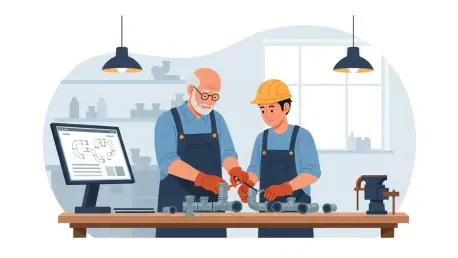
The company’s success is ultimately built on the strength of its people, and it has consciously cultivated a workplace culture that empowers its employees and ensures long-term stability. In the UK, where it employs 127 staff, the organization has fostered an environment described as one of “kindness, fairness, and empowerment.” This positive culture is a strategic necessity in a region with a limited labor pool, serving as a powerful tool for attracting and retaining skilled talent. Furthermore, PAM Building is deeply invested in the future of its workforce through comprehensive apprenticeship and upskilling programs. It has shifted its hiring strategy from seeking pre-trained specialists to developing its own talent internally. Promising operators are trained and mentored to become experts in highly skilled roles like pattern-making, ensuring the transfer of critical institutional knowledge and creating a robust, sustainable talent pipeline that will support the company for generations to come.
Forging a Resilient Industrial Future
A pivotal development that solidified PAM Building’s trajectory was its acquisition by the private equity firm Aldebaran and France’s public investment bank, Bpifrance. This transition marked the beginning of a new chapter of accelerated growth and strategic investment. The new ownership provided the essential financial backing and strategic support needed to fast-track the company’s ambitions, particularly the capital-intensive decarbonization of the French plant. A comprehensive strategic plan extending to 2028 was developed, centered on six key pillars: sustainability, faster innovation, growth in key geographies, expansion into new markets, operational excellence, and cash generation. The foundational elements of sustainability and innovation were identified as the primary drivers that would propel success across the other pillars. This clear vision and robust financial support ensured that PAM Building was perfectly positioned to further differentiate itself in a competitive global market and solidify its leadership in responsible manufacturing.