
Beneath the bustling streets and historic facades of Liverpool, a quiet revolution is underway, powered by a £40 million investment designed to systematically dismantle the carbon footprint of the city’s most essential public buildings. This ambitious program represents one of the most significant municipal climate actions in the United Kingdom, shifting the conversation from abstract targets to concrete, measurable change. By overhauling the energy infrastructure of 35 key sites, from leisure centers to museums, the Liverpool City Region is not merely upgrading its facilities; it is constructing a blueprint for a sustainable urban future, one building at a time. The initiative is a direct and robust response to the urgent need for decarbonization, demonstrating a proactive approach to environmental stewardship that aims to set a national standard.
Beyond Symbolic Gestures: How Liverpool is Tackling 77,000 Tonnes of Civic Carbon
The Liverpool City Region has moved decisively beyond performative environmentalism with a data-driven strategy targeting the source of a significant portion of its emissions. The public sector’s own building portfolio, comprising more than 600 structures, has been identified as a major contributor to the area’s carbon output, collectively responsible for nearly 77,000 tonnes of CO₂ each year. This figure, representing 13% of the region’s total emissions, has become the focal point of the Combined Authority’s five-year carbon action plan, making the decarbonization of these assets a top priority.
This initiative is not a patchwork of isolated projects but a coordinated, large-scale intervention. By focusing on public buildings, regional leaders aim to achieve a dual objective: directly reduce a substantial volume of emissions under their control and set a powerful, visible example for private sector organizations to follow. The retrofit of these community hubs, offices, and cultural landmarks serves as a tangible demonstration of the technologies and strategies that will be essential for the entire region to meet its climate goals, turning civic infrastructure into a living laboratory for green innovation.
A Region Racing Ahead: The Strategic Push for a 2035 Net-Zero Goal
This £40 million program is a critical component of a much larger and more ambitious vision for the Liverpool City Region. The area has committed to achieving net-zero carbon emissions by 2035, a target that significantly outpaces the UK national government’s 2050 goal. This accelerated timeline positions the region as a vanguard in the national effort to combat climate change, reflecting a deep-seated commitment to rapid and meaningful action. The public building decarbonization plan is therefore not an isolated effort but a cornerstone of this broader strategy, providing immediate and quantifiable progress toward the 2035 objective.
The strategic importance of this push is underscored by the interconnected nature of urban sustainability. By modernizing its public infrastructure, the region enhances its resilience against volatile energy markets, creates new green jobs, and improves the quality of public spaces. This holistic approach recognizes that environmental policy is inextricably linked to economic stability and community well-being. Consequently, the drive toward 2035 is framed as an investment in the region’s long-term prosperity, ensuring that Liverpool remains a competitive, attractive, and sustainable place to live and work for decades to come.
Deconstructing the £40M Decarbonization Blueprint
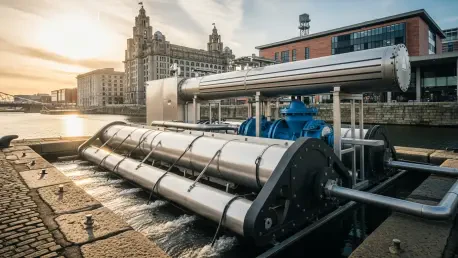
The financial and technological framework of this initiative is multifaceted, combining innovative local energy solutions with substantial national funding. A central feature is the expansion of the Mersey Heat network, an advanced district heating system. This network innovatively utilizes one of the country’s largest water source heat pumps, which extracts thermal energy directly from the Leeds and Liverpool Canal. The new funding will extend this low-carbon heat supply to several of the city’s most iconic waterfront landmarks, including the historic Cunard Building and the Georges Dock Building, with National Museums Liverpool also connecting the Museum of Liverpool. This expansion alone is projected to slash regional emissions by an impressive 4,000 tonnes of CO₂ annually.
Beyond the heat network, the program entails a comprehensive retrofit of the targeted buildings. The core of this work involves phasing out antiquated fossil-fuel heating systems, predominantly those running on natural gas, and replacing them with a suite of modern, low-carbon technologies such as air source heat pumps and solar thermal systems. These upgrades are complemented by crucial energy efficiency measures designed to reduce overall demand. Improvements to building envelopes, including enhanced insulation, will be implemented alongside the installation of intelligent control systems that optimize energy consumption in real time. The cumulative impact of this dual approach is expected to be transformative, with a target of halving both the energy demand and the carbon emissions of the participating buildings.
This green transition is underpinned by a robust financial model that blends national grants with local investment. The lion’s share of the funding, £36 million, was successfully secured from the UK’s Public Sector Decarbonisation Scheme (PSDS), a testament to the project’s strategic alignment with national climate objectives. This significant sum is further augmented by contributions from the local authorities, bringing the total investment to more than £40 million. In a parallel effort, the Combined Authority has also allocated £1.45 million from its Mayoral Renewables Fund. This dedicated capital is financing the installation of solar photovoltaic panels on 14 public buildings, adding 1.2 MW of new renewable electricity generation capacity to the region’s portfolio and further diversifying its green energy sources.
Voices from the Frontline: Why This Initiative Matters for the Community
The benefits of this far-reaching program extend well beyond environmental metrics, promising tangible improvements for the communities it serves. Cllr Anthony Burns, the Liverpool City Region Cabinet Member for Net Zero, emphasized the project’s role in securing the long-term viability of public services. He highlighted that retrofitting these essential civic buildings achieves the dual benefit of drastically cutting carbon emissions while simultaneously lowering their long-term energy bills. This, he noted, helps to future-proof vital community assets against rising energy costs, ensuring they can continue to serve the public effectively and affordably.
From a financial perspective, the initiative creates a virtuous cycle of investment. James Johnson of the North West Net Zero Hub explained the powerful feedback loop generated by the program’s efficiency gains. By significantly reducing the running costs of public buildings, the project frees up valuable financial resources. These savings can then be reinvested directly back into front-line community services, meaning that action on climate change translates into enhanced support for local residents. This direct link between environmental responsibility and social value underscores the practical, community-focused rationale driving the decarbonization effort.
From Plan to Progress: The First Wave of Green Upgrades
With funding secured and plans finalized, the initiative has rapidly transitioned from strategy to implementation. Initial work is already underway at several key sites across the region, demonstrating a clear commitment to delivering immediate and visible results. Among the first locations to undergo upgrades are the Bootle Leisure Center and Bootle Library, Wirral Country Park, the Prescot Soccer Center, and Landican Cemetery. This diverse selection of sites illustrates the comprehensive scope of the program, which targets a wide range of public facilities that are central to community life.
The project is operating on an ambitious timeline, reflecting the urgency of its climate goals. An initial target has been set to complete comprehensive upgrades on the first eight buildings by March, setting a brisk pace for the rest of the program. This swift mobilization not only ensures that the benefits of reduced emissions and lower energy costs are realized as quickly as possible but also serves to build momentum for the wider regional transition. By hitting the ground running and delivering tangible progress in its early stages, the program aims to inspire confidence and galvanize further action across both the public and private sectors. The successful completion of these initial projects marked a significant milestone, proving the viability of the technologies and the effectiveness of the region’s strategic approach.