
Across the United States, institutions of higher learning are grappling with a profound challenge: how to reconcile the preservation of their historic architectural legacy with the urgent need for a sustainable, low-carbon future. Many university campuses are a patchwork of time, featuring 19th-century halls standing alongside modern research facilities, all interspersed with public squares and green spaces that have evolved over decades. This diversity, while a source of character and identity, presents a complex problem for estate management. Older buildings are notoriously inefficient, new constructions carry a significant carbon footprint, and historically significant structures require a delicate touch to retrofit without compromising their heritage. In response to this dilemma, a comprehensive strategy is emerging that treats the campus not as a collection of disparate parts, but as a single, integrated ecosystem. This approach is centered on responsible stewardship and future-proofing the entire built environment, from the foundational materials of its oldest buildings to the air quality in its newest laboratories. It represents a shift in thinking, where sustainability and heritage are no longer seen as conflicting priorities but as intertwined components of a resilient and inspiring academic setting.
Navigating the Complexities of a Diverse Estate
A Retrofit First Philosophy
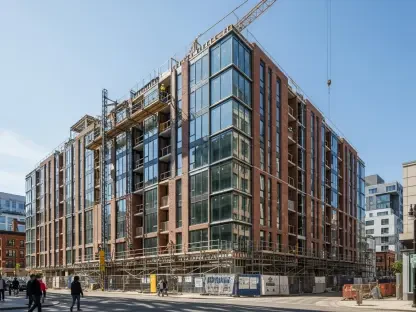
The cornerstone of this modern approach to campus management is a resolute “retrofit first” policy, which fundamentally prioritizes the adaptation and upgrading of existing buildings over the carbon-intensive process of demolition and new construction. This philosophy directly confronts the issue of embodied carbon—the emissions associated with manufacturing, transporting, and installing building materials—by maximizing the lifespan and utility of structures that are already in place. For a university estate that includes numerous listed buildings, this presents a unique set of challenges. The process of retrofitting these heritage assets is a delicate balancing act, requiring sensitive interventions that enhance energy efficiency and functionality without erasing the architectural and historical character that makes them valuable. It involves carefully insulating historic facades, upgrading to modern heating and ventilation systems without disrupting period features, and integrating smart technologies in a way that is both effective and unobtrusive. This strategy acknowledges that the most sustainable building is often the one that already exists, transforming heritage preservation from a passive act of conservation into an active contribution to a low-carbon future.
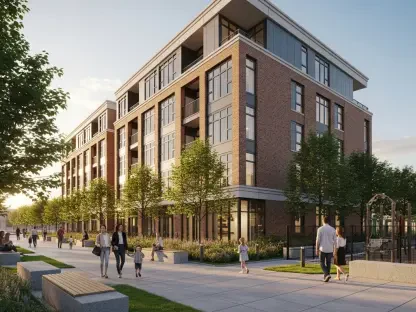
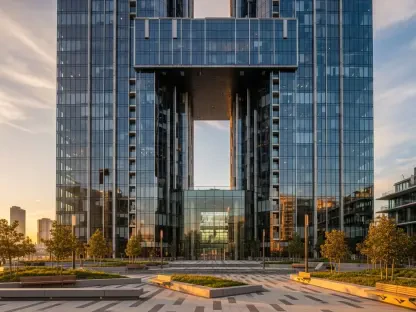
When retrofitting is not a viable option and new construction becomes necessary, the commitment to sustainability is just as rigorous, with a mandate that all new projects be designed to meet or exceed recognized net-zero standards. This goes far beyond simply installing solar panels or using energy-efficient lighting. A true net-zero building accounts for its entire carbon lifecycle, from the embodied carbon in its materials to its operational energy consumption over decades of use. This requires a sophisticated design process that integrates passive design strategies, such as optimizing natural light and ventilation, with advanced building systems and on-site renewable energy generation. The goal is to create structures that are not just “less bad” but are actively beneficial to the environment, potentially generating as much energy as they consume. By setting such a high bar for new developments, this strategy ensures that any expansion of the campus footprint directly supports, rather than undermines, the institution’s overarching climate goals. This dual approach—prioritizing retrofitting while enforcing stringent standards for new builds—forms a cohesive and powerful framework for decarbonizing a complex and diverse building portfolio.
Embracing the Circular Economy
Beyond managing energy and carbon, a truly forward-thinking campus strategy deeply integrates the principles of the circular economy into every facet of its built environment. This marks a paradigm shift from the traditional linear model of “take, make, dispose” to a regenerative system where resources are kept in use for as long as possible. In practice, this means designing buildings for future deconstruction, allowing materials to be easily recovered and repurposed at the end of a building’s life. It involves meticulous waste elimination during the construction process and the proactive reuse of materials salvaged from renovation projects. This approach extends to procurement, favoring products made from recycled content and those that can be repaired or recycled themselves. By embedding circularity into its core operations, an institution can drastically reduce its consumption of virgin resources, minimize landfill waste, and create a more resilient and self-sufficient estate. This holistic view transforms buildings from static objects into dynamic reservoirs of valuable materials, creating a closed-loop system that aligns physical infrastructure with ecological principles.
This commitment to circularity is being formalized through the strengthening of internal guidelines, such as a Sustainable Building Standard that embeds ambitious targets from the earliest stages of a project. This updated standard moves beyond basic energy efficiency to encompass a broader spectrum of sustainability metrics. It mandates the calculation and reduction of both operational energy and embodied carbon, ensuring that the full climate impact of a building is considered. A significant addition is the focus on Indoor Environmental Quality (IEQ), which prioritizes the health and well-being of the people who study and work within the buildings. This includes optimizing air quality, thermal comfort, lighting, and acoustics. By incorporating IEQ from a project’s inception, the strategy ensures that sustainable buildings are also healthy, comfortable, and productive spaces. This comprehensive standard acts as a powerful tool, translating the abstract principles of the circular economy and holistic well-being into concrete, measurable, and enforceable requirements for all capital projects.
From Blueprint to Reality A Timeline for Transformation
Cultivating a Resilient Public Realm
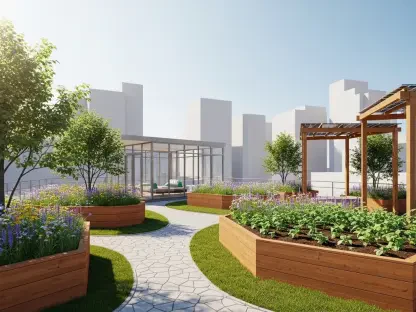
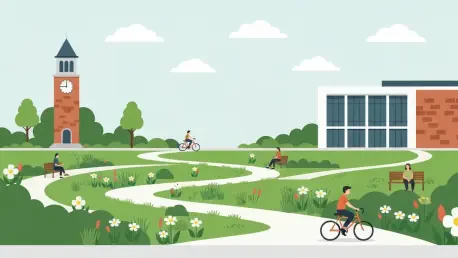
The vision for a sustainable campus extends far beyond the walls of its buildings to encompass the entire public realm—the network of squares, pathways, and green spaces that connect the estate and shape the daily experience of its community. A key initiative involves the strategic enhancement of green infrastructure to create a more ecologically robust and climate-resilient environment. This includes planting more trees to provide shade and reduce the urban heat island effect, creating wildflower meadows and other habitats to boost local biodiversity, and implementing natural drainage systems. Techniques such as rain gardens and permeable paving are used to manage surface water runoff, reducing the strain on conventional drainage systems and mitigating the risk of localized flooding during heavy rainfall. By weaving nature more deeply into the fabric of the campus, this approach not only strengthens its ecological health but also creates a more pleasant and restorative setting for students, staff, and visitors, demonstrating that a built environment can coexist harmoniously with the natural world.
This focus on the public realm is fundamentally people-centric, designed to create a campus that is more welcoming, accessible, and conducive to well-being. By improving and expanding pedestrian and cycling networks, the strategy encourages active travel, which contributes to both physical health and reduced carbon emissions from transportation. The creation of more inviting green spaces provides areas for relaxation, socialization, and informal learning, enhancing the overall student experience. This commitment to human health is mirrored by a rigorous focus on the indoor environment. A plan is in place to complete a comprehensive, campus-wide Indoor Environmental Quality (IEQ) assessment. The findings from this assessment will be used to establish a baseline and set targets for improvement, ensuring that every building provides a healthy and comfortable atmosphere. These IEQ metrics will then be fully integrated into the university’s building standards, solidifying the link between environmental sustainability and the health of the campus community.
Establishing Accountability with Clear Targets
To ensure that these ambitious goals translate into tangible outcomes, a detailed timeline of measurable targets has been established, creating a clear roadmap for progress and accountability. A critical early milestone is the commitment to align all new construction projects with the UK Net Zero Carbon Buildings Standard by 2026, a move that will set a new benchmark for sustainable development on campus. In the same year, sustainability principles are set to be fully embedded within the overarching Future Campus Plan, ensuring that environmental considerations are central to all long-term strategic planning. To manage the cumulative impact of development, a stringent five-yearly carbon budget will be enforced for all capital projects, limiting emissions to less than 25,000 tonnes of CO2e. This budgetary approach treats carbon as a finite resource that must be managed as carefully as financial capital, driving innovation in low-carbon design and construction across the entire portfolio of projects.
Further advancing the circular economy, the timeline includes several key initiatives aimed at transforming how the institution manages materials. By 2027, a dedicated construction reuse hub will be established on campus. This facility will serve as a central point for salvaging, storing, and redistributing used building materials, making it easier for projects to incorporate reclaimed resources and divert waste from landfills. This will be supported by the implementation of a sophisticated materials tracking system by 2029, which will create a detailed inventory of the materials within the university’s buildings, facilitating future reuse and recycling. By 2030, the strategic focus on well-being will culminate in the completion of the campus-wide IEQ assessment and the full integration of its metrics into building standards. In parallel, the university will require standardized reporting of embodied carbon for all new projects, providing the critical data needed to drive down the hidden carbon footprint of construction and create a truly sustainable built environment.
A Model for a Living Legacy
The comprehensive strategy undertaken by the institution provided a powerful blueprint for how heritage and sustainability could not only coexist but mutually reinforce one another. By championing a “retrofit first” philosophy, the plan honored the architectural legacy of the campus while directly addressing the urgent need to reduce embodied carbon. The deep integration of circular economy principles transformed the management of the built environment, shifting the perspective from a linear consumption of resources to a regenerative, closed-loop system. The establishment of a clear, data-driven timeline with specific targets for carbon, material reuse, and indoor environmental quality moved the vision from abstract aspiration to accountable action. Ultimately, this approach demonstrated that a university campus could be a living laboratory for innovation, proving that it was possible to preserve a rich past while simultaneously building a resilient, healthy, and low-carbon future for generations to come.