
In the global race to decarbonize, dense urban landscapes present one of the most significant challenges, and Hong Kong’s built environment stands at the forefront of this complex battle against climate change. The Hong Kong Green Building Council (HKGBC) recently marked a pivotal moment in this journey, bringing together industry leaders to celebrate a major milestone while simultaneously launching a forward-thinking strategic guide. This confluence of celebrating past achievements and unveiling a new, more holistic roadmap underscores a strategic intensification of efforts within the building sector. At an event held on November 26, the council not only recognized the tangible progress made through its certification programs but also introduced an updated framework designed to integrate green finance and ecological considerations, pushing the industry toward a more resilient and sustainable future. This dual focus signals a mature and sophisticated approach, moving beyond simple carbon reduction to embrace the interconnectedness of climate stability and biodiversity.
Milestone in Green Building Certification
A Landmark Achievement for Hong Kong’s Built Environment
The council’s “Zero-Carbon-Ready Building Certification Scheme” reached a significant milestone, surpassing 100 cumulative certificates and demonstrating the industry’s growing commitment to decarbonization. This achievement was celebrated at a dedicated ceremony attended by approximately 200 industry experts and officiated by Hong Kong’s Secretary for Environment and Ecology. During the event, 35 new certificates were awarded to a diverse group of 34 projects, showcasing the wide-ranging adoption of green building principles across various sectors. Prominent organizations receiving recognition included the Electrical and Mechanical Services Department, Sino Group, JLL, China Construction Bank, and Citigroup Inc., highlighting that the push for net-zero is being driven by both public and private entities. The sheer number of certificates awarded in a single ceremony, combined with the high-profile nature of the recipients, serves as a powerful testament to the momentum gathering behind Hong Kong’s sustainable building movement and the effectiveness of the certification scheme in driving tangible action.
Recognizing Proactive Carbon Reduction Efforts
Beyond the headline number, the ceremony also highlighted the scheme’s nuanced approach to encouraging proactive and accelerated decarbonization. This was evident in the specific types of recognition awarded, which go beyond simple compliance. Five projects earned “Target Setting Certificates,” a distinction that acknowledges their forward-looking commitment and robust planning for future carbon reduction, signaling a long-term strategic vision. More notably, one project received the first-ever “Progress Certificate,” an award specifically designed to honor accelerated efforts in cutting carbon emissions ahead of schedule. The introduction and awarding of this certificate mark a significant evolution in the program, creating a powerful incentive for building owners and operators to not just meet but exceed their environmental targets. This focus on both planning and performance demonstrates a sophisticated understanding of the decarbonization journey, rewarding both foresight and tangible, accelerated results, thereby fostering a culture of continuous improvement within the industry.
Unveiling an Evolved Climate Change Framework
Enhanced Guidance for a Net Zero Future
A cornerstone of the event was the official launch of the “HKGBC Climate Change Framework for Built Environment (3rd Edition),” a critical tool for guiding the industry toward its climate goals. This influential document, already downloaded over 45,000 times across more than 50 regions, has been substantially updated by a team of 46 industry experts to reflect the latest challenges and opportunities in sustainable construction. The key revisions provide significantly enhanced guidance on several critical fronts. These include more detailed methodologies for addressing embodied carbon, which is the carbon footprint associated with materials and construction processes, and operational carbon, the emissions from a building’s energy use. Furthermore, the updated framework offers more robust approaches to climate risk assessment and disclosure, aligning with global trends toward greater transparency and accountability. By refining these core areas, the framework equips developers, architects, and engineers with the advanced knowledge needed to make more informed decisions that will accelerate the transition to net-zero buildings.
Integrating Biodiversity and Nature Based Solutions
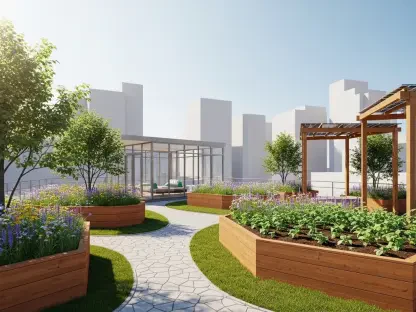
Signaling a major leap forward in holistic environmental design, the third edition of the framework introduces an entirely new chapter on “Biodiversity & Nature-based Solutions.” This significant addition formally recognizes the deep and inextricable link between the climate crisis and ecological degradation, pushing the industry to consider its impact beyond carbon emissions alone. The new section provides actionable strategies for integrating natural systems into the built environment to enhance resilience, improve local ecosystems, and support the well-being of urban populations. It advocates for solutions that work with nature, such as green roofs, vertical gardens, and sustainable drainage systems, to mitigate the effects of climate change while simultaneously restoring natural habitats. By incorporating this crucial dimension, the framework encourages a more comprehensive approach to creating a truly sustainable and low-carbon city. This move not only addresses a critical gap in previous guidelines but also reinforces Hong Kong’s position as a leader in pioneering integrated green building standards on a global scale.
Charting a Sustainable Course Forward
The November 26 event successfully crystallized the building industry’s path forward by celebrating concrete progress while simultaneously deploying a more sophisticated strategic tool for the future. The milestone of over 100 Zero-Carbon-Ready Building Certifications provided tangible proof of the sector’s commitment and capability, offering a moment of recognition that has bolstered industry-wide morale and momentum. The timely launch of the third edition of the Climate Change Framework built upon this success, providing an evolved and more comprehensive roadmap. Its enhanced focus on embodied carbon and risk disclosure, coupled with the groundbreaking new chapter on biodiversity, has equipped professionals with the advanced guidance necessary to navigate the increasingly complex demands of creating a net-zero, resilient, and ecologically conscious built environment. These combined initiatives have not only reinforced Hong Kong’s leadership in green building but have also laid a stronger, more integrated foundation for achieving its ambitious climate targets.