As West African nations grapple with the intense pressures of rapid urbanization and its environmental consequences, one country has decisively charted a sustainable course forward, transforming its cityscapes and construction industry from the ground up. Ghana has successfully established itself as the undisputed regional leader in green building, a remarkable achievement cemented by the culmination of a focused, three-year initiative. This milestone is not the result of a single policy but rather the product of a comprehensive strategy that integrated education, market incentives, and government support to create a thriving, self-sustaining ecosystem for sustainable construction. By building local capacity and proving the financial viability of green design, the nation has moved beyond aspiration to tangible reality, setting a powerful precedent for climate-conscious development across the continent. This shift demonstrates a profound understanding that ecological responsibility and economic prosperity are not mutually exclusive but are, in fact, deeply intertwined pillars of future growth.
A Strategic Foundation for Sustainable Growth
Cultivating a Local Ecosystem of Expertise
A core pillar of Ghana’s success was the deliberate cultivation of local talent through the International Finance Corporation’s (IFC) “Designing for Greater Efficiency” (DfGE) program. Rather than importing temporary expertise, the initiative, supported by the Swiss State Secretariat for Economic Affairs (SECO), focused on creating a self-perpetuating knowledge base within the country. This was achieved by systematically embedding green building design principles directly into the academic and professional fabric of the nation. The curriculum was integrated into five universities, a key professional association, and a technical institute, ensuring that the next generation of architects, engineers, and developers would enter the workforce with sustainability as a core competency. This far-reaching educational effort successfully trained 254 students and professionals, but its most enduring legacy lies in the preparation of 30 certified trainers. These local experts are now equipped to deliver the curriculum independently, guaranteeing the program’s continuity and ensuring that the principles of efficient and sustainable design will continue to disseminate and evolve long after the initial three-year period.
The initiative’s focus on human capital extended beyond technical skills to champion inclusivity within the construction sector. In an industry traditionally dominated by men, the program made significant strides in fostering gender diversity, with women comprising more than a quarter of all participants. This deliberate inclusion does more than address social equity; it unlocks a broader pool of talent and perspectives, which is critical for driving innovation and problem-solving in a complex field like sustainable construction. By empowering a diverse and highly skilled workforce, the program has laid the groundwork for long-term economic benefits that transcend the building sector itself. This new generation of green building professionals is positioned to not only fill the growing demand for sustainable projects but also to create new jobs, launch innovative enterprises, and contribute to a more resilient and dynamic national economy. The investment in people has effectively created a powerful engine for both environmental stewardship and sustainable economic development.
Translating Policy into Market Reality
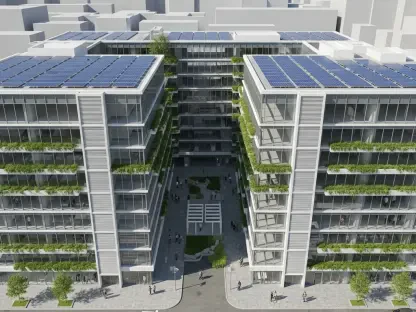
The true measure of the program’s success is visible in the nation’s skylines and development projects, where green building has transitioned from a niche concept to a mainstream market reality. Ghana has officially surpassed one million square meters of EDGE-certified green building space, a landmark achievement that represents the highest volume of any country in West Africa. This certification is not confined to a handful of flagship projects; it spans more than 81 distinct developments, showcasing the widespread adoption of sustainable practices across the board. The diversity of these projects—encompassing residential complexes, commercial offices, and public facilities—underscores the versatility and applicability of green design principles. This tangible progress sends a clear signal to the market that sustainable construction is no longer an abstract goal but a practical and attainable standard, effectively shifting industry norms and setting a new benchmark for development throughout the region. The sheer scale of certified space serves as undeniable proof of a fundamental transformation in how Ghana builds its future.
This market transformation was fueled by a growing consensus among key stakeholders that sustainable construction is both an environmental imperative and a commercially astute decision. Officials at the IFC have emphasized that reaching this milestone provides concrete proof to developers and investors that green buildings are a sound financial proposition. By integrating resource-efficient technologies and design strategies, these buildings significantly reduce operational expenses for energy and water, delivering long-term savings that enhance their overall value and appeal. This proven business case has been instrumental in boosting investor confidence and attracting capital to the sector. Concurrently, the Ghanaian government has embraced sustainable construction as a critical policy tool for managing the challenges of rapid urbanization. With the building sector being a major contributor to energy emissions, promoting green design aligns perfectly with national climate goals while supporting the development of more resilient and livable cities for a growing population.
The Lasting Impact and Future Outlook
A Blueprint for Regional Leadership
The initiative’s conclusion marked not an end, but the establishment of an enduring foundation for continued progress. A key element of its legacy is the creation of accessible online resources, which ensure that the specialized knowledge and training materials developed during the program remain available to students, professionals, and policymakers. This digital repository acts as a force multiplier, allowing the principles of green design to reach a wider audience and support ongoing professional development. The widespread adoption of the EDGE certification system has also created a clear, internationally recognized benchmark for sustainability, simplifying the process for developers to design and market green properties while providing a transparent measure of performance. Through these sustained efforts, Ghana has not only transformed its domestic construction market but has also created a comprehensive and replicable blueprint for sustainable development that can guide and inspire other nations across West Africa and beyond.
A Greener Foundation for Prosperity
The strategic fusion of education, policy, and market validation ultimately built more than just sustainable structures; it constructed a new economic reality for Ghana. The initiative successfully demonstrated that environmental responsibility could drive commercial success, a revelation that fundamentally shifted investor sentiment and development practices. By nurturing a local, skilled workforce and proving the financial case for green building through a portfolio of over 81 certified projects, the program created a robust and attractive market for climate-smart investment. This foundation, built on local expertise and proven returns, has positioned the nation as a premier destination for capital dedicated to sustainable development, ensuring that its leadership in green construction became a powerful engine for long-term economic growth and resilience.