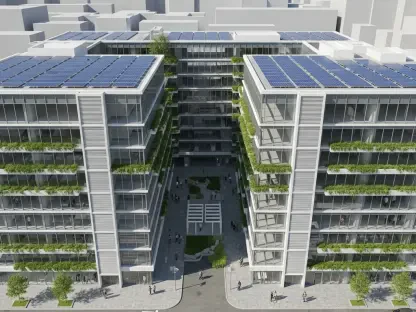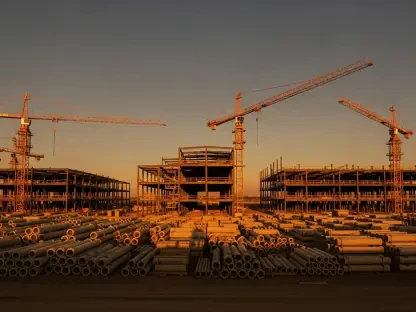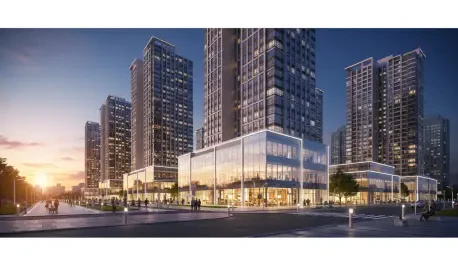

Standing amidst the bustling urban landscape of West London, a former stretch of underutilized brownfield land is currently undergoing a metamorphosis that could redefine the blueprint for 21st-century metropolitan living. This transformation, known as the Bollo Lane project in Ealing, is not merely another high-density development; it represents the largest implementation of the rigorous Passivhaus energy standard ever attempted in Europe. By integrating 900 new homes into a space once characterized by industrial decay, the project aims to demonstrate that the intense demand for urban housing can be met without compromising on the urgent necessity of climate resilience.
The significance of this endeavor extends far beyond its physical footprint or its architectural ambition. As London grapples with a persistent housing shortage and skyrocketing utility costs, the Bollo Lane development offers a tangible solution where resident energy bills are projected to drop by a staggering sixty percent. This is achieved through meticulous airtight construction and advanced ventilation systems that maintain comfortable temperatures year-round with minimal mechanical heating. This shift toward high-performance building standards suggests that the future of the city lies in “invisible” technology—infrastructure that works silently to slash carbon emissions by 90% while providing a higher quality of life for its inhabitants.
A New Standard for Urban Living: Where Energy Bills Drop by Sixty Percent
The core philosophy of the Bollo Lane development is rooted in the belief that sustainability should be a default feature rather than a luxury add-on. By adhering to the Passivhaus standard, the design team has prioritized a “fabric-first” approach, focusing on high-quality insulation and the elimination of thermal bridges. This method ensures that the buildings remain thermally stable regardless of external weather conditions, effectively decoupling the comfort of the home from the volatility of the global energy market. For the future residents of these 900 units, this translates into a dramatic reduction in monthly overheads, providing financial relief in one of the world’s most expensive cities.
Furthermore, this project challenges the traditional trade-offs associated with high-density urban growth. Often, massive housing schemes are criticized for contributing to “urban heat islands” or placing undue strain on local grids. However, Bollo Lane reverses this narrative by acting as a low-impact anchor for the Ealing community. The environmental benefits are paired with a design that emphasizes natural light and air quality, proving that the technical requirements of carbon reduction can actually enhance the daily sensory experience of the people living within these structures.
Addressing the Intersection: Housing Scarcity and Climate Change
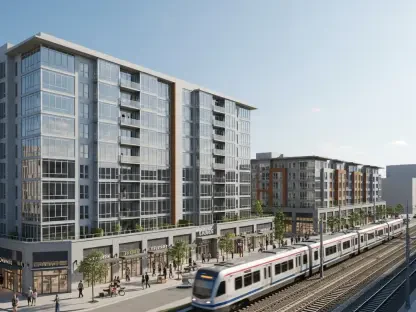
London is currently caught in a pincer movement between an acute shortage of affordable dwellings and an increasingly stringent set of environmental mandates. The Bollo Lane project emerges as a critical intervention at this crossroads, utilizing its strategic location near Acton Town station to promote transit-oriented development. By building upward on land that is already well-connected to the London Underground network, the developers are maximizing land efficiency while discouraging car dependency. This strategy aligns with a regional vision to unlock thousands of homes across multiple boroughs, treating every square foot of brownfield land as a precious resource for social and ecological progress.
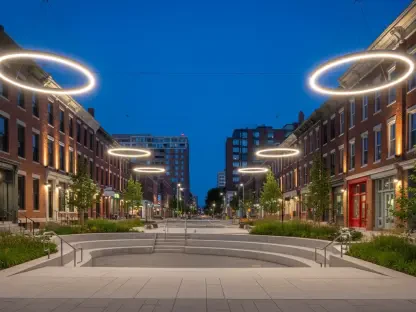
The project also serves as a vital case study in how cities can regenerate without displacing the essence of the neighborhood. Rather than being an isolated enclave, the development is designed to stitch together the districts of Acton and Chiswick, which were previously separated by industrial barriers. By addressing the housing crisis through the lens of climate science, the developers are ensuring that the homes built today will remain viable and comfortable for decades, avoiding the costly retrofitting cycles that plague older housing stocks across the United Kingdom.
Scaling Sustainability: Two Phases of Mixed-Use Development
Managing a project of this magnitude requires a sophisticated, multi-staged execution strategy to ensure that both social and economic goals are met. The first phase of the development, a collaborative effort with Grainger, is specifically tailored to the “London Living Rent” model. This approach targets working Londoners who find themselves squeezed out of the traditional market, providing intermediate rental options that allow for savings toward future homeownership. By focusing on this demographic, the project fosters a stable, long-term community from the outset, rather than a transient population of short-term renters.
As the construction progresses into its second phase, the focus shifts toward a broader mix of social rent and shared ownership in partnership with Metropolitan Thames Valley Housing. This phase also introduces the “Lo-E” standard, further refining the project’s energy performance targets. Beyond the residential towers, the site incorporates 300,000 square feet of commercial and retail space, designed to house local businesses and startups. This mixed-use integration ensures that Bollo Lane is not just a place where people sleep, but a vibrant economic hub that generates jobs and supports the local economy throughout the day.
Political Will: The Power of Strategic Partnerships
The momentum behind Bollo Lane is fueled by a unique joint venture between Barratt London and Places for London, the specialized real estate arm of Transport for London. This partnership represents a powerful synergy between public-sector land ownership and private-sector delivery expertise. High-level endorsements from the UK Housing Secretary and the Mayor of London have highlighted the project as a premier example of how state-owned land can be leveraged for the public good. By utilizing the “transit-oriented development” model, the partnership has created a framework that allows for rapid scaling without the typical bureaucratic friction that often stalls large-scale urban projects.
Moreover, the success of this collaboration has influenced national policy discussions regarding planning reforms. The project’s ability to meet a 50% affordability mandate while maintaining world-class environmental standards has provided a “proof of concept” for a “default yes” approach to brownfield redevelopment. This consensus among stakeholders signals a shift in how urban regeneration is viewed—moving away from piecemeal developments toward integrated, master-planned communities that prioritize long-term social value over short-term profit margins.
A Framework for Implementing: Transit-Oriented Passivhaus Communities
For urban planners and developers looking to replicate the Bollo Lane model, several key strategies emerge as essential for success. First, the prioritization of brownfield sites adjacent to existing transit hubs is non-negotiable for reducing the overall carbon footprint of a growing city. By concentrating density where the infrastructure already exists, planners can preserve green belts while breathing new life into neglected urban corridors. Second, the early adoption of certifications like Passivhaus ensures that sustainability is baked into the project’s DNA rather than being treated as a cosmetic afterthought, guaranteeing long-term operational savings.
Finally, the project demonstrates that diversity in housing tenure is the cornerstone of a resilient community. By offering a range of options from social rent to private sales, developers can ensure that the neighborhood remains accessible to a wide variety of income levels, which in turn fuels regional job growth and social stability. As the construction at Bollo Lane moved toward its final stages, it set a new benchmark for the industry, proving that the most ambitious environmental goals are entirely compatible with the urgent need for large-scale, affordable urban housing. Architects and policymakers began looking toward this site as the primary evidence that a sustainable, high-density future was not just a theoretical possibility, but a functional reality.