
Northern Ireland has articulated a bold vision to transform its built environment into a global exemplar of sustainability, yet this ambition is currently constrained by the formidable, real-world challenges that hinder the widespread adoption of green construction practices. The region finds itself at a critical juncture, attempting to balance a forward-thinking strategy with the immense practical hurdles involved in reshaping an entire economic sector. This places Northern Ireland in a unique position, with the potential to emerge as a pioneer in sustainable building while simultaneously navigating the deep-seated systemic barriers that have slowed progress both locally and on the international stage. The journey toward a net-zero future is not merely a matter of policy, but a complex interplay of market forces, technological adoption, and a fundamental shift in industry culture.
The Global Context of Local Challenges
The pressing need for this transformation is underscored by a stark reality: the construction and built environment sectors are collectively responsible for nearly 40% of global carbon emissions and a similar share of raw material consumption. This staggering figure establishes the high stakes of the climate crisis and reinforces the consensus that inaction is no longer a viable option. However, this urgency is met with a concerning level of global inertia. Findings from the Royal Institution of Chartered Surveyors (RICS) 2025 global sustainability report highlight a significant stagnation in worldwide demand for sustainable buildings. This broader international pattern provides a crucial context for Northern Ireland’s local struggles, suggesting that the obstacles it faces are not unique but are symptomatic of a more widespread, systemic resistance to change that is slowing progress across developed economies and complicating the transition to a greener future.
Three primary barriers have been identified as the main impediments to the widespread adoption of sustainable building practices throughout the United Kingdom, with Northern Ireland facing the full force of their impact. The first and most significant is the high initial capital cost associated with green technologies and environmentally friendly materials, which often acts as a powerful deterrent for investors and developers who are focused on maximizing short-term financial returns. Compounding this issue is the second major barrier: the lack of clear, compelling, and standardized evidence demonstrating a strong return on investment (ROI) for sustainable buildings. This ambiguity fosters investor hesitance, as the long-term financial benefits—such as reduced operating costs, higher tenant retention rates, and increased overall property value—are not yet consistently proven or universally accepted by the market. The third obstacle is a pervasive knowledge gap regarding green real estate that exists among a wide range of critical stakeholders, including investors, developers, and even consumers, which complicates decision-making and weakens overall market demand for sustainable properties.
Proactive Strategies and Emerging Success Stories
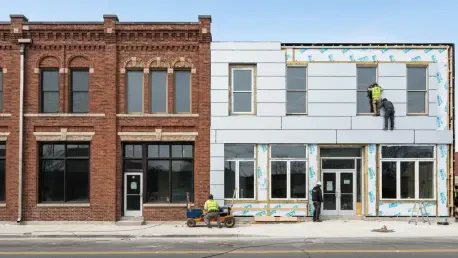
In direct response to these formidable challenges, RICS Northern Ireland is actively promoting a series of proactive strategies designed to dismantle these barriers and accelerate the transition toward a more sustainable built environment. A central pillar of this approach is a strong focus on retrofitting, a strategy aimed at upgrading Northern Ireland’s aged and carbon-intensive existing building stock. This is a crucial step in reducing the region’s overall emissions, as a significant portion comes from older, inefficient structures. Alongside this, the organization is championing the adoption of whole-life carbon assessments. This advanced methodology encourages a more holistic view of a building’s carbon footprint, encompassing not only its operational emissions from heating and power but also the embodied carbon from the manufacturing, transportation, and construction phases. The adoption of this comprehensive standard is presented as essential for accurate carbon measurement, management, and reduction. Finally, these initiatives are supported by a concerted effort to enhance sustainability skills across the industry, ensuring that professionals possess the necessary expertise to design, construct, and manage the next generation of high-performance, sustainable buildings.
Despite these systemic challenges, encouraging success stories from local developers in Northern Ireland are beginning to provide a powerful blueprint for the future of the industry. These pioneering projects serve as a crucial finding: when sustainability is treated not as an afterthought but as a core priority intricately linked to measurable performance metrics, a genuine and robust market demand for green buildings begins to emerge. These exemplary developments demonstrate that sustainability can transition from being perceived as a costly and complex limitation to becoming a central element of a project’s overall value proposition. The tangible benefits for consumers, such as significantly lower utility bills and healthier indoor living environments, have proven to be powerful market drivers. There is a growing and optimistic view that as more public sector entities begin to adopt RICS standards for their own projects, a significant ripple effect will encourage the private sector to follow suit, creating a self-reinforcing cycle of demand and innovation.
Charting a Course for Industry-Wide Transformation
The opportunity for Northern Ireland to establish itself as a genuine leader in the field of sustainable construction was clear and attainable. The primary challenge lay not in a lack of vision or technical capability, but in scaling up the successful models from a few early adopters and exemplary projects to foster a widespread, industry-wide culture of sustainability. The path to achieving this required a synergistic alignment of standards, skills, and value signals. Clear and robust standards, such as the whole-life carbon assessment, provided a consistent and reliable framework for action. A skilled and knowledgeable workforce supplied the capability to effectively implement these standards on the ground. Finally, clear value signals—including proven ROI and strong market demand—provided the essential financial incentive for the entire industry to embrace and drive this fundamental change. The journey was far from complete, but by collectively addressing the existing barriers, investing in education, and consistently showcasing the tangible benefits of green building, Northern Ireland’s stakeholders collaboratively built a more sustainable and resilient future.