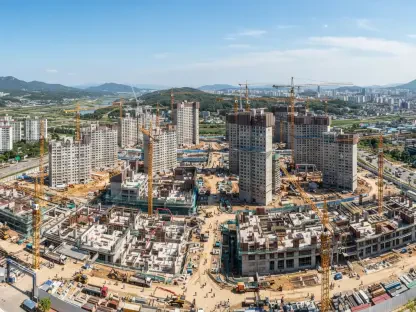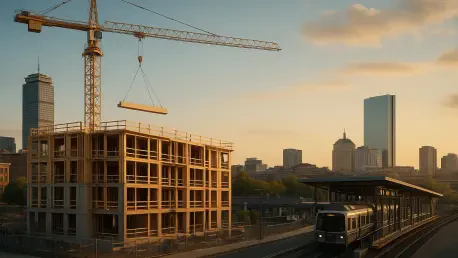

A persistent shortage of homes in Boston is being exacerbated by financial constraints that have sidelined numerous residential initiatives across the metropolitan area. The administration of Mayor Michelle Wu is now recalibrating its approach, acknowledging that the aggressive housing goals set during the previous decade require a more pragmatic implementation strategy given the current economic landscape. This shift represents a departure from purely aspirational figures toward a data-driven model that accounts for elevated borrowing costs and the rising price of raw materials like structural steel and timber. By focusing on what is physically and financially achievable between 2026 and 2028, the city aims to unlock stalled projects that have been frozen in the planning pipeline for years. This pivot suggests that public intervention is no longer optional but a necessary component to ensure the city remains habitable for its diverse workforce and maintains its status as a leading global innovation hub.
Navigating the Financial Realities of Modern Construction
Adjusting Expectations to Market Dynamics
City officials are adopting a more restrained view of what can be accomplished under the current market conditions. The previous era’s goals were often disconnected from the reality of capital markets, leading to a significant disconnect between policy and production. By lowering projected output to align with present conditions, the Wu administration is signaling to developers that the city is a partner rather than just a regulator. This realignment is crucial because unrealistic mandates often led to developers walking away from permits entirely. Instead, the focus has shifted toward ensuring that units already approved actually break ground. From 2026 to 2028, the city expects a steady, albeit slower, increase in inventory, prioritizing stability over volatile growth spurts. This ensures that the infrastructure can keep pace with new residents while providing a predictable environment for long-term investment and urban planning strategies that emphasize sustainable growth.
Utilizing Targeted Tax Abatements
One of the most significant tools being deployed is the introduction of targeted tax breaks for high-priority developments. These are projects that provide a significant percentage of affordable units but are currently facing massive funding gaps due to overhead. The administration recognizes that the financial math of building no longer works without these interventions. By bridging the gap between high construction costs and the revenue generated from affordable rents, the city can jumpstart projects that would otherwise remain dormant. These incentives are not broad-based giveaways but are instead tied to specific neighborhood needs and zoning revisions that encourage density near transit hubs. This approach acknowledges that the private market alone cannot solve a crisis that is fundamentally driven by a mismatch between supply costs and resident incomes. By focusing on these specific levers, the city aims to revitalize the housing pipeline and create a replicable template.
Scaling Solutions for Long-Term Affordability
Innovation in Building Materials and Zoning
Boston’s situation is not unique, as it mirrors a broader national trend where high overhead has sidelined projects in expensive metropolitan areas. This has led to the exploration of diverse solutions across the country, ranging from California’s fast-tracking of infill housing to the development of innovative, low-cost building materials. For instance, the use of recycled-plastic mortar and modular construction techniques is gaining traction as a way to lower the initial capital requirements for large-scale developments. In Boston, these technological advancements are being integrated into the planning process to reduce the reliance on traditional construction methods. Flexible zoning is also being utilized to allow for the conversion of underused commercial spaces into residential units, a trend that is becoming increasingly common in high-density urban centers. These regional comparisons provide a roadmap for how Boston can leverage global innovations to address local challenges.
Securing the Economic Future of the Workforce
The Wu administration determined that the path forward necessitated a move beyond traditional zoning toward a proactive fiscal partnership. By implementing these strategic tax breaks and lowering production hurdles, the city established a framework that prioritized actual construction over theoretical unit counts. Officials recognized that the survival of the local economy depended on bridging the affordability gap through targeted public intervention. To maintain this momentum, stakeholders were encouraged to focus on three key areas: streamlining the approval process for modular construction, expanding transit-oriented development zones, and securing permanent subsidies for families at risk of displacement. These actions moved the conversation from a state of crisis toward a manageable roadmap for regional growth. The integration of these strategies provided a clear signal to the market that Boston was committed to a long-term vision where housing remained accessible to all economic sectors.