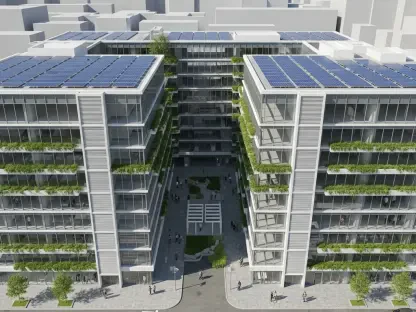

A powerful and undeniable trend is reshaping the commercial real estate landscape as tenants and investors increasingly prioritize sustainability, yet the very digital infrastructure that agents depend on is proving to be a significant barrier to progress. A recent industry-wide analysis reveals a critical disconnect between the surging market demand for energy-efficient properties and the capacity of real estate professionals to effectively market them. This is not a matter of agent disinterest or a lack of client demand, but rather a systemic flaw embedded within the primary digital platforms used for property listings. The tools of the trade appear to be lagging behind the market’s evolution, creating a frustrating bottleneck that prevents the efficient matching of green supply with eco-conscious demand and hindering the growth of a more sustainable built environment. This gap between technological capability and market reality raises urgent questions about the industry’s readiness to adapt to the future of real estate.
The Widening Chasm Between Demand and Data
A Systemic Breakdown in Information Exchange
The core of the problem lies within the industry’s foundational listing platforms, known as Commercial Information Exchanges (CIEs), which are failing to accommodate the nuances of the green building market. An astonishingly low 13% of commercial real estate members report having access to specific “green data fields” within their CIEs, making it nearly impossible to formally list, search for, or promote a property’s sustainable attributes. This limitation is not a reflection of agent unwillingness; on the contrary, where these features are available, a majority of agents (54%) actively utilize them, demonstrating a clear appetite for the functionality. The issue is therefore one of infrastructure, a fundamental data-entry constraint that effectively renders a building’s most valuable efficiency features invisible. This technological oversight directly undercuts an agent’s ability to highlight a property’s competitive advantages, leaving them ill-equipped to serve a growing segment of the market and articulate the full value proposition of a sustainable asset.
This glaring technological gap creates a profound and counterproductive divide between professional development and daily practice, effectively nullifying the benefits of industry training. While a notable 37% of commercial agents have invested time in receiving education on sustainable building features and their benefits, the majority find this knowledge difficult to apply in their work. A staggering 52% of agents report that they never work with buildings possessing such elements, not because these properties do not exist, but because they are not properly identified or searchable within the systems they are required to use. This disconnect forges a frustrating paradox where agents are educated on a market trend they cannot easily participate in. The absence of standardized, accessible green data means that acquired expertise remains theoretical, leading to a cycle where the market’s green potential is discussed in seminars but remains largely untapped in actual transactions, leaving both agents and their clients at a distinct disadvantage.
The Perception Versus Reality of Green Value
The inadequacy of current tools has a direct impact on how agents perceive the financial viability of sustainable properties, creating a cycle of undervaluation. While a slight majority of agents, at 55%, believe that green features contribute some level of value to a listing, their confidence wanes when it comes to quantifiable financial returns. This skepticism is evident in the data, with only 30% of agents convinced that certified green properties achieve higher valuations, and a mere 9% believing these certifications help a property sell or lease more quickly. This professional hesitancy is not unfounded but is a direct consequence of the lack of robust, accessible data within their CIEs. Without the ability to consistently track, compare, and showcase the performance metrics of efficient buildings against conventional ones, the financial benefits—such as lower operating costs and higher tenant retention—remain abstract concepts rather than concrete, marketable facts. This information vacuum forces agents to rely on anecdotal evidence, which perpetuates a cautious and often underestimated view of a green building’s true market worth.
In stark contrast to the industry’s internal data limitations and resulting perceptual hurdles, the demand from clients and investors for sustainable properties is both strong and specific. A significant 58% of agents report that their clients frequently inquire about general green building features, indicating that sustainability has become a mainstream consideration in the property acquisition process. This interest is far from superficial, as demonstrated by the 53% of agents who receive specific questions about the availability of electric vehicle (EV) charging stations—a clear sign that tenants and buyers are thinking practically about future needs and infrastructure. This robust client-side demand throws the industry’s technological shortcomings into sharp relief. Agents are consistently being asked to provide detailed information about sustainability that their primary professional systems are simply not designed to capture or display. This creates an operational bottleneck, forcing agents to seek information outside of official channels and ultimately failing to meet the explicit needs of an increasingly sophisticated and environmentally conscious clientele.
Charting a Path Forward for a Sustainable Market
Aligning Tools with Market Imperatives
The drive for sustainable properties is rooted in practical, financial considerations rather than abstract ideals, a reality that current real estate tools fail to reflect. Client priorities are sharply focused on tangible benefits that directly affect operational efficiency and occupant well-being. The most common inquiries revolve around utility and operations costs, a top concern for 32% of clients who understand that energy efficiency translates directly into lower overhead. Following closely is indoor air quality, which is a key factor for 26% of clients, reflecting a growing awareness of how building environments impact employee health and productivity. Furthermore, 25% of clients specifically ask about high-efficiency windows and doors, underscoring a demand for specific, performance-enhancing features. These data points reveal a sophisticated buyer and tenant base that is making decisions based on long-term value and performance metrics. The industry’s inability to provide standardized data on these exact features represents a critical failure to speak the language of its most informed customers, leaving significant value on the table.
An Industry Evolution Mandated by the Market
The evidence overwhelmingly pointed to a critical inflection point where the real estate industry had to modernize its foundational digital infrastructure to meet the clear demands of the market. The strong valuations already commanded by energy-efficient buildings, driven by verifiably lower operating costs, underscored a market reality that the professional tools had largely failed to acknowledge. The most logical and urgent path forward involved the widespread improvement and standardization of green data fields within Commercial Information Exchanges. This evolution was not merely a technical upgrade; it was a necessary step to empower agents with the data they needed to accurately communicate a property’s value, align their services with client priorities, and maintain a competitive edge. As local governments continued to introduce incentives and regulations favoring energy-efficient practices, adapting the industry’s core technology became essential for future relevance and growth in a rapidly changing landscape.