
In an ambitious move to redefine sustainable industrial architecture, Amazon has commenced construction on a groundbreaking £40 million delivery station in Stockton-on-Tees, UK, meticulously engineered to be its first zero-carbon certified facility in Europe. This project represents a significant strategic pivot, tackling the dual challenge of decarbonization by targeting both the embodied carbon inherent in construction materials and processes, and the operational carbon generated during the building’s lifecycle. By establishing this new benchmark, the facility is poised to serve as a comprehensive blueprint for the future of logistics infrastructure, demonstrating that large-scale industrial development can align with aggressive environmental goals. The initiative’s success hinges on a holistic integration of advanced materials, innovative technology, and a steadfast commitment to rigorous third-party verification, setting a new precedent for the industry.
Pioneering a New Standard in Green Building
The central ambition for the 10,800-square-meter facility is to achieve the demanding Zero Carbon Certification from the Living Future Institute, a first for any Amazon building globally to register for this specific standard. In addition to this international benchmark, the project is being constructed to comply with the new UK Net Zero Carbon Buildings Standard framework, underscoring a commitment to validated, transparent sustainability. The delivery station is scheduled to open in autumn 2026, after which it will undergo a mandatory full year of operational data collection and assessment before becoming eligible for formal certification in 2027. This deliberate, data-driven process highlights a core principle of the project: true sustainability is not just designed but proven through verified performance, ensuring the building operates exactly as intended and provides a credible model for future developments.
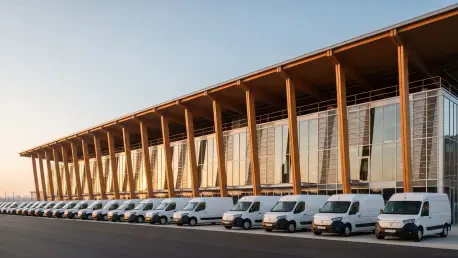
To meet these stringent certification requirements, the project’s design marks a decisive departure from conventional construction practices toward lower-carbon, circular-economy alternatives. This forward-thinking strategy is projected to reduce the total carbon emissions associated with the construction phase by at least 20% compared to Amazon’s previous design standards. The building’s structure will prominently feature mass timber beams and renewably produced steel with high recycled content, significantly lowering the embodied carbon footprint. Furthermore, the project will utilize advanced, lower-carbon concrete formulations. In a particularly innovative step supported by Amazon’s Climate Pledge Fund, the facility will pioneer technology that embeds captured carbon dioxide directly into concrete, effectively transforming a fundamental building component into a permanent carbon sink.
Leveraging Technology for Sustainable Operations
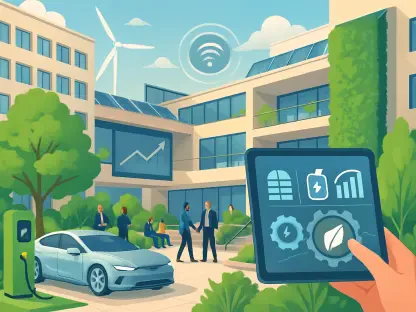
Beyond material innovation, the Stockton-on-Tees project showcases a powerful trend toward leveraging data and artificial intelligence to drive efficiency and transparency. Amazon is deploying a suite of new technologies designed to monitor and manage the project’s carbon footprint with unprecedented precision. An advanced AI-powered analytics software platform will enable engineers to meticulously track carbon emissions across all building systems, from major structural elements down to individual components like wiring and plumbing fixtures. This granular, real-time data allows the team to identify carbon-intensive hotspots and implement targeted improvements throughout the construction phase, optimizing the building’s environmental performance before it even becomes operational. This data-first approach transforms carbon management from a post-project audit into an active, dynamic process.
The technological integration extends to resource management on the construction site itself through a novel photo-based material tracking system. This system uses sophisticated image recognition software to document everything that enters and leaves the site, automatically scanning delivery notes and waste tickets. This provides a quantifiable, live feed of data on material usage and waste generation, replacing traditional, less accurate end-of-project reporting. With this immediate feedback loop, site managers can make instant adjustments to reduce waste, improve resource allocation, and enhance the overall efficiency of the construction process. This commitment to meticulous tracking ensures that the project’s sustainability goals are upheld not just in theory but in daily practice, setting a new standard for accountability in green construction.
A Blueprint for Broader Industry Impact
The Stockton-on-Tees delivery station was conceived not as an isolated experiment but as a key component of a broader, global strategy to spearhead innovation in sustainable building. This initiative built upon the precedents set by other pioneering Amazon sites in North America, including the SCA5 logistics facility in Sacramento, California, which earned a Zero Carbon Certification from the International Living Future Institute, and the DII5 delivery station in Indiana, which served as a real-world testbed for over 40 different sustainability technologies. By committing to share performance data and key learnings from the UK project, Amazon intended to help refine and advance sustainable building methodologies, contributing valuable insights for wider industry adoption and accelerating the transition toward greener logistics infrastructure worldwide. The facility effectively became a living case study.
Ultimately, this project successfully synthesized ambitious environmental objectives with tangible economic development. As a component of Amazon’s larger £40 billion investment commitment in the UK between 2025 and 2027, the facility represented a powerful synergy between corporate growth and community benefit. The construction and operation of the Stockton-on-Tees station created approximately 100 new jobs, demonstrating that large-scale investment in cutting-edge environmental innovation can also deliver direct economic opportunities to local communities. The project proved that industrial buildings could be constructed and operated with a significantly reduced carbon footprint through a holistic combination of smarter materials, advanced technology, and an unwavering commitment to rigorous, third-party certification, creating a new paradigm for the industry.