
Listen to the Article
Global real estate portfolio holders and facility managers are currently confronting a decisive moment in which carbon neutrality targets are shifting from distant aspirations to immediate operational requirements. While theoretical commitments and pilot programs defined the previous decade, the transition into 2025 signaled a fundamental shift toward the practical execution of deep decarbonization strategies.
The building sector, which continues to be a primary contributor to global energy consumption and greenhouse gas emissions, has reached a point where small, superficial improvements are no longer sufficient to maintain asset value or regulatory compliance.
Investors and developers are recognizing that the intersection of digital innovation and electrification is creating a new standard for high-performance infrastructure. It’s a period that bridges technological readiness and environmental urgency, forcing a complete reconsideration of how urban environments are designed, operated, and maintained to ensure long-term resilience in an increasingly volatile energy market.
The Convergence of Electrification and Digital Intelligence
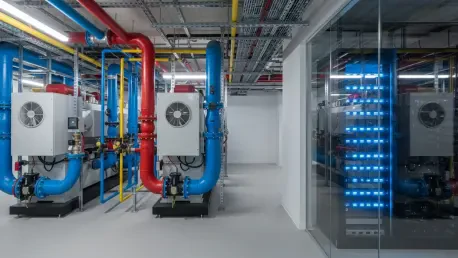
To align with global temperature targets, the rate of decarbonization within the building sector must increase significantly, moving beyond simple efficiency measures. The industry focus has shifted toward total electrification, replacing fossil fuel-based heating and cooling systems with advanced heat pumps and electric boilers. This transition is not merely about changing energy sources but about redesigning the building’s relationship with the power grid. Due to surging electricity demand driven by the mainstreaming of electric vehicle charging infrastructure, buildings must function as flexible nodes that can store, manage, and dynamically distribute power to avoid overloading local systems.
It’s a shift accelerated by rapid urbanization. With nearly 70% of the world’s population expected to reside in cities by 2050, the density of energy consumption has made “intelligent efficiency” a prerequisite for any viable, long-term commercial development. To meet the demands for innovation, the integration of artificial intelligence and sophisticated sensor networks has moved from the periphery of building management into the core operational strategy. These digital tools enable real-time optimization of Heating, Ventilation, and Air-Conditioning and lighting systems by analyzing tenant behavior and environmental variables. Utilizing predictive analytics will empower facility managers to eliminate the massive energy waste associated with heating or cooling unoccupied spaces. It’s a data-driven approach that does more than reduce costs. It provides the transparency required for environmental, social, and governance reporting.
Strategic Integration of Artificial Intelligence and Real-Time Operational Data
Modern smart buildings are defined by their ability to act as responsive ecosystems that prioritize both occupant well-being and resource conservation. The deployment of “digital twin” technology has revolutionized facility management, enabling operators to create virtual replicas of physical assets to simulate energy-saving scenarios. The capability emerges as an essential one for optimizing complex systems that involve multiple variables, such as varying occupancy levels and fluctuating outdoor temperatures. By testing adjustments in a virtual environment before implementation, building managers can significantly reduce the risk of operational disruptions while maximizing performance. The result: a structure that learns and adapts over time, ensuring that energy usage is always aligned with actual demand. Such a strategic adoption of AI enables a new level of sophistication for meeting the stringent performance standards now being enforced across major global markets.
Beyond mere energy savings, the implementation of autonomous building controls has addressed the growing challenge of maintaining indoor air quality and comfort in increasingly sealed, high-efficiency envelopes. Advanced sensors monitor carbon dioxide levels, humidity, and volatile organic compounds in real-time, automatically adjusting ventilation rates to ensure a healthy environment for occupants. By prioritizing human-centric design, construction enterprises can enhance the marketability of real estate assets, improving the indoor environment and promoting wellness, cognitive function, and productivity among residents. The move from static architecture toward a more dynamic, interactive infrastructure will become increasingly attractive to clients, serving as a key differentiator for businesses.
The Talent Gap through Modular Construction and Automation
The construction and facilities management industries are currently undergoing a dual pain point: the aging workforce and a persistent shortage of skilled labor. This demographic reality has accelerated the adoption of modular construction and prefabrication as essential strategies for sustainable growth. By shifting a significant portion of the building process into controlled factory environments, developers can achieve greater precision and significantly less material waste than with traditional on-site methods. Modular techniques also enable the seamless integration of energy-efficient technologies, such as high-performance insulation and pre-installed smart sensors, before components even reach the site. Using this approach speeds up construction timelines and ensures that the final structure meets strict sustainability certifications through rigorous quality control processes that are difficult to replicate in the field.
Automation in building maintenance has also become a critical solution for addressing the labor deficit while improving operational longevity. Predictive maintenance systems use Internet of Things sensors to monitor the health of mechanical equipment, identifying potential failures before they occur. This proactive path reduces the need for emergency repairs and extends the lifespan of expensive building assets, such as chillers and elevators. Instead of relying on a shrinking pool of technicians to perform routine manual inspections, facility managers can use data to deploy labor exactly where and when it is needed. The optimization of human resources is vital for maintaining the complex systems that define modern sustainable buildings.
Economic Imperatives and the Regulatory Landscape of Energy Efficiency
The financial case for sustainable buildings has reached a state of maturity where the “green premium” is being replaced by a “brown discount” for inefficient assets. Regulatory frameworks, such as the Energy Performance of Buildings Directive, have established clear trajectories for reducing greenhouse gas emissions, making it increasingly difficult to lease or sell non-compliant properties. Institutional investors are increasingly prioritizing assets that demonstrate high levels of energy efficiency and circularity to mitigate the risk of stranded assets. Now, owners recognize that the cost of inaction far outweighs the investment required for modernization. Smart building technologies offer the most cost-effective path to these upgrades, delivering rapid returns on investment through significant reductions in operational expenses and improved tenant retention.
Strategic partnerships across the industry have become the primary driver of the scale needed to meet global environmental targets. Collaborative initiatives among technology providers, government bodies, and non-governmental organizations are creating the standards and policy frameworks needed for the widespread implementation of sustainable practices. They’re alliances that focus on harmonizing regulations and sharing best practices to ensure that the transition to green buildings is both technically feasible and economically viable. By working together, stakeholders can overcome the fragmentation that has historically hindered the construction sector, leading to a more cohesive approach to urban development.
Conclusion
The evolution of the building sector reached a decisive threshold as the industry moved beyond conceptual sustainability into the era of verified performance and digital integration. Artificial intelligence, modular construction, and grid-interactive technologies are coming together to provide the framework to overcome the complex challenges of labor shortages and rising energy demands. Future progress relies on high-performance, future-focused, and greener buildings, built through an innovative, urban infrastructure that will ensure both productivity and environmental responsibility.